Chapel Of Our Lady
Jakarta, Indonesia
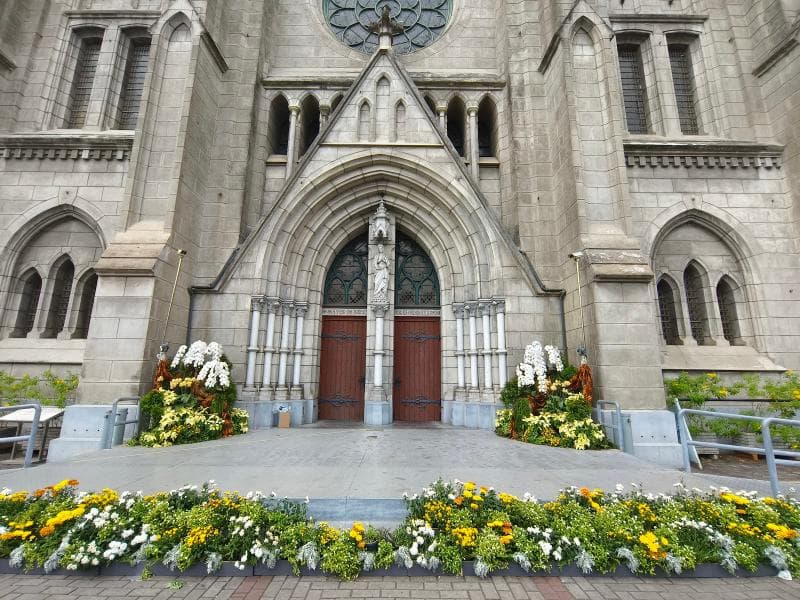
Explore the Chapel of Our Lady within Jakarta Cathedral, Indonesia. Discover its neo-Gothic architecture, Marian altars, and unique cultural statues.
Overview
The Jakarta Cathedral, officially known as the Church of Our Lady of the Assumption (Gereja Santa Perawan Maria Diangkat ke Surga), stands as a magnificent neo-Gothic masterpiece in the heart of Jakarta, Indonesia. While there isn't a standalone 'Chapel of Our Lady' as a separate, enclosed room within its walls, the entire cathedral is a profound dedication to the Virgin Mary. It is a spiritual sanctuary where devotion to Our Lady is woven into its very fabric, expressed through dedicated altars, symbolic architecture, and unique cultural representations. This iconic landmark not only serves as the seat of the Archbishop of Jakarta but also as a powerful symbol of religious harmony in a predominantly Muslim nation, attracting both pilgrims and curious travelers alike.
History & Cultural Background
The history of the Jakarta Cathedral is one of resilience and faith. The current structure, consecrated in 1901, rose from the ashes of an earlier Catholic church on the same site, which had been built in 1829 but tragically collapsed in 1890. The rebuilding effort was led by architect Antonius Dijkmans, SJ, with construction resuming in 1891 and concluding a decade later. The design adopted a neo-Gothic style, reminiscent of grand European cathedrals, yet it was intelligently adapted to Indonesia's local conditions. Rather than heavy stone masonry, the cathedral was constructed using sturdy red bricks covered with plaster to mimic natural stone, and featured teak wood roofs and iron spires, chosen for their lighter weight and earthquake resistance in this seismic region.
Its official Indonesian name, 'Gereja Santa Perawan Maria Diangkat ke Surga,' translates directly to 'Church of Our Lady of the Assumption,' underscoring its deep Marian patronage. A remarkable aspect of its cultural significance is its strategic location directly opposite the Istiqlal Mosque, the largest mosque in Southeast Asia. This proximity was a deliberate choice by Indonesia's first president, Soekarno, to embody the nation's philosophy of 'unity in diversity' (Bhinneka Tunggal Ika), showcasing a profound commitment to interfaith harmony and tolerance.
What Makes It Special
Within the Jakarta Cathedral, several features stand out as special dedications to the Virgin Mary. Foremost among these is 'The Altar of Saint Mary,' located on the left side of the nave. Crafted in 1915 by Atelier Ramakers, this altar is dedicated to celebrating the Assumption of Mary into Heaven, offering a focal point for Marian devotion.
Upon entering, visitors are greeted by a statue of Our Lady at the trumeau of the main portal, above which is inscribed the Latin phrase 'Beatam Me Dicentes Omnes Generationes' – 'All generations shall call me blessed.' The cathedral also boasts a large, circular stained-glass window known as the 'Rozeta Rosa Mystica' (Mystical Rose Rosette), a beautiful and prominent symbol of Mother Mary.
A unique and culturally significant element is the 'Our Lady of All Tribes' (Maria Bunda Segala Suku) statue, unveiled in 2018. This depiction of the Virgin Mary incorporates traditional Indonesian cultural elements, showing her adorned in a kebaya and batik sarong, with a red and white veil and the Garuda Pancasila emblem. This statue beautifully symbolizes the integration of faith with Indonesian national identity and diversity. Furthermore, the cathedral's three spires carry Marian symbolism; the southern spire, known as 'The Ivory Tower,' represents the purity of the Virgin Mary, contrasting with the northern 'Tower of David' symbolizing protection. Other representations, such as the 'Mater Dei' statue above the tabernacle and various reliefs depicting Marian events like the Dormition, further enrich the cathedral's dedication to Our Lady.
Stories, Fun Facts & Local Details
One of the most compelling stories associated with the Jakarta Cathedral is the intentional placement chosen by President Soekarno. By having the neo-Gothic cathedral stand directly across from the colossal Istiqlal Mosque, he created an enduring emblem of interfaith cooperation and mutual respect, a testament to Indonesia's foundational principle of 'unity in diversity.' Visitors can witness this harmony firsthand, as the two religious sites often coordinate, even sharing parking facilities during major festivals.
A fascinating architectural detail lies in the cathedral's construction. Despite its imposing appearance that mimics European stone cathedrals, it was ingeniously built using locally available red bricks, coated with plaster to give the illusion of natural stone. The roof is supported by large teak beams, and the spires are fashioned from iron. These choices were not merely aesthetic but practical, employing lighter materials to ensure structural integrity in an earthquake-prone country. The second floor of the cathedral houses the Jakarta Cathedral Museum, offering visitors a deeper dive into the history of Catholicism in Indonesia through a collection of sacred artifacts, vestments, and historical documents. The month of May holds special significance for Marian devotion, with specific prayers and pilgrimages dedicated to the Blessed Mother.
Visitor Perspective
Stepping into the Jakarta Cathedral offers a serene and awe-inspiring experience, a striking contrast to the bustling city outside. The interior captivates with its soaring vaulted ceilings, delicate stained-glass windows that cast colorful light, and intricately carved wooden furnishings. The neo-Gothic architecture, with its upward-sweeping lines, is designed to elevate the spirit and direct one's gaze towards the divine, creating a truly majestic and sacred atmosphere. Whether seeking spiritual solace or cultural enrichment, visitors will find a profound sense of peace and historical depth. The various Marian elements, from the altars to the statues, provide a focal point for reflection and an appreciation for the enduring faith it represents. The cathedral stands not just as a place of worship, but as a significant cultural and historical landmark, symbolizing Indonesia's rich tapestry of faiths and its commitment to religious respect and coexistence.
Coordinates: 106.833069, -6.169257
View on Google Maps💬 How Travelers Describe This Place
Based on community votes
Photogenic
457Interesting
252Beautiful
147Must See
114Unique
19
Traveler Stories
Discover memorable experiences shared by travelers who have visited this place.
No traveler stories yet.
Be the first traveler to share what made this place memorable.

Tour
By
Spot
Discover amazing places around the world. Your journey starts here.
Explore
© 2026 TourBySpot. All rights reserved.