Main Nave
Jakarta, Indonesia
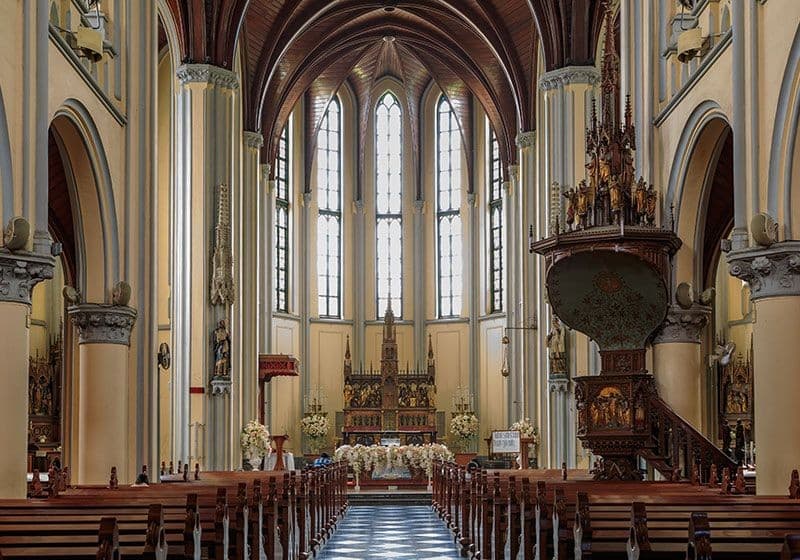
Explore the majestic Main Nave of Jakarta Cathedral in Jakarta, Indonesia. Discover its Neo-Gothic architecture, rich history, and spiritual significance. A must-visit landmark.
Overview
Stepping into the Main Nave of Jakarta Cathedral, officially known as the Church of Our Lady of the Assumption, is an experience that transports visitors to a realm of Neo-Gothic grandeur in the heart of Indonesia's bustling capital. This central aisle, stretching an impressive 60 meters in length and 10 meters in width, forms the core of the cathedral's cross-shaped floor plan. The lofty wooden vaulted ceiling, supported by sturdy teak beams, draws the eye upwards, creating a sense of awe and reverence. Unlike many European cathedrals built with heavy stone masonry, Jakarta Cathedral ingeniously uses bricks covered in plaster to mimic stone, a practical design choice made with Indonesia's seismic activity in mind. It stands as a profound architectural and spiritual landmark, not only for the Catholic community but also as a symbol of religious harmony in Jakarta.
The Main Nave serves as the principal gathering space for worshippers, flanked by ornate altars and illuminated by vibrant stained-glass windows depicting sacred narratives. Visitors can freely explore the interior, soak in its tranquil ambiance, and appreciate the intricate details that tell centuries of stories. Admission is free, allowing anyone to experience this unique blend of European design and Indonesian resilience.
History & Cultural Background
The history of Jakarta Cathedral dates back to the 19th century, with the current structure consecrated in 1901. It replaced an earlier church on the same site, which, built in 1829, unfortunately collapsed in 1890 due to structural damage. The Dutch, being predominantly Protestant, initially had little interest in supporting Catholic faith propagation in the East Indies. However, with Napoleon Bonaparte's brother Louis on the Dutch throne, efforts were made to spread Catholicism in the region.
The rebuilding effort began in 1891, with architect Antonius Dijkman, S.J., initially designing the Neo-Gothic structure. His design was later simplified by Marius Hulswit, who ensured it could be constructed by local workers. This architectural marvel is dedicated to the Virgin Mary, officially named Gereja Santa Perawan Maria Diangkat ke Surga, or the Church of Our Lady of the Assumption. Its enduring presence reflects the long and sometimes challenging journey of the Catholic faith in Indonesia, becoming an integral part of Jakarta's rich cultural tapestry.
What Makes It Special
The Main Nave's distinctiveness lies in its unique fusion of classic Neo-Gothic aesthetics with an adaptive Indonesian character. While it boasts the pointed arches, high ceilings, and intricate ornamentation typical of Neo-Gothic architecture, its construction materials tell a story of local ingenuity. The use of sturdy red bricks covered with plaster to imitate stone, and teak wood for the roof structure, was a deliberate choice to ensure resilience against earthquakes, a common occurrence in the region. Soaring arches rise from the nave towards the high-vaulted wooden ceiling, providing an airy and majestic interior. This practical adaptation allows the cathedral to maintain its European architectural charm while being firmly rooted in its Indonesian context.
Another striking feature within the Main Nave are the three prominent altars. The central, most majestic altar, adorned with a golden cross, was crafted in the Netherlands in the 19th century and installed in 1956. Flanking it are the Altar of Saint Mary, completed in 1915, and the Altar of Saint Joseph, finished in 1922. These sacred spaces, along with the detailed Stations of the Cross adorning the side walls, invite contemplation and reflection.
Stories, Fun Facts & Local Details
- A Symbol of Tolerance: One of the most heartwarming aspects of Jakarta Cathedral is its direct proximity to the Istiqlal Mosque, Southeast Asia's largest mosque. This isn't a coincidence; Indonesia's first president, Soekarno, intentionally chose this location to symbolize the nation's commitment to religious tolerance and harmony. During major religious festivals, the two places of worship even share parking facilities, a beautiful testament to peaceful coexistence.
- The Musical Heart: The Main Nave houses a grand Neo-Gothic pipe organ on its southern side, installed in 1988, originally from Belgium. An even older German-made organ, dating back to the cathedral's inauguration in 1901, resides in the mezzanine, though it is rarely used today. The sounds of these instruments during mass add a profound layer to the spiritual experience.
- Hidden Museum: Above the wooden pews, on the second floor (the triforium or mezzanine), visitors can discover the Jakarta Cathedral Museum. This often-missed gem offers a glimpse into the history of Catholicism in Indonesia, displaying religious artifacts and relics from the Dutch East Indies era, including robes and chalices of past archbishops.
- Artistic Details: Look closely at the stained-glass windows, which beautifully depict biblical stories, adding bursts of color and spiritual narratives to the serene atmosphere. The intricate carvings and details throughout the nave reflect the dedication of the craftsmen from the early 20th century.
Visitor Perspective
For any traveler to Jakarta, a visit to the Main Nave of Jakarta Cathedral offers a serene and enriching experience. As you walk down the 60-meter-long aisle, the sheer scale and detailed craftsmanship are immediately apparent. The high ceilings and majestic arches create an expansive feeling, inspiring quiet contemplation. Take your time to admire the three main altars at the front, each with its own history and significance, and observe the Stations of the Cross lining the walls, narrating Jesus Christ's journey to Calvary.
Don't forget to ascend to the second floor to explore the small yet informative Jakarta Cathedral Museum. It provides a deeper historical and cultural context to the cathedral and the spread of Catholicism in Indonesia. Visiting in the morning or late afternoon can provide a particularly peaceful experience, away from larger crowds. The cathedral is open daily and entry is free, making it an accessible and meaningful stop on your Jakarta itinerary. It's an opportunity to not just witness an architectural masterpiece, but to feel the peace and harmony emanating from a place that has stood through significant historical changes, serving as a beacon of faith and a testament to Indonesia's diverse spirit.
Coordinates: 106.8265, -6.1682
View on Google Maps💬 How Travelers Describe This Place
Based on community votes
Unique
953Must See
695Interesting
658Photogenic
69Beautiful
22
Traveler Stories
Discover memorable experiences shared by travelers who have visited this place.
No traveler stories yet.
Be the first traveler to share what made this place memorable.

Tour
By
Spot
Discover amazing places around the world. Your journey starts here.
Explore
© 2026 TourBySpot. All rights reserved.