Bell Towers
Jakarta, Indonesia
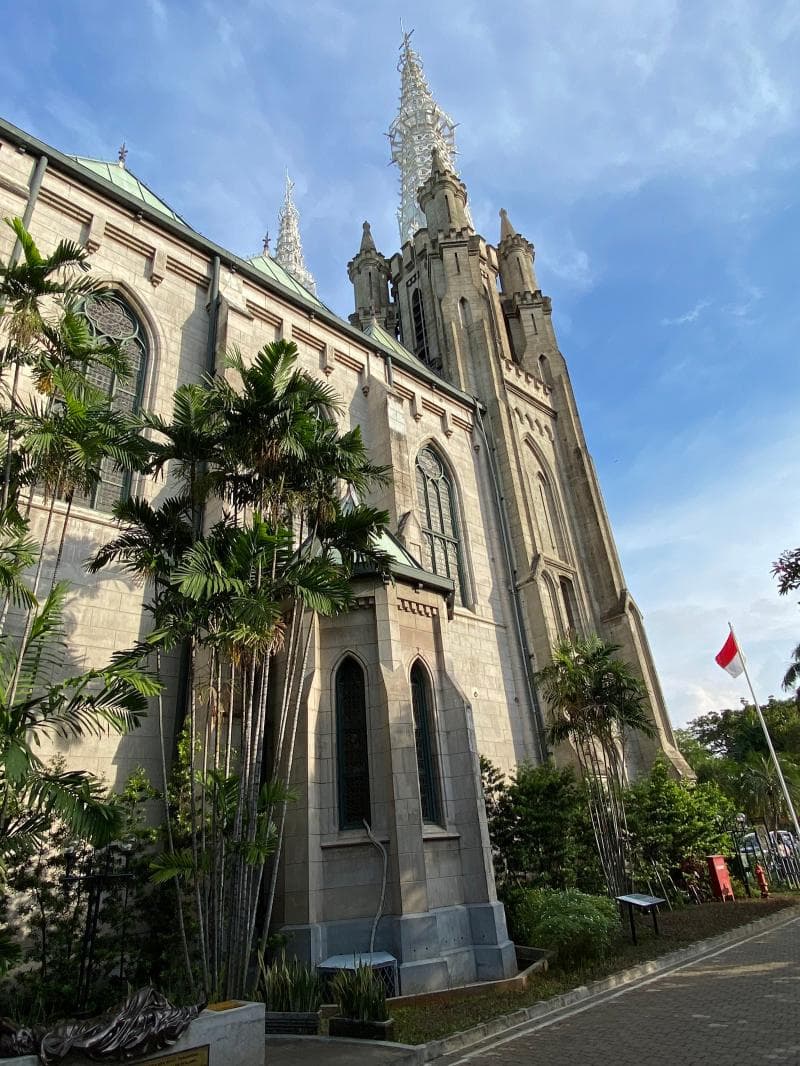
Explore the historic Bell Towers of Jakarta Cathedral in Jakarta, Indonesia. Discover their Neo-Gothic architecture, rich symbolism, and cultural significance.
Overview
Soaring majestically above the bustling cityscape of Jakarta, Indonesia, the Bell Towers of Jakarta Cathedral stand as iconic symbols of faith and enduring architectural beauty. Part of the larger Neo-Gothic Jakarta Cathedral, officially known as Gereja Santa Perawan Maria Diangkat ke Surga (The Church of Our Lady of the Assumption), these spires are not merely architectural adornments but hold deep historical and cultural significance. The cathedral, consecrated in 1901, is a testament to resilience, rising from the collapse of its predecessor in 1890. Its design, reminiscent of European Gothic churches, incorporates adaptations suitable for Indonesia's tropical climate and seismic activity. The bell towers are a focal point, drawing the eye upwards and inviting visitors to delve into the rich narrative of this spiritual landmark.
The Jakarta Cathedral boasts three distinct bell towers. Dominating the front facade are two impressive spires, each standing 60 meters tall. The north tower is known as 'Turris Davidica', or 'Tower of David', while the south tower is called 'The Ivory Tower'. A third, slightly shorter spire, 'The Angelus Dei Tower', rises 45 meters above the cathedral's crossing, behind the main altar. Each tower contributes to the cathedral's grandeur and its symbolic language, telling stories of devotion and architectural ingenuity.
History & Cultural Background
The story of the Jakarta Cathedral's Bell Towers is interwoven with the broader history of the Catholic Church in Indonesia and the nation's colonial past. The current Neo-Gothic structure was meticulously rebuilt between 1891 and 1901, following the tragic collapse of an earlier church in 1890. Designed by Jesuit priest Antonius Dijkmans, the architecture pays homage to European Gothic traditions while adapting to local conditions.
The choice of materials for the towers reflects this adaptation. Unlike their European counterparts, which often feature solid stone masonry, Jakarta Cathedral's spires were constructed with an iron frame, and the main building uses large red bricks covered with plaster to mimic natural stone. This ingenious design made the structure more robust and resistant to earthquakes, a pragmatic decision in a seismically active region. The original roof was made of teak wood, later changed to copper.
Culturally, the Bell Towers, and indeed the entire cathedral, stand as a powerful symbol of religious harmony in Indonesia. Situated directly opposite the grand Istiqlal Mosque, the largest mosque in Southeast Asia, their proximity signifies the nation's commitment to interfaith tolerance and unity. This deliberate placement, chosen by Indonesia's first president, Soekarno, fosters a unique dialogue between two major faiths, often sharing parking facilities during major religious holidays.
What Makes It Special
Beyond their architectural splendor, the Bell Towers are special due to their profound symbolism and the unique stories they embody. The 'Turris Davidica' (Tower of David) is a devotional title for Mary, symbolizing her as a refuge and protector against darkness. The 'Ivory Tower' similarly reflects the purity of the Virgin Mary, evoked by the whiteness and untainted nature of ivory. These names provide a spiritual depth to the towering structures, connecting them to centuries of Catholic tradition.
The presence of old, still-functioning clocks and a church bell within the Ivory Tower adds to its charm, marking the passage of time for generations of worshippers and the surrounding community. The bells themselves have their own history, with various donations marking significant moments in the cathedral's life. The largest bell, named Wilhelmus, was a gift from Mr. J.H. de Wit, while smaller bells were donated by Mr. Chasse.
Furthermore, the material composition of the towers, utilizing iron for the spires and bricks covered with plaster, sets them apart from traditional European Gothic constructions. This blend of imported design principles with local craftsmanship and practical considerations makes them a distinct architectural achievement, uniquely Indonesian in their execution.
Stories, Fun Facts & Local Details
One fascinating detail is that the lower part of the iron structure for the towers was imported from the Netherlands, while the upper part was crafted locally in a workshop in Batavia (old name for Jakarta). This blend of foreign expertise and local industry speaks volumes about the construction era.
The bell tower of the 'Citadel of David' (another name for Turris Davidica) received a significant gift from George Marie van Arcken Clemens, highlighting the communal effort and generosity that built and sustained the cathedral.
The Jakarta Cathedral's bell towers are a quiet constant in a city that has undergone immense change. They have stood witness to decades of Indonesian history, from colonial times through the struggle for independence and into the modern era, silently observing the evolution of Jakarta. Their chimes resonate not just as a call to prayer but as echoes of history and continuity.
Visitor Perspective
For a curious traveler, approaching Jakarta Cathedral and gazing up at its bell towers is an experience that transcends mere sightseeing. It's an opportunity to connect with a significant piece of Indonesia's heritage, both religious and architectural. The intricate Neo-Gothic details, the tapered spires, and the symbolic names invite contemplation and appreciation for the craftsmanship of a bygone era.
The contrast of these European-inspired towers against the vibrant, tropical backdrop of Jakarta provides a unique visual spectacle. Visitors can imagine the sound of the bells ringing out over the city, a sound that has marked important moments for generations. Ascending to the upper levels of the cathedral, where the triforium once housed choirs and now hosts a museum, offers a closer look at the structures and relics, providing deeper insights into the Catholic Church's history in Indonesia.
Observing the cathedral's proximity to the Istiqlal Mosque also offers a profound lesson in interfaith harmony, a tangible representation of Indonesia's 'unity in diversity' motto. The Bell Towers, therefore, are not just architectural elements; they are storytellers, chronicling history, faith, and the peaceful coexistence that defines a significant aspect of Indonesian culture.
Coordinates: 106.83325, -6.16919
View on Google Maps💬 How Travelers Describe This Place
Based on community votes
Photogenic
995Beautiful
989Must See
613Interesting
603Unique
581
Traveler Stories
Discover memorable experiences shared by travelers who have visited this place.
No traveler stories yet.
Be the first traveler to share what made this place memorable.

Tour
By
Spot
Discover amazing places around the world. Your journey starts here.
Explore
© 2026 TourBySpot. All rights reserved.