Prayer Hall
Jakarta, Indonesia
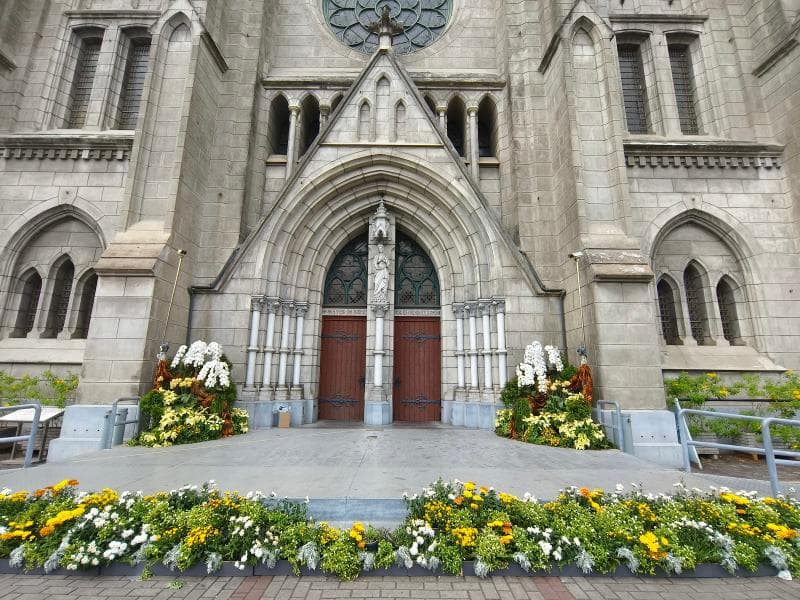
Explore the serene Prayer Hall within Jakarta Cathedral, Indonesia. Discover its Neo-Gothic architecture, rich history, and symbol of interfaith harmony.
Overview
Nestled in the bustling heart of Jakarta, Indonesia, the Jakarta Cathedral, officially known as the Church of Our Lady of the Assumption (Gereja Santa Maria Pelindung Diangkat ke Surga), stands as a magnificent testament to faith and architectural grandeur. Its imposing Neo-Gothic design, a style reminiscent of medieval European cathedrals, immediately captures the eye amidst the modern cityscape. The main worship area, which serves as the cathedral's spiritual core and what a visitor might consider its 'Prayer Hall', is a space of profound reverence and intricate beauty. This grand sanctuary invites quiet contemplation and offers a glimpse into Indonesia's rich spiritual tapestry. Located directly opposite the majestic Istiqlal Mosque, the cathedral is not only a significant religious site but also a powerful symbol of interfaith harmony and tolerance in the world's most populous Muslim-majority nation.
History & Cultural Background
The history of the Jakarta Cathedral dates back to the early 19th century. The current structure, consecrated in 1901, replaced an earlier church built in 1829 that unfortunately collapsed in 1890. The reconstruction, led by Dutch Jesuit priest Antonius Dijkmans, embraced the Neo-Gothic style, which was popular in Europe at the time. The cathedral's existence reflects the historical journey of Catholicism in Indonesia, initially introduced by Portuguese traders and missionaries. During the Dutch colonial period, the spread of Catholicism faced limitations, but it saw a resurgence later. The cathedral has silently witnessed significant historical events, from the colonial era to Indonesia's struggle for independence, even serving as a hospital and refuge during wartime.
What Makes It Special
The main worship space within the Jakarta Cathedral, often perceived as its 'Prayer Hall', is distinguished by several unique features. Its cruciform layout, typical of Gothic cathedrals, stretches 60 meters long with aisles extending 5 meters on each side. The interior boasts high vaulted ceilings, large columns, and light filtering through colorful stained-glass windows, creating an atmosphere of solemnity. The cathedral houses three main altars: the Altar of Saint Mary on the left, completed in 1915; the Altar of Saint Joseph on the right, completed in 1922; and the splendid central altar with its gold cross and tabernacle, reportedly made in the Netherlands in the 19th century and installed in 1956. Uniquely, despite its European appearance, the cathedral was constructed using thick red brick covered with plaster, teak wood for the roof beams, and wrought iron for its soaring spires. These materials were chosen to make the structure lighter and more resilient in earthquake-prone Indonesia, a clever adaptation from traditional stone masonry.
Stories, Fun Facts & Local Details
One of the most compelling aspects of the Jakarta Cathedral is its geographical relationship with the Istiqlal Mosque, the largest mosque in Southeast Asia, located directly across the street. This proximity is not accidental; Indonesia's first President, Sukarno, deliberately chose the mosque's site to symbolize the nation's philosophy of 'Bhinneka Tunggal Ika' (unity in diversity), promoting peaceful coexistence among all religions. This spirit of harmony is actively demonstrated during major religious festivals, where the parking facilities of the cathedral and the mosque are shared to accommodate worshippers, illustrating a beautiful spirit of cooperation. Furthermore, the cathedral's three wrought-iron spires each have names: the north tower is called 'Turris Davidica' (Tower of David), the south tower 'The Ivory Tower', both standing 60 meters tall, while the central spire is named 'The Angelus Dei Tower'.
Visitor Perspective
Stepping into the main worship hall of Jakarta Cathedral offers a serene escape from the city's ceaseless energy. Visitors are often struck by the profound sense of peace that pervades the sacred space. The intricate carvings, religious artworks, and the interplay of light and shadow create a contemplative environment, inviting reflection regardless of one's faith. The cathedral is open to visitors who wish to admire its architecture, delve into its history, or experience its spiritual ambiance. A small museum within the cathedral complex also offers insights into the history of the Catholic Church in Indonesia and displays various religious artifacts, providing a deeper cultural and historical context for this remarkable landmark.
Coordinates: 106.833069, -6.169257
View on Google Maps💬 How Travelers Describe This Place
Based on community votes
Photogenic
934Unique
879Interesting
741Must See
482Beautiful
396
Traveler Stories
Discover memorable experiences shared by travelers who have visited this place.
No traveler stories yet.
Be the first traveler to share what made this place memorable.

Tour
By
Spot
Discover amazing places around the world. Your journey starts here.
Explore
© 2026 TourBySpot. All rights reserved.