Istiqlal Mosque
Jakarta, Indonesia
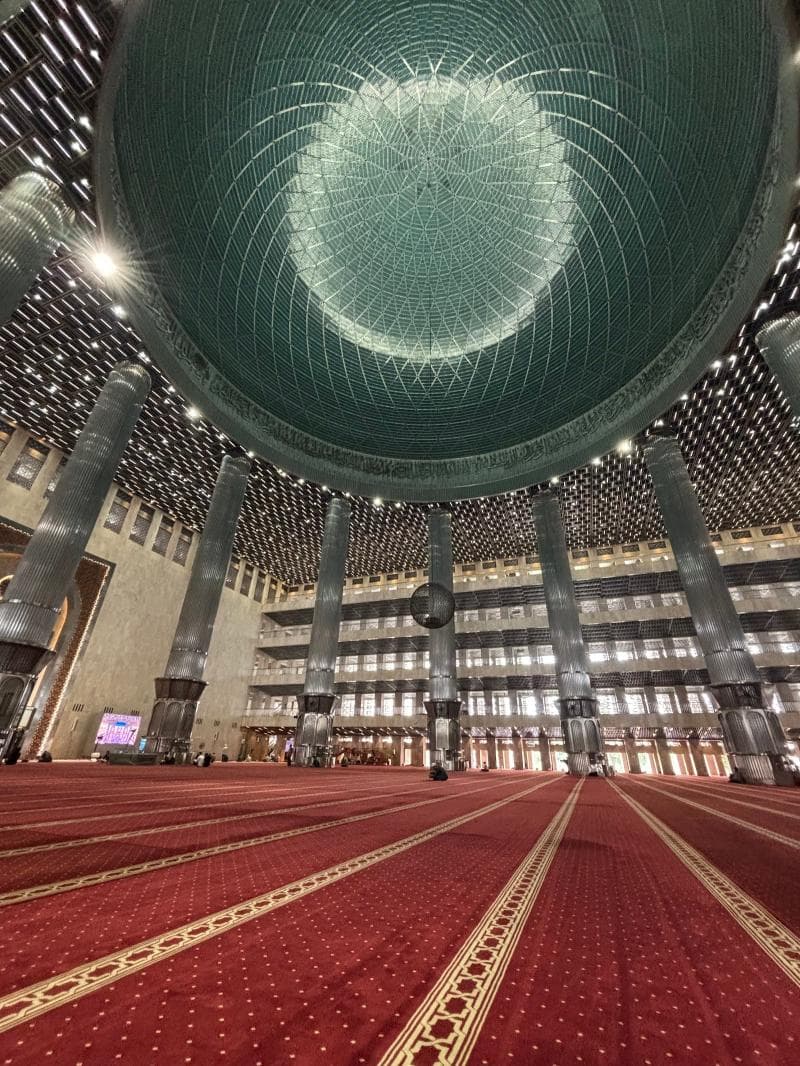
Explore Istiqlal Mosque in Jakarta, Indonesia – Southeast Asia's largest mosque, a beacon of independence and religious tolerance with unique symbolism.
Overview
The Istiqlal Mosque, located in the bustling heart of Jakarta, Indonesia, stands as a monumental symbol of the nation's independence and religious harmony. Its name, 'Istiqlal,' directly translates from Arabic to 'independence,' serving as a powerful reminder of Indonesia's hard-won freedom. As the largest mosque in Southeast Asia, it is a truly imposing structure, capable of accommodating an estimated 120,000 to 200,000 worshippers at once, making it one of the world's largest mosques by capacity. Its modern, yet minimalist, architectural style features expansive marble surfaces and a striking design that sets it apart, contributing significantly to Jakarta's cityscape.
History & Cultural Background
The vision for a grand national mosque arose shortly after Indonesia declared its independence in 1945. The idea, championed by Muslim leader KH Wahid Hasyim and supported by then-Minister for Religious Affairs Cokroaminoto, gained the full backing of Indonesia's first President, Sukarno. Sukarno personally supervised the ambitious project, which saw its cornerstone laid in 1961. What makes its origin story particularly compelling is the selection of Frederich Silaban, a Christian architect from North Sumatra, as the winner of the 1955 design competition. This choice, strongly supported by Sukarno, underscored the young nation's commitment to religious tolerance and unity, values enshrined in the state ideology of Pancasila. After 17 years of construction, the mosque was officially inaugurated on February 22, 1978, by President Suharto, marking a significant chapter in modern Indonesian history and symbolizing gratitude for the nation's freedom.
What Makes It Special
The Istiqlal Mosque is not merely a place of worship; it is an architectural masterpiece steeped in national and religious symbolism. Its design, characterized by modern formalism, incorporates significant numerical meanings. The grand central dome, with a diameter of 45 meters, intentionally references the year 1945, when Indonesia declared its independence. The mosque features five levels, symbolizing the Five Pillars of Islam, the five daily prayers, and the five principles of Pancasila. The main prayer hall is supported by 12 round columns, a number often associated with the Prophet Muhammad's birthday. Furthermore, the mosque boasts seven entrance gates, each named after one of the 99 Names of Allah, and conceptually representing the seven heavens of Islamic cosmology. Perhaps its most profound feature is its deliberate placement directly across from the Jakarta Cathedral. This physical proximity serves as a powerful, enduring testament to Indonesia's commitment to religious pluralism and interfaith dialogue.
Stories, Fun Facts & Local Details
The story of a Christian architect designing Indonesia's national mosque is often highlighted as a prime example of the nation's inclusive spirit. This spirit is further exemplified during major religious holidays like Eid al-Fitr and Christmas, when the Istiqlal Mosque and Jakarta Cathedral have been known to share parking facilities, symbolizing a peaceful coexistence that many global leaders, including former US President Barack Obama, have praised. The mosque serves as the primary venue for Islamic celebrations and prayers broadcast across Indonesia. Inside the main prayer hall, intricate Arabic calligraphy beautifully spells out the names of Allah and Prophet Muhammad, enhancing the spiritual ambiance. Beyond its spiritual functions, the mosque actively serves as a social and cultural center, hosting various lectures, seminars, and exhibitions. A modern touch has been added through recent renovations, including smart lighting with Dynamic White technology for the dome, which can change colors and mimic moonlight, all controlled via a smartphone app. On the southern side near the minaret, a large bedug (traditional wooden drum) is used in conjunction with the call to prayer, reflecting local Islamic traditions.
Visitor Perspective
The Istiqlal Mosque warmly welcomes visitors of all faiths, offering a unique opportunity to experience a significant cultural and religious landmark. Non-Muslim visitors are encouraged to tour the mosque outside of prayer times to ensure a respectful and peaceful experience. A modest dress code is required: women should cover their heads, and all visitors must remove their shoes before entering the prayer hall, with cloaks often provided for those needing them. Free guided tours are available, providing invaluable insights into the mosque's rich history, architectural symbolism, and cultural significance, lasting approximately 45 minutes. The serene atmosphere within its vast marble halls offers a striking contrast to Jakarta's usual urban hustle. Its central location, adjacent to other major attractions like Merdeka Square, the National Monument (Monas), and the Jakarta Cathedral, makes it a convenient and compelling stop for any traveler exploring the city.
Coordinates: 106.83101, -6.17032
View on Google Maps💬 How Travelers Describe This Place
Based on community votes
Unique
540Must See
470Beautiful
410Photogenic
147Interesting
114
Traveler Stories
Discover memorable experiences shared by travelers who have visited this place.
No traveler stories yet.
Be the first traveler to share what made this place memorable.
Things to see at Istiqlal Mosque



Tour
By
Spot
Discover amazing places around the world. Your journey starts here.
Explore
© 2026 TourBySpot. All rights reserved.