Grand Dome
Jakarta, Indonesia
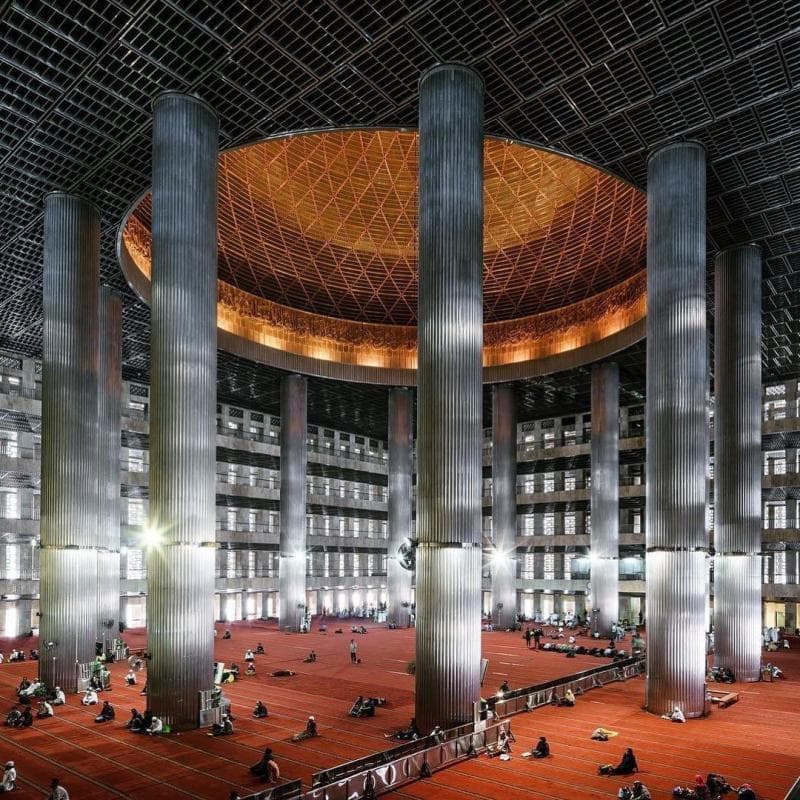
Discover the Grand Dome of Istiqlal Mosque in Jakarta, Indonesia – a symbol of independence and religious harmony, featuring impressive architecture.
Overview
Deep within the sprawling urban landscape of Jakarta, Indonesia, stands the magnificent Istiqlal Mosque, a powerful emblem of national independence and religious harmony. As the largest mosque in Southeast Asia, and among the largest in the world, it offers not just a place of worship but a profound cultural experience. At its heart lies the Grand Dome, a central architectural marvel that immediately draws the eye and spirit, serving as a focal point for the mosque's vast interior and its deep symbolic meanings. The Grand Dome presides over the main prayer hall, a space designed to accommodate tens of thousands of worshippers, reflecting Indonesia's significant Muslim population. Its modern design, coupled with significant historical and cultural context, makes it a truly unique and awe-inspiring destination for any traveler.
History & Cultural Background
The name 'Istiqlal' itself, meaning 'independence' in Arabic, encapsulates the mosque's foundational purpose: to commemorate Indonesia's hard-won freedom from colonial rule. The idea for a grand national mosque emerged shortly after Indonesia's independence in 1945, championed by figures like KH Wahid Hasyim, the first Minister for Religious Affairs, and Anwar Cokroaminoto. The foundation stone was laid in 1961 by President Sukarno, who personally oversaw the ambitious project. Remarkably, the mosque was designed by Frederich Silaban, a Christian architect from North Sumatra, a deliberate choice that powerfully underscores Indonesia's commitment to religious tolerance and unity in diversity. After 17 years of construction, the mosque was finally inaugurated in 1978, a testament to enduring national vision.
What Makes It Special
The Grand Dome of Istiqlal Mosque is not merely a structural element; it is imbued with layers of symbolism. Its impressive 45-meter diameter specifically commemorates the year of Indonesia's Proclamation of Independence, 1945. This vast dome, often described as spherical, covers the expansive main prayer hall and is supported by twelve imposing round columns. These twelve columns carry their own significance, often interpreted to represent the 12th day of Prophet Muhammad's birth, or the twelve months of the Islamic calendar. The interior beneath the dome, while modern and minimalistic in its ornamentation, achieves an effect of airy elegance through the extensive use of marble, stainless steel, and aluminum, allowing the sheer scale and architectural form to speak volumes. Four tiers of balconies encircle the main hall, expanding the capacity for congregational prayers and offering different perspectives of this grand space. At its apex, the Grand Dome is crowned with a stainless steel ornamental pinnacle featuring the crescent and star, universal symbols of Islam.
Stories, Fun Facts & Local Details
One of the most compelling aspects of the Istiqlal Mosque, and by extension its Grand Dome, is its physical proximity to the Jakarta Cathedral. Standing directly opposite each other, these two significant religious structures are a tangible representation of Indonesia's deeply ingrained philosophy of religious harmony and tolerance. This deliberate placement, championed by President Sukarno, was intended to showcase to the world that people of different faiths can coexist peacefully. In recent years, a 'Tunnel of Friendship' (Terowongan Silaturahmi) was constructed to connect the mosque and the cathedral, further solidifying this message of interfaith dialogue and unity. The mosque is not only a place for daily prayers but also a vibrant hub for major Islamic events and national celebrations, such as Eid prayers, attracting worshippers from across the archipelago. Its design was considered quite modern for its time, and some initially felt it deviated from traditional Indonesian Islamic architecture, yet it has since become an iconic national symbol. Distinguished visitors, including former President Barack Obama, have toured the mosque, highlighting its global recognition as a symbol of peace and inclusiveness.
Visitor Perspective
Visiting the Grand Dome within Istiqlal Mosque offers a deeply immersive experience. As you step into the main prayer hall, the sheer scale of the dome overhead creates a sense of immense space and tranquility. Non-Muslim visitors are warmly welcomed, often accompanied by guides who can provide fascinating insights into the mosque's history, architecture, and spiritual significance. It's important to remember that this is an active place of worship, so respectful attire, covering shoulders and knees, is required, and shoes must be removed before entering the prayer areas. Women are also encouraged to wear a headscarf; covers are readily available if needed. The best times to visit for a quieter experience are outside of peak prayer times. Standing beneath the majestic Grand Dome, you not only witness an architectural feat but also feel the pulse of Indonesia's national identity and its dedication to faith and unity. The quiet grandeur of the space invites contemplation, making it a memorable stop on any journey through Jakarta. You can capture photographs within designated areas, preserving memories of this architectural and cultural landmark.
Coordinates: 106.83101, -6.17032
View on Google Maps💬 How Travelers Describe This Place
Based on community votes
Interesting
950Must See
929Unique
858Photogenic
287Beautiful
275
Traveler Stories
Discover memorable experiences shared by travelers who have visited this place.
No traveler stories yet.
Be the first traveler to share what made this place memorable.

Tour
By
Spot
Discover amazing places around the world. Your journey starts here.
Explore
© 2026 TourBySpot. All rights reserved.