Main Prayer Hall
Jakarta, Indonesia
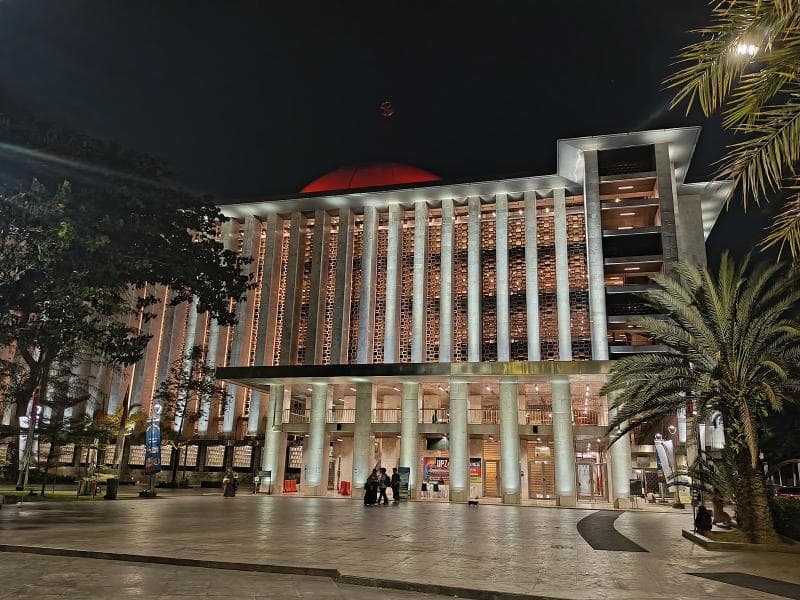
Explore the grandeur of the Main Prayer Hall inside Istiqlal Mosque, Jakarta, Indonesia's largest mosque, a symbol of independence and interfaith harmony.
Overview
The Main Prayer Hall, nestled within the magnificent Istiqlal Mosque in Jakarta, Indonesia, stands as the spiritual heart of Southeast Asia's largest mosque. This grand structure is a profound symbol of Indonesian independence, its name 'Istiqlal' stemming from the Arabic word for 'independence.' As you approach, the sheer scale of the mosque, capable of accommodating a vast congregation, immediately captures attention. The Main Prayer Hall itself is a breathtaking space designed to foster deep reflection and communal prayer, reflecting both architectural innovation and spiritual devotion in the bustling capital city.
History & Cultural Background
The genesis of Istiqlal Mosque traces back to Indonesia's post-independence era, conceived as a national monument of gratitude and a proud symbol for the nation's Muslim majority. Construction began on August 24, 1961, culminating in its official inauguration on February 22, 1978, after 17 years of dedicated effort. A unique and powerful cultural statement was the selection of Frederich Silaban, a Christian architect from North Sumatra, to design this national mosque. This decision, alongside the mosque's strategic placement directly opposite the Jakarta Cathedral, deliberately embodies Indonesia's cherished principle of religious tolerance and peaceful coexistence. The mosque's design is imbued with rich symbolism: the 45-meter diameter of the main dome signifies 1945, the year of Indonesia's independence. The twelve main columns supporting this dome commemorate the widely accepted birth month of Prophet Muhammad. Furthermore, the five levels—the main floor and four balconies—represent the Five Pillars of Islam and the Pancasila, Indonesia's foundational state philosophy.
What Makes It Special
Entering the Main Prayer Hall, you are immediately struck by its impressive expanse and modernist aesthetic. The rectangular hall is crowned by a colossal 45-meter diameter central spherical dome, a remarkable feat of engineering. This immense dome is gracefully supported by twelve massive, gleaming stainless steel columns, which create an open and airy atmosphere. The interior's minimalist design, distinct from many traditional mosques, emphasizes clean lines and a contemporary feel, allowing the scale and materials to speak for themselves. Much of the mosque, including the smooth floors and walls of the prayer hall, is adorned with high-quality marble sourced from East Java, lending an understated elegance. Four tiers of balconies encircle the main prayer area, offering additional capacity and unique vantage points of the activity below. The mihrab, a finely crafted niche indicating the direction of Mecca, is intricately decorated with beautiful Arabic calligraphy, spelling out the revered names of Allah and Prophet Muhammad.
Stories, Fun Facts & Local Details
The Istiqlal Mosque is more than just a place of worship; it is a repository of stories and cultural anecdotes that highlight its unique position. The fact that a Christian architect, Frederich Silaban, designed this paramount Islamic edifice remains a compelling tale, often shared as a testament to Indonesia's commitment to interfaith harmony. The mosque's placement directly opposite the Jakarta Cathedral was a deliberate decision by Indonesia's first President Sukarno, meant to visually represent the nation's ethos of unity. A heartwarming manifestation of this harmony is the reciprocal sharing of parking facilities: the mosque's grounds are made available to Cathedral congregants during major Christian holidays, and similarly, the Cathedral parking is offered during large Islamic celebrations. This profound example of mutual respect deeply impressed figures like former US President Barack Obama, who lauded Istiqlal as a 'symbol of religious tolerance' during his visit. The mosque also boasts seven distinct entrances, each named after one of the 99 Names of Allah, symbolically representing the Seven Heavens of Islam.
Visitor Perspective
Istiqlal Mosque extends a warm invitation to visitors from all walks of life, encouraging exploration and cultural exchange within a respectful environment. While access to the Main Prayer Hall is generally reserved for Muslim worshippers, non-Muslim guests can still experience its grandeur by observing from the upper balconies, offering a splendid perspective of the expansive space and the rituals of prayer. To enrich your visit, complimentary guided tours are frequently available, providing insightful narratives on the mosque's history, architectural nuances, and its significant role in Indonesian society. Visitors are kindly requested to dress modestly, ensuring shoulders and knees are covered, and wraps are often provided at the entrance if needed. It is also customary to remove footwear before entering prayer areas, with clear provisions for shoe storage. For a more serene and less crowded experience, consider visiting outside of peak prayer times and major religious holidays. A visit to the Main Prayer Hall and the wider Istiqlal Mosque complex offers a powerful journey into Indonesian culture, spirituality, and national identity.
Coordinates: 106.8309, -6.1704
View on Google Maps💬 How Travelers Describe This Place
Based on community votes
Photogenic
457Interesting
252Beautiful
147Must See
114Unique
19
Traveler Stories
Discover memorable experiences shared by travelers who have visited this place.
No traveler stories yet.
Be the first traveler to share what made this place memorable.

Tour
By
Spot
Discover amazing places around the world. Your journey starts here.
Explore
© 2026 TourBySpot. All rights reserved.