Minaret
Jakarta, Indonesia
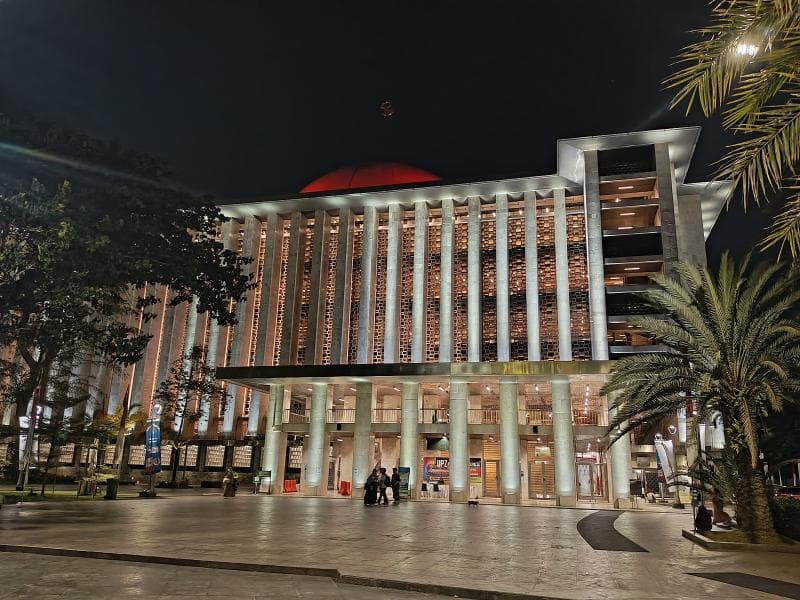
Explore the unique Minaret of Istiqlal Mosque in Jakarta, Indonesia. Discover its symbolic height, modern design, and profound historical context.
Overview
Soaring into the Jakarta sky, the Minaret of Istiqlal Mosque stands as a distinctive symbol of faith and national identity in Indonesia. Unlike many grand mosques worldwide that boast multiple minarets, Istiqlal's striking architecture features a singular, towering minaret, emphasizing the divine oneness of God. This iconic structure is an integral part of Istiqlal Mosque, the largest mosque in Southeast Asia, centrally located in Jakarta, Indonesia. The mosque itself, whose name 'Istiqlal' means 'independence' in Arabic, commemorates Indonesia's hard-won freedom, making its minaret a beacon of both spiritual devotion and national pride.
The Minaret's modern, minimalist design, consistent with the mosque's overall aesthetic, commands attention with its height and elegant simplicity. Standing adjacent to the mosque's main structure, it is a focal point within the sprawling complex, which spans over nine hectares. Its commanding presence is not just visual; it carries profound symbolic meanings, deeply intertwined with Islamic teachings and Indonesian history. Visitors often find themselves gazing upward, captivated by its stature and the stories it silently tells about Indonesia's journey.
History & Cultural Background
The story of the Istiqlal Mosque's Minaret is intrinsically linked to the mosque's broader history, conceived as a monument to Indonesian independence. The foundation stone for the mosque was laid in 1961 by President Sukarno, with its inauguration finally taking place in 1978. What makes its creation particularly remarkable is that the winning design came from a Christian architect, Frederich Silaban, a testament to Indonesia's commitment to religious tolerance and harmony, particularly highlighted by the mosque's deliberate placement directly opposite the Jakarta Cathedral.
Silaban's vision for Istiqlal, including its singular minaret, was a departure from traditional mosque architecture, embracing a modern formalism. This choice was not merely aesthetic but philosophical, aiming to reflect a new, independent Indonesia that could blend Islamic values with contemporary design. The construction period of 17 years was a national effort, culminating in a structure that embodies the nation's spiritual aspirations and its diverse cultural fabric.
What Makes It Special
The Minaret of Istiqlal Mosque is distinguished by its singularity and impressive height, symbolizing the oneness of Allah. It stands approximately 96.66 meters tall, a number that has been interpreted to symbolize the 99 Asmaul Husna (Names of Allah). Earlier sources also mentioned its height as 66.66 meters, incorrectly symbolizing the 6,666 verses of the Quran, a detail that adds to its intriguing narrative. Perched atop the minaret is a 30-meter high stainless steel pinnacle, a deliberate design choice to symbolize the 30 juz' (parts) of the Quran.
Its location in the southern corner of the mosque complex, connected by arcades to the main building, allows it to be a prominent landmark. The minaret's design contrasts sharply with the multiple minarets often seen in Middle Eastern and other Asian mosques, further cementing its unique character. Its modern aesthetic, clean lines, and use of materials like stainless steel and marble contribute to its grandeur and harmonious integration with the tropical climate.
Stories, Fun Facts & Local Details
Perhaps one of the most compelling stories surrounding the Istiqlal Minaret, and indeed the entire mosque, is that its architect, Frederich Silaban, was a Christian. This fact is often highlighted as a powerful emblem of religious tolerance in Indonesia, a nation known for its pluralistic society. The mosque's direct proximity to the Jakarta Cathedral further reinforces this message, with both religious institutions occasionally sharing parking facilities during major celebrations, a gesture of mutual respect that has garnered international recognition.
The intricate numerical symbolism embedded in the minaret's dimensions—from its disputed height representing Quranic verses to the pinnacle's height reflecting the number of juz'—offers a fascinating layer of cultural and religious depth. These details transform the minaret from a mere architectural element into a rich tapestry of meaning, inviting contemplation from both believers and curious travelers alike. The presence of a large traditional drum, known as a 'bedug,' near the minaret on the southern side, further connects the modern structure to ancient Indonesian Islamic traditions of calling to prayer.
Visitor Perspective
For visitors to Istiqlal Mosque, the minaret is a majestic sight, visible from various points within the mosque complex and from nearby landmarks like the National Monument (Monas). While direct ascent to the minaret may not always be available, its towering presence can be appreciated from the main courtyard, offering excellent photographic opportunities. Non-Muslim visitors are welcomed at the mosque and are often accompanied by knowledgeable guides who can explain the minaret's significance and the mosque's rich history.
During guided tours, insights are provided into the minaret's architectural nuances and the spiritual journey it represents. The experience of walking through the vast complex and observing the minaret against the Jakarta skyline is both humbling and inspiring. It encourages a moment of reflection on the mosque's role as a symbol of independence, unity, and interfaith harmony in the world's most populous Muslim-majority nation. Modest dress is required for all visitors, and removing shoes before entering the prayer areas is customary.
Coordinates: 106.83101, -6.17032
View on Google Maps💬 How Travelers Describe This Place
Based on community votes
Photogenic
836Must See
287Interesting
255Beautiful
231Unique
86
Traveler Stories
Discover memorable experiences shared by travelers who have visited this place.
No traveler stories yet.
Be the first traveler to share what made this place memorable.

Tour
By
Spot
Discover amazing places around the world. Your journey starts here.
Explore
© 2026 TourBySpot. All rights reserved.