Conference Hall
Jakarta, Indonesia
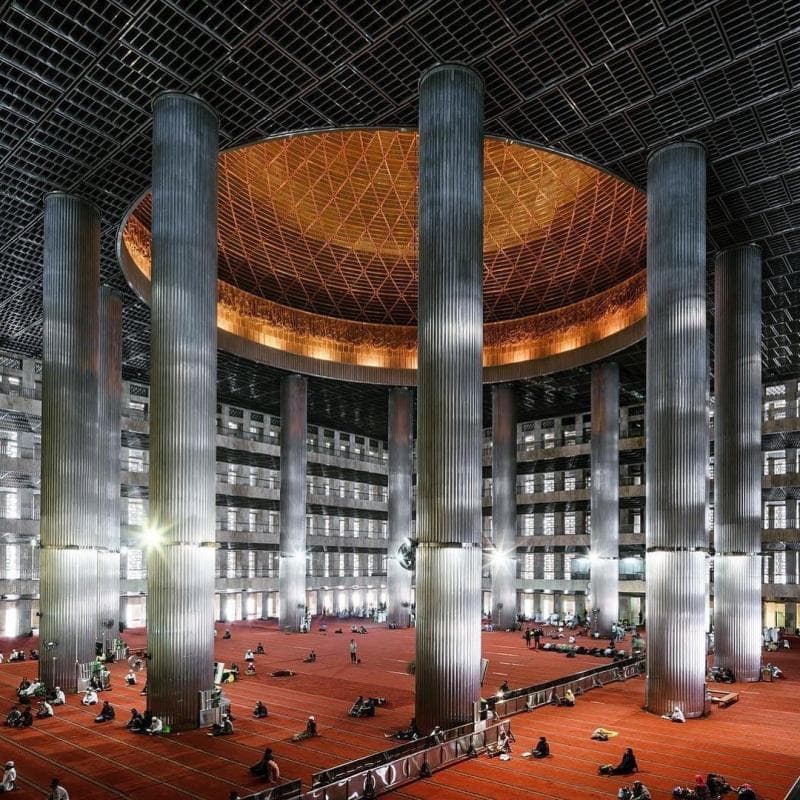
Explore the Conference Hall at Istiqlal Mosque, Jakarta, Indonesia. Discover its role in fostering interfaith dialogue, education, and community engagement.
Overview
Nestled within the monumental Istiqlal Mosque in Jakarta, Indonesia, the Conference Hall, or more broadly, its function and meeting facilities, serves as a vital hub for intellectual discourse and interfaith understanding. While perhaps not as visually striking as the mosque's grand prayer hall, this space embodies the Istiqlal's profound commitment beyond worship: to foster dialogue, education, and community engagement. Here, the essence of Indonesia's national philosophy of Pancasila—unity in diversity—is actively lived out. It is a place where ideas converge, discussions unfold, and bridges are built between various communities and faiths, reflecting the mosque's broader role as a symbol of religious harmony in a nation celebrated for its pluralism.
The Istiqlal Mosque itself is the largest mosque in Southeast Asia, named 'Istiqlal,' an Arabic word meaning 'independence,' commemorating Indonesia's hard-won freedom. Its architects envisioned it not merely as a place of prayer, but as a center for social and cultural activities, an ambition largely fulfilled through its versatile function spaces. These areas host a variety of events, from international conferences and seminars to local educational programs and cultural exhibitions. The Conference Hall, therefore, is an integral part of the mosque's identity, providing a dedicated environment for these crucial interactions, making it a dynamic space where the mosque's spiritual and social missions intertwine.
History & Cultural Background
The vision for Istiqlal Mosque, including its facilities for broader community engagement, dates back to the post-independence era. Following Indonesia's independence in 1945, there was a strong desire to build a national mosque that would symbolize the nation's gratitude for its freedom and serve as a focal point for its predominantly Muslim population. Inaugurated in 1978 after 17 years of construction, the mosque was designed by Friedrich Silaban, a Protestant Christian architect, a testament to Indonesia's founding principles of religious tolerance.
From its inception, the mosque was intended to be more than just a place of worship. It was conceived as a national project bringing together various elements of the nation, reflecting the diverse fabric of Indonesian society. The inclusion of 'function hall' facilities was a deliberate part of this design, recognizing the need for spaces where the community could gather for purposes beyond prayer, such as education, social welfare, and interfaith dialogue. This aligns with the mosque's strategic location directly opposite the Jakarta Cathedral, intentionally placed by President Sukarno to symbolize and promote religious harmony and tolerance, which are cornerstones of the Indonesian national philosophy, Pancasila.
What Makes It Special
What makes the Conference Hall of Istiqlal Mosque truly special is its embodiment of the mosque's unique mission as a beacon of interfaith dialogue and moderation. Unlike typical conference venues, this hall operates within a sacred space dedicated to promoting peace and understanding. It regularly hosts significant events such as interfaith discussions, seminars, and cultural exchanges, bringing together leaders and communities from various religious backgrounds.
For instance, an international conference involving 'world grand imams' was planned for September 2026, highlighting its role on a global stage in fostering religious diplomacy. The presence of an 'international corner' equipped with a digital library allowing access to academic journals from universities worldwide further underscores its commitment to intellectual exchange and global engagement. These initiatives transform a mere meeting space into a dynamic forum where crucial conversations about faith, society, and global issues are held, positioning Istiqlal Mosque not only as a spiritual landmark but also as an intellectual and cultural one. The simplicity of the internal architecture, focusing on functionality, allows the richness of the discussions and interactions to take center stage.
Stories, Fun Facts & Local Details
While specific 'fun facts' about the Conference Hall itself are scarce, its story is inextricably linked to the broader narrative of Istiqlal Mosque's commitment to openness and dialogue. One compelling detail is the mosque's unique practice of providing parking space for worshippers of the nearby Jakarta Cathedral during major Christian celebrations like Christmas, illustrating a profound act of neighborly goodwill and interfaith cooperation.
The Conference Hall, alongside other functional areas, facilitates the mosque's engagement in similar acts of community support and dialogue. The mosque's ground floor, where these facilities are located, also houses offices and a madrasah, signifying a holistic approach to serving the community beyond prayer. It’s a testament to the idea that a place of worship can also be a vibrant civic space, actively contributing to the social fabric and fostering mutual respect. The very act of hosting an international conference with various religious leaders within its walls amplifies this message, demonstrating that meaningful dialogue thrives when spaces are intentionally created for it.
Visitor Perspective
For a curious traveler, visiting the Conference Hall or any of the Istiqlal Mosque's function areas offers a unique glimpse into the mosque's multifaceted role in Indonesian society. While the main prayer hall inspires awe with its sheer scale and architectural symbolism, these ancillary spaces reveal the mosque's living, breathing function as a community and intellectual center. Visitors can witness, or even participate in, events ranging from educational seminars to cultural exhibitions, provided they align with the mosque's schedule.
Even if no event is underway, observing the well-maintained facilities used for such diverse purposes provides a deeper understanding of Istiqlal's vision. Non-Muslim visitors are welcomed, often with guided tours that explain the mosque's history, architectural philosophy, and its significant role in national identity and interfaith relations. This perspective transcends a purely architectural appreciation, offering insight into how a major religious institution actively promotes peace, education, and social cohesion in one of the world's most diverse nations. It's an opportunity to experience firsthand the 'independence' (Istiqlal) not just of a nation, but of a spirit of inclusivity and understanding.
Coordinates: 106.83101, -6.17032
View on Google Maps💬 How Travelers Describe This Place
Based on community votes
Beautiful
836Unique
797Photogenic
396Interesting
286Must See
255
Traveler Stories
Discover memorable experiences shared by travelers who have visited this place.
No traveler stories yet.
Be the first traveler to share what made this place memorable.

Tour
By
Spot
Discover amazing places around the world. Your journey starts here.
Explore
© 2026 TourBySpot. All rights reserved.