Intramuros
Manila, Philippines
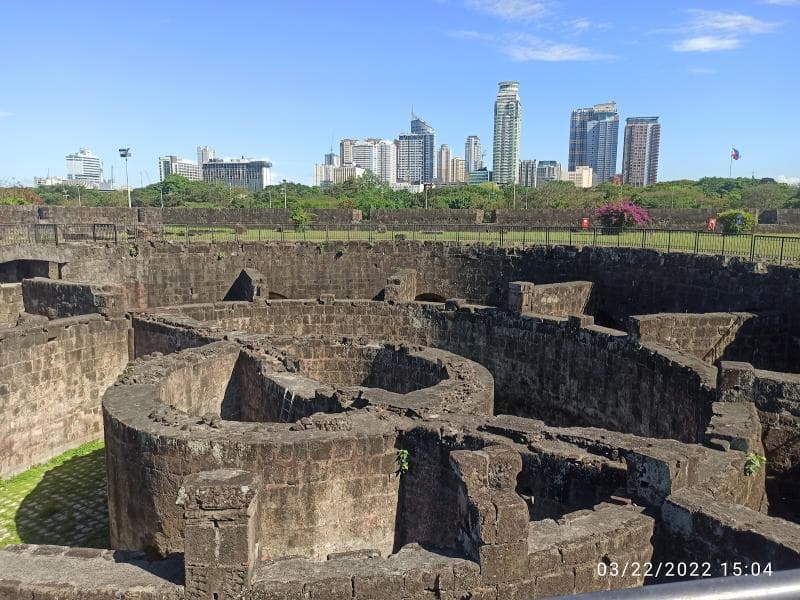
Explore Intramuros, the historic Walled City in Manila, Philippines. Uncover centuries of Spanish colonial history, iconic landmarks, and cultural stories.
Overview
Intramuros, often referred to as the 'Walled City,' is a historic district nestled within the bustling city of Manila, the capital of the Philippines. Its name, derived from the Spanish phrase 'intra muros,' literally means 'within the walls,' perfectly encapsulating its defining characteristic: a 0.67-square-kilometer area entirely surrounded by formidable stone fortifications. This district served as the epicenter of Spanish colonial power in the Philippines for over three centuries, functioning as the primary seat of government, religious authority, and educational institutions. Administered by the Intramuros Administration, an agency under the Department of Tourism, the area is meticulously preserved to reflect its Philippine-Spanish architectural heritage from the 16th to 19th centuries, offering a profound journey into the nation's past.
History & Cultural Background
The story of Intramuros began in 1571 with its founding by Spanish Governor-General Miguel López de Legazpi, following the Spanish conquest of Manila. The walls themselves, constructed between the 16th and 18th centuries, were an imposing defense mechanism, up to 8 meters high and spanning approximately 3 to 5 kilometers, complete with bastions and moats, designed to protect the ruling elite from both foreign invaders and local uprisings. For over 300 years, Intramuros was synonymous with Manila, housing the governor-general, the Real Audiencia, numerous churches, monasteries, and schools, making it the political, military, religious, and educational heart of the Spanish East Indies.
However, the city's rich history also bears the scars of conflict. Intramuros suffered immense destruction during the Battle of Manila in 1945 towards the end of World War II, when it was almost entirely flattened. Remarkably, only the San Agustin Church, the oldest stone church in the Philippines, survived largely intact. Post-war reconstruction efforts have meticulously aimed to restore its historic character, allowing visitors today to walk through carefully reconstructed streets and buildings that blend original ruins with recreated structures. In recognition of its profound significance, Intramuros was designated a National Historical Landmark in 1951, and its fortifications were declared National Cultural Treasures.
What Makes It Special
Intramuros stands as a unique 'living museum,' providing an unparalleled connection to the pivotal events and influential figures that shaped the Philippines. Its special charm lies in the harmonious blend of old-world allure and the vibrant pulse of contemporary Manila outside its walls. As you wander through its cobblestone streets, you'll encounter a captivating array of well-preserved historical sites, each telling a piece of the nation's story.
Key landmarks like Fort Santiago, a citadel steeped in history, the majestic Manila Cathedral, and the UNESCO World Heritage-listed San Agustin Church, are testaments to the Spanish colonial era. The district's architectural integrity is carefully maintained under the 'Intramuros Register of Styles,' a national law ensuring that new constructions adhere to the Philippine-Spanish architectural style of the 16th to 19th centuries, making it a cohesive historical experience. This dedication to heritage creates an immersive environment unlike any other in the Philippines.
Stories, Fun Facts & Local Details
Intramuros is rich with fascinating tales and cultural nuances. The resilient San Agustin Church, completed in 1607, is not only the oldest stone church in the Philippines but also holds the distinction of being the sole structure within the Walled City to have survived the devastating Battle of Manila in 1945 without being completely destroyed. Its Baroque facade and intricate interior offer a glimpse into the artistry of the Spanish era. Fort Santiago, a strategic fortress at the mouth of the Pasig River, served as a military headquarters and later as a prison for many Filipino revolutionaries, most notably Dr. Jose Rizal, the national hero, before his execution.
Before the Spanish arrived, the area where Intramuros now stands was the ancient settlement of Maynila, ruled by Rajah Sulayman. A curious historical detail is that the moats surrounding the city walls were drained during American rule and converted into a golf course. Exploring Intramuros offers charming ways to connect with its past, such as riding a 'kalesa' (horse-drawn carriage) along its cobblestone streets or renting a bamboo bicycle, providing a unique perspective on the district's storied pathways. The district's culinary scene also reflects its diverse history, with dishes showcasing a delightful fusion of Spanish, Chinese, and indigenous Filipino influences.
Visitor Perspective
For the curious traveler, Intramuros offers an enriching and accessible experience. It is highly recommended to explore the district on foot, by renting a bicycle (including unique bamboo bikes), or by taking a traditional 'kalesa' ride, allowing you to truly absorb the atmosphere of its compact, walkable area. Many guided tours are available, offering deeper insights into the history, culture, and hidden gems of the Walled City.
Must-visit attractions include the solemn Fort Santiago, with its Rizal Shrine, and the grand San Agustin Church and Museum. Other sites like Casa Manila, a recreated Spanish colonial house, and various museums such as Museo de Intramuros, provide further immersion into the lifestyle and artifacts of bygone eras. For a more comfortable visit, consider exploring during weekdays to avoid larger crowds, and always wear comfortable walking shoes to navigate the historic grounds. Easily reachable from Ninoy Aquino International Airport, Intramuros is a destination that promises a meaningful discovery of Philippine heritage.
Coordinates: 120.97356, 14.59147
View on Google Maps💬 How Travelers Describe This Place
Based on community votes
Interesting
934Beautiful
879Unique
741Must See
396Photogenic
276
Traveler Stories
Discover memorable experiences shared by travelers who have visited this place.
No traveler stories yet.
Be the first traveler to share what made this place memorable.
Things to see at Intramuros



Tour
By
Spot
Discover amazing places around the world. Your journey starts here.
Explore
© 2026 TourBySpot. All rights reserved.