Baluarte De San Diego
Manila, Philippines
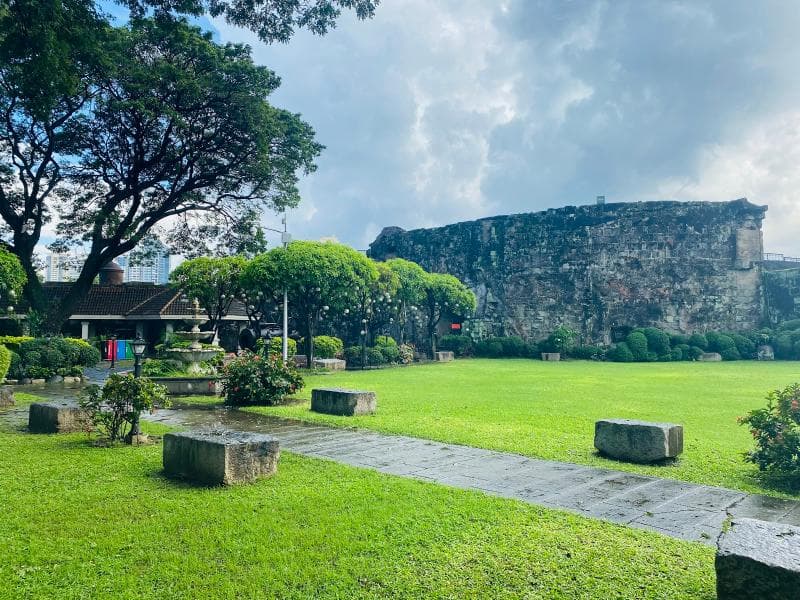
Explore Baluarte de San Diego, an ace-of-spades shaped bastion and historical gem within Intramuros, Manila, Philippines. Discover its rich history and unique architecture.
Overview
Nestled within the historic walls of Intramuros, Manila, the Baluarte de San Diego stands as a captivating testament to centuries of Philippine history. This uniquely spade-shaped bastion, also known as the Baluarte de San Diego Complex, is one of the oldest stone fortifications in the ‘Walled City.’ It comprises not only the formidable bastion itself but also the intriguing ruins of the Torre de Nuestra Señora de Guia, a three-tiered circular stone fort. Today, it serves as a serene archaeological park, inviting curious travelers to step back in time and explore its rich past amidst beautifully landscaped gardens.
History & Cultural Background
The origins of Baluarte de San Diego trace back to the late 16th century. Construction began in 1586-1587 under the direction of the Jesuit priest and architect, Antonio Sedeño, who initially designed a circular fort called Nuestra Señora de Guia to defend Manila's southern bayside boundary. This early fort was later integrated into the city's expanding defensive walls in 1593. Over time, the structure underwent significant alterations, culminating in the distinct ace-of-spades shape visible today, which was completed between 1653 and 1663.
The baluarte's strategic location at the southwestern corner of Intramuros made it crucial for defending Spanish Manila from attacks approaching from Manila Bay. It valiantly withstood numerous challenges, including being breached by British forces with cannon fire in 1762, after which it was restored. However, an earthquake in 1863 caused further damage, leading to its abandonment. During the American occupation, the original circular fort was covered with earth, a burial that ironically shielded it from the extensive destruction of the Battle of Manila in 1945.
Extensive archaeological excavations were carried out from 1979 to 1982 by the Intramuros Administration, revealing the complex's multiple layers and the evolution of Spanish military engineering. The site was declared a National Historical Monument in 1951 and later recognized as a National Cultural Treasure in 2014, underscoring its profound historical and cultural significance to the Philippines.
What Makes It Special
The Baluarte de San Diego is remarkable for its distinctive 'ace-of-spades' design, a feature that optimized its defensive capabilities by allowing for broader observation and artillery positioning. Its unique structure is essentially a 'fort within a fort,' encompassing the earlier circular tower of Nuestra Señora de Guia within the larger bastion. This architectural evolution tells a compelling story of military adaptation and resilience.
Beyond its military prowess, the baluarte offers a tangible link to the past. Visitors can explore the stone ramparts and the interior of the circular tower, gaining insight into the daily life and strategic thinking of colonial-era defenders. Today, the surrounding San Diego Gardens provide a lush, tranquil oasis, a stark contrast to its original purpose. These manicured grounds, adorned with fountains and monuments, offer a peaceful retreat from the bustling city and serve as a popular venue for special occasions.
Stories, Fun Facts & Local Details
One fascinating detail is that the Baluarte de San Diego once housed a foundry during the 18th century, highlighting its role not just in defense but also in the logistical support of the Spanish colonial regime. The archaeological excavations from 1979 to 1982 were crucial in unearthing the various concentric layers of the bastion, which had been buried over time, providing valuable clues about its construction phases and the military techniques of the era.
The surrounding San Diego Gardens have adapted over time. While once a military installation, they are now a favored spot for weddings and other events, offering a picturesque backdrop of ancient stone ruins. It's also a quirky local detail that visitors might occasionally see a sign warning about 'flying golf balls,' as the baluarte peacefully coexists with a nearby golf course.
Visitor Perspective
Visiting Baluarte de San Diego offers a contemplative journey through time. The site is open daily, typically from 8 AM to 5 PM, with the last entry at 4 PM. There is a modest entrance fee, with concessions available for students, senior citizens, and persons with disabilities.
Travelers often find that exploring the baluarte and its gardens can take about half an hour, making it a perfect component of a larger Intramuros tour. The site is ideal for those interested in history, architecture, and photography, offering numerous 'Instagram-worthy' spots amidst the ruins and greenery. Informational displays help visitors understand the fort's evolution and significance. To fully immerse yourself in the Intramuros experience, consider exploring the area on foot, by bamboo bicycle (bambike), or via a traditional horse-drawn carriage.
Coordinates: 120.976, 14.5854
View on Google Maps💬 How Travelers Describe This Place
Based on community votes
Photogenic
685Interesting
446Beautiful
152Unique
33Must See
16
Traveler Stories
Discover memorable experiences shared by travelers who have visited this place.
No traveler stories yet.
Be the first traveler to share what made this place memorable.

Tour
By
Spot
Discover amazing places around the world. Your journey starts here.
Explore
© 2026 TourBySpot. All rights reserved.