Hazrat Imam Complex
Tashkent, Uzbekistan
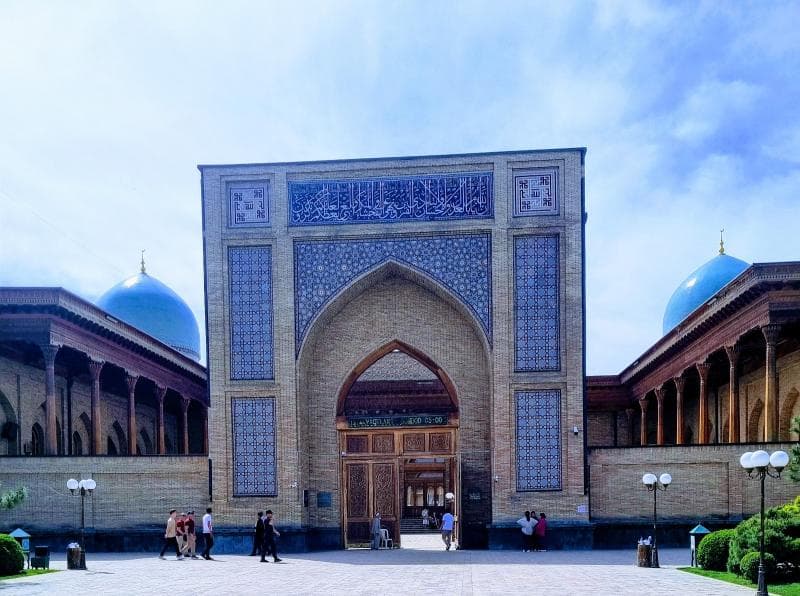
Explore Tashkent, Uzbekistan's Hazrat Imam Complex, home to ancient Islamic architecture and one of the world's oldest Qurans. Discover its history and spiritual significance.
Overview
Nestled in the heart of Tashkent's historic 'Old City', the Hazrat Imam Complex, often referred to as Khast-Imam, stands as a profound spiritual and architectural landmark in Uzbekistan. This sprawling ensemble encompasses a collection of mosques, madrasahs, and mausoleums, each telling a story of centuries of Islamic scholarship and culture. More than just a collection of buildings, it serves as the spiritual heart of the city, drawing pilgrims and curious travelers alike into its tranquil courtyards and sacred halls. The complex is deeply rooted in history, named after a revered 10th-century scholar, and continues to be a vibrant center for religious education and daily worship.
Spanning approximately two hectares, the Hazrat Imam Complex showcases an impressive blend of Islamic architectural styles dating predominantly from the 16th to the 19th centuries, though its origins trace back much further. It is a place where the echoes of ancient Central Asian traditions resonate alongside the ongoing rhythm of contemporary life.
History & Cultural Background
The complex is named in honor of Abu Bakr Muhammad Kaffal al-Shashi, known respectfully as Hazrat Imam, meaning 'Holy Imam'. Born in 904 in Shash (the ancient name for Tashkent), he was a highly esteemed scholar, an expert in the Quran and Hadiths, a poet, and a skilled artisan. His original mausoleum, built over his grave in the late 10th century, formed the sacred nucleus around which the entire complex gradually developed.
Over the centuries, various significant structures were added. The Baroqxon Madrasah and the current Qaffol Shoshi Mausoleum date back to the 16th century. Other key additions include the Tillashaykh Mosque and the Muyi Muborak Madrasah, both from the mid-19th century. Remarkably, the complex, including the mausoleum of Kaffal ash-Shashi and surrounding buildings, largely withstood the catastrophic 1966 Tashkent earthquake, preserving its authentic medieval architectural character in a city where much was rebuilt.
Even during the Soviet period, the Hazrat Imam Complex maintained its spiritual significance, becoming a central point for millions of Muslims across Soviet Central Asia. In 2007, a major reconstruction effort revitalized the complex, uniting previously separate buildings into a harmonious architectural ensemble and adding modern facilities while preserving its historical essence.
What Makes It Special
The Hazrat Imam Complex is distinguished by several unique features, most notably its role as a custodian of one of the world's most revered Islamic artifacts: the Uthman Quran. This ancient manuscript, believed to be the earliest surviving copy of the Holy Quran, was penned in the 7th century on deer skin in Hijazi script. Tradition holds that it is stained with the blood of the third Caliph, Uthman ibn Affan, who was martyred while reading it.
For many years, this sacred text was housed in the Muyi Muborak Madrasah within the complex. However, in November 2025, it was transferred to the newly opened Center for Islamic Civilization, located adjacent to the complex, signifying its enduring importance as a symbol of Islamic heritage.
Beyond the Uthman Quran, the complex is a living testament to Central Asian Islamic architecture. The intricate tilework, grand portals, and soaring minarets of structures like the Hazrati Imam Mosque (constructed in 2007) and the historic Tillashaykh Mosque showcase exceptional craftsmanship. The Imam al-Bukhari Islamic Institute, also part of the complex, continues its mission of religious education, training future imams and scholars, thereby ensuring the continuation of a centuries-old tradition of learning.
Stories, Fun Facts & Local Details
The personality of Abu Bakr Muhammad Kaffal al-Shashi, the complex's namesake, is full of fascinating details. He was not only a prodigious scholar but also a master craftsman, earning the nickname 'Qaffal', meaning 'locksmith', for his intricate and robust lock-making skills. Legend further credits him with speaking 72 languages and even translating the Old Testament (Torah) into Arabic.
Another captivating legend associated with the Muyi Muborak Madrasah is that it once housed a golden hair of the Prophet Muhammad, adding another layer of sanctity to the site. The complex itself is surrounded by traditional 'mahalla' neighborhoods, characterized by their narrow lanes and mud-brick houses, offering a glimpse into the atmosphere of old Tashkent that has largely remained unchanged over time.
In the evenings, the square often takes on a different, magical character as architectural lighting illuminates the historic buildings, creating a serene and captivating ambiance.
Visitor Perspective
Visiting the Hazrat Imam Complex offers a profound cultural immersion. Most visitors find that 2-3 hours are sufficient to explore the vast grounds, admire the architectural marvels, and absorb the spiritual atmosphere. Modest dress is essential, and it is customary for women to bring a headscarf. Removing shoes is also expected before entering mosques and mausoleums, reflecting respect for the sacred spaces.
The complex is easily accessible, located in the Olmazor district of Tashkent's old city. While taxis are a convenient option, public transport such as the Tashkent Metro (to Chorsu or Gafur Gulyam stations) can bring you close, with a short taxi or bus ride, or even a pleasant walk through the old city, completing the journey. Exploring the Hazrat Imam Complex provides an unparalleled opportunity to connect with Uzbekistan's rich Islamic heritage and witness the seamless blend of history, faith, and daily life.
Coordinates: 69.2633, 41.3147
View on Google Maps💬 How Travelers Describe This Place
Based on community votes
Photogenic
951Unique
748Beautiful
499Interesting
427Must See
94
Traveler Stories
Discover memorable experiences shared by travelers who have visited this place.
No traveler stories yet.
Be the first traveler to share what made this place memorable.
Things to see at Hazrat Imam Complex



Tour
By
Spot
Discover amazing places around the world. Your journey starts here.
Explore
© 2026 TourBySpot. All rights reserved.