Islamic Institute
Tashkent, Uzbekistan
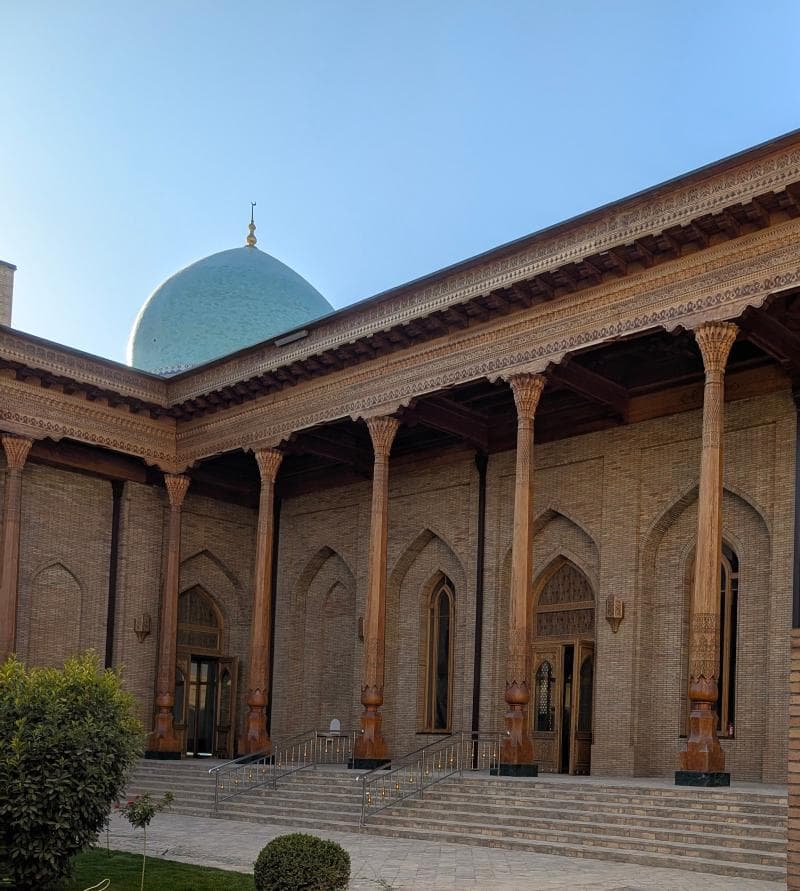
Discover the Imam Al-Bukhari Islamic Institute in Tashkent, Uzbekistan, a premier center for Islamic studies within the historic Hazrat Imam Complex.
Overview
The Imam Al-Bukhari Islamic Institute, nestled within the venerable Hazrat Imam Complex in Tashkent, Uzbekistan, stands as a pivotal center for Islamic scholarship and spiritual development in Central Asia. This significant institution is an integral part of the larger Hazrat Imam Complex, an architectural marvel dating from the 16th to 20th centuries, situated in Tashkent's historic Olmazor district. The complex itself is revered as one of the city's primary spiritual hubs, built around the revered tomb of Hazrati Imam (Imam Abu Bakr Muhammad ibn Ali Ismail ash-Qaffol Shoshiy). The Institute serves as a beacon of learning, dedicated to the study and preservation of Islamic knowledge, contributing profoundly to the religious and intellectual landscape of the region.
History & Cultural Background
The establishment of the Imam Al-Bukhari Islamic Institute in 1971 marked a groundbreaking moment in the history of Islamic education within the Soviet Union. Founded by the esteemed Sheikh Ziyauddinkhan ibn Eshon Babakhan, it proudly became the first Muslim higher educational institution in the CIS countries solely dedicated to the comprehensive study of Islam. The institute's foundations were laid upon the historical site of the Namozgoh mosque, an edifice from the late 19th century that, despite its destruction during the Revolution, was meticulously restored to house this new center of learning. While inaugurated in 1971, the Institute acquired its modern aesthetic following an extensive renovation of the broader Hast Imam Complex in 1997. Initially known as the 'Higher Religious Madrasa,' it was honorably renamed the 'Higher Ma'had' or 'Tashkent Islamic Institute' in 1974, commemorating the 1200th anniversary of the birth of the revered scholar Imam Bukhari. The encompassing Hazrat Imam Complex boasts an even deeper historical tapestry, with its origins tracing back over a thousand years, remarkably enduring the devastating 1966 Tashkent earthquake, thus preserving a rare authentic medieval architectural ensemble within the city.
What Makes It Special
What truly distinguishes the Imam Al-Bukhari Islamic Institute is its comprehensive curriculum and its profound impact on Islamic scholarship across Central Asia. It offers a rigorous educational program encompassing vital Islamic disciplines such as Sharia (Islamic law), Aqidah (theology), Hadith (prophetic traditions), Quranic studies, and the Arabic language. Each year, the institute nurtures the minds of up to 200 students, equipping them with knowledge that enables them to contribute meaningfully to both religious and secular spheres. Graduates from the Institute receive diplomas that are recognized by the state, affirming the high standard of education provided. Beyond its academic offerings, the institute is home to an extensive library, housing a wealth of Islamic texts and an invaluable collection of rare manuscripts, drawing scholars and researchers globally. As an active contributor to Tashkent's intellectual vibrancy, the Institute regularly hosts conferences, seminars, and workshops that delve into complex Islamic jurisprudence, theology, and history. Its educational philosophy thoughtfully integrates traditional Islamic scholarship with contemporary studies, ensuring relevance in modern society. Furthermore, its presence within the Hazrat Imam Complex connects it to other significant sites, including the Moyie Mubarek Madrasah, which famously housed the Uthman Quran—one of the world's oldest Quran manuscripts, now preserved at the nearby Center of Islamic Civilization.
Stories, Fun Facts & Local Details
The institute carries the esteemed name of Imam Al-Bukhari, a monumental 9th-century Islamic scholar celebrated for meticulously compiling one of the most authentic collections of Hadith. His legacy continues to inspire students and scholars alike at the institute. A fascinating aspect of the institute's history is its establishment during the challenging Soviet era, a testament to the persistent efforts of Sheikh Ziyauddinkhan ibn Eshon Babakhan to foster religious education against significant odds. The institute boasts a distinguished roster of alumni, including many prominent CIS scholars, muftis, and ulemas who have gone on to shape Islamic thought and leadership. The broader Hazrat Imam Complex holds a special place in Tashkent's heart, having miraculously survived the devastating 1966 earthquake, making it a living museum of the city's pre-Soviet architectural heritage. The complex itself is an artistic fusion, showcasing traditional Islamic design elements blended harmoniously with contemporary aesthetics, visible in its intricate calligraphy and geometric patterns. Adding to its significance, the Hazrat Imam Complex also serves as the administrative seat of the Spiritual Administration of Muslims of Uzbekistan, underscoring its central role in the country's religious life.
Visitor Perspective
For those considering a visit, the Imam Al-Bukhari Islamic Institute and the surrounding Hazrat Imam Complex offer a profound journey into Uzbekistan's rich spiritual and intellectual heritage. Visitors are encouraged to observe respectful attire and demeanor, acknowledging the sacred and academic nature of the institution. Exploring the institute provides invaluable insight into the nuances of Islamic education in the country and the broader cultural and religious history of Central Asia. The Hazrat Imam Complex is a vibrant religious and cultural hub, generally accessible during daylight hours. While the complex's grounds are usually open, specific visiting hours may apply for individual buildings or certain exhibits, making it wise to check locally. Its location in the 'Old City' part of Tashkent ensures an immersive experience, surrounded by the historical fabric of the Uzbek capital.
Coordinates: 69.2633, 41.3147
View on Google Maps💬 How Travelers Describe This Place
Based on community votes
Interesting
585Beautiful
550Photogenic
546Unique
56Must See
28
Traveler Stories
Discover memorable experiences shared by travelers who have visited this place.
No traveler stories yet.
Be the first traveler to share what made this place memorable.

Tour
By
Spot
Discover amazing places around the world. Your journey starts here.
Explore
© 2026 TourBySpot. All rights reserved.