Courtyards
Tashkent, Uzbekistan
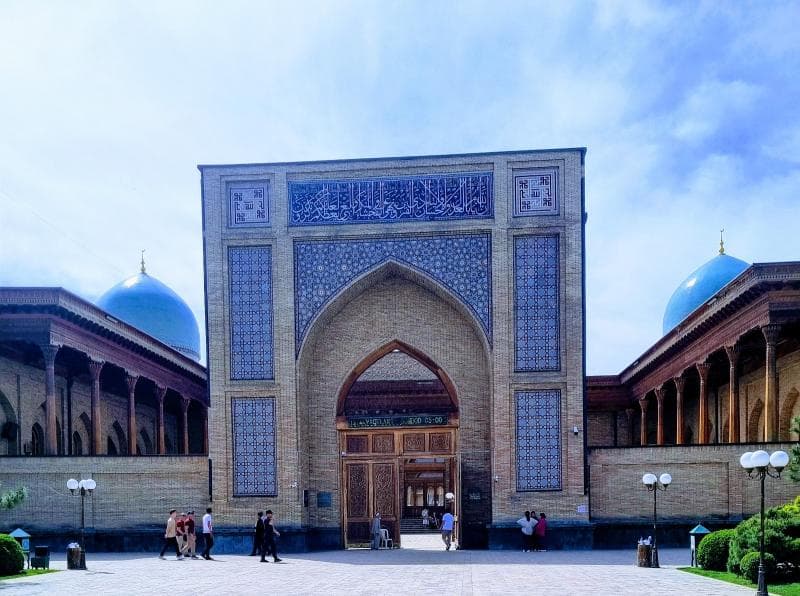
Explore the serene courtyards of the Hazrat Imam Complex in Tashkent, Uzbekistan, a spiritual heart blending ancient Islamic architecture and history.
Overview
The 'Courtyards' of the Hazrat Imam Complex in Tashkent, Uzbekistan, are not a single named structure but rather a collection of interconnected open spaces that serve as the spiritual and architectural heart of this revered Islamic ensemble. Located in the 'Old City' part of Tashkent, these courtyards seamlessly link several historically significant buildings, including ancient madrasahs, mosques, and mausoleums, creating an expansive and tranquil environment for both worshippers and travelers. They are central to the complex's identity, providing serene pathways and gathering spots that underscore its role as a living religious landmark and a testament to centuries of Islamic culture in Central Asia.
As you step into these courtyards, the bustling city sounds fade, replaced by a sense of calm and reverence. The well-maintained grounds, often adorned with green lawns, flower beds, and shaded benches, invite visitors to pause and reflect. These spaces are not merely transitional areas; they are integral to the visitor's experience, offering expansive views of the surrounding architectural marvels with their intricate tilework, elegant arches, and iconic turquoise domes.
History & Cultural Background
The Hazrat Imam Complex itself boasts a history stretching back over a thousand years, though most of its present buildings date from the 16th to 19th centuries, with significant restoration and additions in the modern period. The courtyards evolved organically over centuries, forming around the revered tomb of Abu Bakr Muhammad Kaffal Shashi, known as Hazrati Imam, an esteemed scholar, poet, and one of Tashkent's first imams.
The current harmonious layout of the complex, including its thoughtfully landscaped courtyards, was largely a result of a major reconstruction in 2007, when previously scattered buildings were united into a single architectural ensemble. This initiative followed Tashkent's designation as the capital of Islamic culture, bringing together diverse structures like the Barak Khan Madrasah, Muyi Mubarak Madrasah, Tilla Sheikh Mosque, and the Hazrati Imam Mosque, all interconnected by these public spaces.
What Makes It Special
The courtyards are special because they encapsulate the essence of the Hazrat Imam Complex, acting as a grand open-air museum that showcases the rich blend of Islamic architecture from various eras. They provide vantage points to admire the intricate details of the surrounding structures, such as the two prominent minarets, standing 53 meters high, crafted by masters from Khorezm and Samarkand. The courtyards of specific buildings, like the Hazrati Imam Jome Mosque, feature unique elements, including a portico with twenty carved sandalwood columns, celebrating Uzbekistan's regional diversity in architectural styles.
These open spaces are also a hub for cultural preservation; for instance, the courtyard of the Barak Khan Madrasah often hosts craftsmen selling traditional handmade products like ikat fabrics, jewelry, and woodcarvings, reinforcing the complex's living heritage. The tranquil ambiance of the courtyards, especially in the early mornings or late afternoons, contributes to a profound sense of peace, making it a place where spirituality, culture, and history truly come alive.
Stories, Fun Facts & Local Details
One fascinating aspect tied to the complex, and indirectly to its courtyards, is the legend of Hazrati Imam himself. He was renowned for his skill in making locks, earning him the nickname 'Qaffol,' meaning 'locksmith,' and was said to have spoken 72 languages, even translating the Old Testament into Arabic. Such stories enrich the historical fabric experienced within these ancient grounds.
The Muyi Mubarak Madrasah, situated within the complex, once famously housed the 7th-century Uthman Quran, considered one of the world's oldest manuscripts of the holy book. While the Quran has since been transferred to the adjacent Center for Islamic Civilization, the story remains a powerful draw, adding to the cultural significance of the courtyards that lead to these revered sites. The complex also survived the catastrophic 1966 Tashkent earthquake, making its courtyards and the structures they connect a symbol of resilience.
Visitor Perspective
For visitors, the courtyards of the Hazrat Imam Complex offer an accessible and engaging experience. They are largely open to the public without an entrance fee, encouraging leisurely strolls and peaceful contemplation. It's customary to remove your shoes before entering specific religious buildings, and women are often advised to carry a headscarf as a sign of respect.
Many travelers recommend visiting the courtyards during the early morning or late afternoon, often referred to as 'golden hour,' to enjoy cooler temperatures, softer light for photography, and fewer crowds. This allows for a more immersive experience of the quiet sense of a place that remains deeply woven into the daily life of Tashkent. The complex's courtyards provide a vital connection to the past, blending historical grandeur with the active spiritual life of contemporary Uzbekistan.
Coordinates: 69.2633, 41.3147
View on Google Maps💬 How Travelers Describe This Place
Based on community votes
Interesting
674Must See
546Unique
503Beautiful
92Photogenic
49
Traveler Stories
Discover memorable experiences shared by travelers who have visited this place.
No traveler stories yet.
Be the first traveler to share what made this place memorable.

Tour
By
Spot
Discover amazing places around the world. Your journey starts here.
Explore
© 2026 TourBySpot. All rights reserved.