Quran Exhibition
Tashkent, Uzbekistan
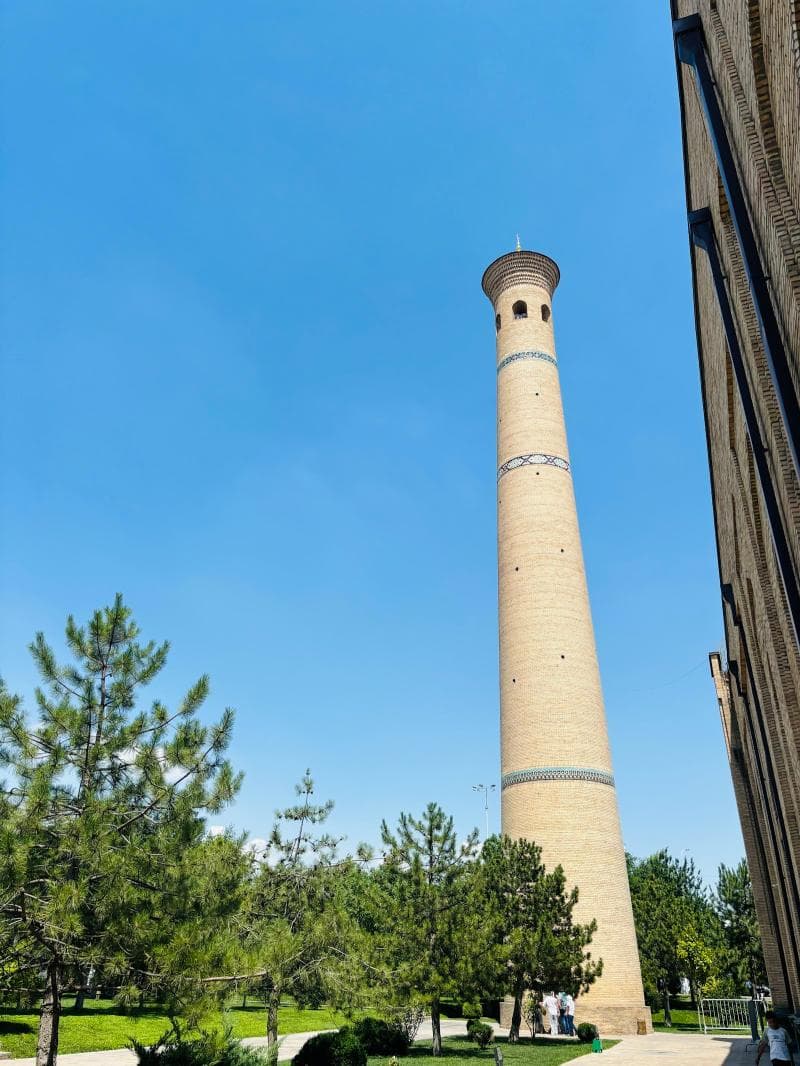
Explore the Quran Exhibition at the Islamic Civilization Center in Tashkent, Uzbekistan, home to the ancient Uthman Quran.
Overview
Deep within Tashkent, Uzbekistan's spiritual heart, the Hazrat Imam Complex, lies a treasure of immense global significance: the Quran Exhibition. This exhibition is predominantly housed within the newly inaugurated Islamic Civilization Center, where visitors can encounter the revered Uthman Quran, believed to be one of the world's oldest surviving Quran manuscripts. While the Muyi Muborak Madrasa historically safeguarded this sacred relic, the contemporary exhibition at the Islamic Civilization Center offers an expansive and technologically advanced display of Islamic heritage, making it a pivotal destination for understanding Central Asian and Islamic civilization.
History & Cultural Background
The Hazrat Imam Complex itself is a collection of architectural marvels, named after Abu Bakr Muhammad Kaffal al-Shashi, a revered 10th-century scholar, poet, and imam who was born in Shash (ancient Tashkent). The complex, which includes several madrasas, mosques, and mausoleums, dates back to the 16th to 20th centuries and underwent significant restoration in 2007, solidifying its role as Tashkent's spiritual and historical core. The journey of the Uthman Quran, the exhibition's centerpiece, is a saga spanning centuries and continents. This ancient manuscript, traditionally dated to the 7th century, is intrinsically linked to Caliph Uthman ibn Affan, the third Caliph of Islam. Its travels have taken it from Medina to Kufa, then brought to Samarkand by the legendary conqueror Amir Temur (Tamerlane) in the late 14th century. Later, in 1868, it was taken to St. Petersburg by Russian General Kaufmann. In a significant act of goodwill towards Turkestan's Muslims, Vladimir Lenin returned the manuscript to Central Asia in 1924, eventually finding its way to Tashkent in 1989.
What Makes It Special
The Uthman Quran is extraordinary for several reasons. Written in the archaic Kufic script on deerskin parchment, it represents an invaluable link to the early days of Islam. A powerful, albeit somber, tradition claims the manuscript bears stains of Caliph Uthman's blood, shed during his assassination while he was reading it. Its historical authenticity and immense value led to its inscription in UNESCO's 'Memory of the World' Register in 1997, further cementing its status as a global heritage item. The Quran Exhibition in the Islamic Civilization Center, opened in March 2026, presents this sacred relic with unparalleled grandeur. The Holy Quran Hall, covering approximately 1,200 square meters, is designed as the complex's spiritual heart. Here, the original Uthman Quran is displayed alongside 114 other rare handwritten copies of the Quran, offering a comprehensive look at the evolution of Quranic calligraphy and preservation. The exhibition utilizes modern technology, including holographic projections of Quranic verses, to create an immersive and deeply moving experience for visitors. The sheer scale of the Islamic Civilization Center, recognized by Guinness World Records as the 'largest museum of Islamic civilization,' underscores Uzbekistan's profound commitment to preserving and promoting its rich Islamic heritage.
Stories, Fun Facts & Local Details
The saga of the Uthman Quran is a testament to its enduring significance, surviving centuries of political upheaval and geographical displacement. Its journey, from the heart of the Islamic Caliphate to the libraries of empires and finally to modern Tashkent, is a compelling narrative in itself. Locally, the Muyi Muborak Madrasa, the Quran's former home, also holds a cherished belief: it is said to house a hair of the Prophet Muhammad, adding another layer of spiritual sanctity to the complex and giving the madrasa its name, which translates to 'Sacred Hair'. This intertwining of grand historical narratives with intimate, revered relics creates a profound sense of connection for both scholars and everyday visitors, bridging centuries of faith and culture. The meticulous efforts to preserve such ancient texts reflect a deep respect for the written word and religious tradition in Uzbekistan. The exhibition offers an opportunity to ponder the vast intellectual and artistic contributions of Islamic civilization.
Visitor Perspective
Visiting the Quran Exhibition within the Islamic Civilization Center is an experience that transcends mere sightseeing. Travelers are immersed in a tranquil and reverent atmosphere designed to inspire contemplation. While the complex grounds are generally free to enter, there may be an admission fee for the exhibition itself, which often includes a guided tour. It is essential for visitors to dress modestly, ensuring shoulders and knees are covered, out of respect for the religious nature of the site. Photography of the Uthman Quran is generally restricted to ensure its preservation, but the center offers ample opportunities to appreciate its architectural grandeur and other exhibits. The modern displays and the knowledgeable guides at the Islamic Civilization Center are adept at contextualizing the exhibition, making it accessible and engaging for all, regardless of their background. Allow sufficient time, perhaps two hours or more, to fully absorb the depth and breadth of this extraordinary collection and the historical insights it provides.
Coordinates: 69.2400966, 41.3372158
View on Google Maps💬 How Travelers Describe This Place
Based on community votes
Interesting
958Beautiful
743Unique
719Photogenic
382Must See
176
Traveler Stories
Discover memorable experiences shared by travelers who have visited this place.
No traveler stories yet.
Be the first traveler to share what made this place memorable.

Tour
By
Spot
Discover amazing places around the world. Your journey starts here.
Explore
© 2026 TourBySpot. All rights reserved.