Khast Imam Square
Tashkent, Uzbekistan
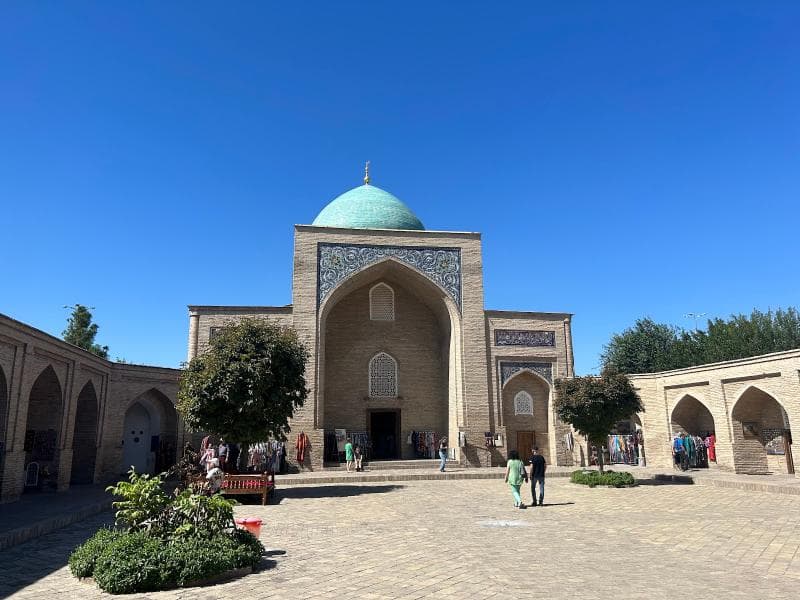
Discover Khast Imam Square in Tashkent, Uzbekistan, home to ancient madrasahs, mosques, and the world's oldest Quran. Explore centuries of Islamic heritage.
Overview
Stepping into Khast Imam Square in Tashkent, Uzbekistan, is akin to entering a timeless spiritual heart, a tranquil haven amidst the bustling modern city. This revered complex, also known as Hazrat Imam, stands as a profound testament to Uzbekistan's rich Islamic heritage and intellectual legacy. It encompasses a collection of breathtaking architectural monuments, including historic madrasahs, majestic mosques, and the sacred mausoleum of Hazrati Imam himself. The square serves not only as a significant pilgrimage site for Muslims from around the world but also as a vibrant center of Islamic scholarship and a peaceful retreat for reflection. Visitors are immediately enveloped by an atmosphere of profound history, where every intricately tiled facade and soaring dome whispers tales of centuries past.
The Khast Imam Complex is meticulously preserved and showcases a stunning array of Islamic architecture, reflecting influences from Timurid and Shaybanid periods. Its structures, predominantly dating from the 16th to 19th centuries, though some modern additions exist, are gracefully arranged around a central, landscaped square. This ensemble is particularly renowned for housing one of the world's most precious Islamic relics: the Uthman Quran, an ancient manuscript believed to be the oldest copy of the holy book.
History & Cultural Background
The genesis of the Khast Imam Complex is deeply rooted in the life and legacy of Abu Bakr Muhammad Kaffal Shashi, a revered 10th-century Islamic scholar, theologian, poet, and craftsman. Born in 903 in Shash (ancient Tashkent), he was one of the city's first imams and held immense respect across the Muslim world. His profound knowledge of the Quran, Hadith, and Islamic law earned him the honorific title 'Hazrati Imam,' meaning 'Holy Imam.' Upon his death around 976 or 977, he was buried in the picturesque Bogi-Keykaus garden outside the city walls, and his tomb quickly became a significant site of pilgrimage.
Over the centuries, around Kaffal Shashi's initial burial site, various religious structures were gradually erected. The 16th century, during the Shaybanid dynasty's rule, saw significant development, including the construction of the present-day Kaffal Shashi Mausoleum, a majestic structure built in 1542, and the Barak Khan Madrasah. The complex continued to expand with additions like the Tilla Sheikh Mosque in the mid-19th century. After Uzbekistan gained independence, particularly in 2007, the complex underwent extensive restoration and modernization, bringing together previously scattered buildings into the cohesive and harmonious ensemble seen today.
What Makes It Special
Khast Imam Square's distinctiveness stems from its profound spiritual significance and its extraordinary collection of historical artifacts and architectural masterpieces. The crowning jewel is arguably the Muyi Muborak Madrasah, which houses the priceless Uthman Quran. This 7th-century manuscript, written on deerskin, is considered one of the oldest surviving copies of the Quran in the world. Its pages are said to bear the bloodstains of Caliph Uthman, who was assassinated while reading it. The presence of such a foundational document of Islam lends an unparalleled sacredness to the complex.
Beyond the Uthman Quran, the architectural diversity within the complex is captivating. The Barak Khan Madrasah, with its intricate tilework and grand portal, offers a glimpse into 16th-century educational institutions. The Tilla Sheikh Mosque, a functioning house of worship, showcases beautiful Central Asian architectural elements, including elegant domes and minarets. The Kaffal Shashi Mausoleum itself, designed as a 'khanaka' (a dervishes' mansion), stands as a unique example of funerary architecture, inviting pilgrims to pay respects to the revered scholar.
Stories, Fun Facts & Local Details
Many stories and fascinating details enrich the experience of Khast Imam Square. Hazrati Imam, Abu Bakr Muhammad Kaffal Shashi, earned his nickname 'Kaffal,' meaning 'locksmith,' due to his exceptional skill in crafting intricate locks and keys. Legend has it he once made a padlock with a key weighing a mere 0.5 grams. His intellectual prowess was equally remarkable; he was said to speak 72 languages and even translated the Old Testament into Arabic.
The Uthman Quran has a captivating journey, believed to have been brought to Central Asia by Amir Timur (Tamerlane) in the late 14th century. After being taken to St. Petersburg by General Kaufmann in the 19th century, it was eventually returned to Uzbekistan in the Soviet era and now rests securely in Khast Imam. Another notable aspect is the complex's resilience; it miraculously survived the devastating 1966 earthquake that leveled much of Tashkent's old city. Visitors might also spot storks nesting on the minarets or walking leisurely across the landscaped grounds during warmer months, adding a touch of natural charm to this historical setting.
Visitor Perspective
For any curious traveler, visiting Khast Imam Square offers a deep immersion into Uzbekistan's spiritual and cultural heart. The atmosphere is generally one of peaceful reverence. While exploring the mosques and mausoleums, visitors are kindly reminded to dress modestly and, in accordance with tradition, remove their shoes before entering sacred spaces. Women are advised to carry a headscarf. The square is particularly enchanting in the evening when architectural lighting illuminates the historic buildings, creating an 'oriental fairy tale' ambiance. Many local artisans showcase their crafts, especially in the Barak Khan Madrasah, offering unique souvenirs. Engaging with locals, perhaps over a cup of green tea, can offer invaluable insights into contemporary Uzbek life and Islamic traditions.
Coordinates: 69.2633, 41.3147
View on Google Maps💬 How Travelers Describe This Place
Based on community votes
Interesting
896Must See
102Beautiful
102Unique
95Photogenic
28
Traveler Stories
Discover memorable experiences shared by travelers who have visited this place.
No traveler stories yet.
Be the first traveler to share what made this place memorable.

Tour
By
Spot
Discover amazing places around the world. Your journey starts here.
Explore
© 2026 TourBySpot. All rights reserved.