Barak-Khan Madrasah
Tashkent, Uzbekistan
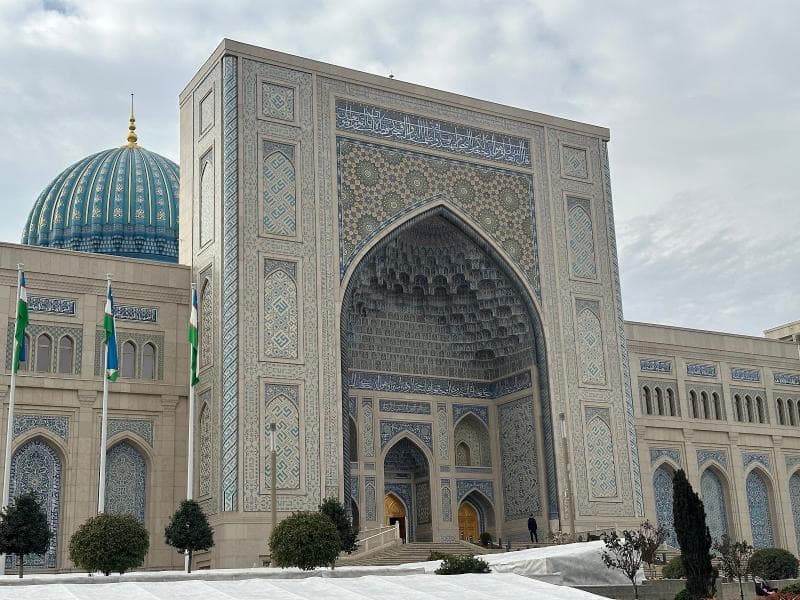
Explore Barak-Khan Madrasah, a stunning 16th-century architectural gem and craft hub within Tashkent's Hazrat Imam Complex, Uzbekistan.
Overview
Stepping into the Hazrat Imam Complex in Tashkent, Uzbekistan, is like walking through centuries of rich Islamic history and architectural grandeur. At its heart lies the Barak-Khan Madrasah, a remarkable 16th-century monument that stands as a testament to the city's enduring legacy as a center of religious scholarship and artistic expression. While it no longer serves as a bustling educational institution, the madrasah today offers a vibrant glimpse into Uzbek culture, housing a captivating array of traditional craft workshops and artisan shops within its historic walls.
The Barak-Khan Madrasah is an integral part of the larger Hazrat Imam Complex, which itself is named after Abu Bakr Muhammad Kaffal al-Shashi, a revered 10th-century scholar and imam of Tashkent. The complex, located in the 'Old City' district, brings together several historically significant structures, including mosques and mausoleums, creating a profound spiritual and cultural focal point. The madrasah's distinct architecture, characterized by its elegant arches, intricate mosaics, and striking blue domes, immediately captures the eye, inviting visitors to explore its storied past and discover the artistry preserved within its courtyards.
History & Cultural Background
The construction of the Barak-Khan Madrasah began in the early to mid-16th century, primarily between 1530 and 1550, during the influential Shaybanid dynasty. It was initiated under the guidance of Nauruz Ahmad Khan, a grandson of the renowned astronomer and ruler Mirzo Ulugbek. Nauruz Ahmad Khan was known by the affectionate nickname 'Barak Khan,' meaning 'lucky' or 'the fortunate one,' and it is from him that the madrasah derives its name.
Initially, the site of the madrasah incorporated two older mausoleums. One was dedicated to Suyunchkhodja Khan, a governor of Tashkent and a significant figure whose era saw the flourishing of the Uzbek language in literature. The other, an 'Unnamed Mausoleum,' was originally intended for Barak Khan himself, though historical accounts confirm he was ultimately buried in Samarkand. These mausoleums were later integrated into the madrasah's structure, reflecting a common practice of building new institutions around venerated burial sites. For centuries, the madrasah served as a vital center for Islamic learning, attracting scholars and students who delved into religious sciences and theology.
The madrasah, like many ancient structures, has faced its share of challenges. A devastating earthquake in 1868 caused significant damage, particularly to its grand domes. However, through numerous meticulous restoration efforts across the 19th and 20th centuries, including significant work in 1946, 1949, 1951, and 1967, the madrasah has been preserved, allowing its architectural splendor to continue inspiring visitors today.
What Makes It Special
The Barak-Khan Madrasah is distinguished by its unique architectural fusion and its enduring cultural role. Its design elements, particularly the glazed brickwork and geometric patterns on its main portal, exhibit a clear stylistic influence from 15th-century Samarkand, setting it apart from other historic buildings in Tashkent. The presence of delicate gunch stucco stalactites in the darskhona (lecture hall) dome and vibrant interior paintings further showcase the exquisite craftsmanship of the era.
What truly makes the Barak-Khan Madrasah special today is its transformation into a living museum of Uzbek heritage. While it no longer functions as a school, its historic cells (khujras) now host workshops for local artisans. Here, you can witness master craftsmen at work, carefully inscribing Arabic calligraphy from the Quran, carving intricate wooden stands for holy books, or stamping elaborate designs onto copper and brassware. This continuity of traditional crafts ensures that the spiritual and cultural essence of the madrasah continues to thrive, bridging the past with the present.
Stories, Fun Facts & Local Details
The name 'Barak Khan' itself is a fun historical detail, meaning 'lucky' or 'fortunate,' and it speaks to the aspirations of the ruler who commissioned this magnificent building. Imagine the bustling courtyard centuries ago, filled with students debating theological points and scholars poring over ancient texts. Today, the madrasah's inner courtyard, bustling with craftsmen, creates a different, yet equally engaging, atmosphere.
A significant nearby attraction within the Hazrat Imam Complex, often associated with the madrasah due to its proximity, is the Mo'yi Muborak Madrasah. It houses the Uthman Quran, considered one of the oldest surviving copies of the holy book, written on deer skin. Legend has it that the third Caliph Uthman was assassinated while reading this very Quran, and drops of his blood are said to be visible on its pages. This sacred relic draws pilgrims and researchers from across the globe, adding another layer of profound spiritual significance to the entire complex. While not inside Barak-Khan Madrasah itself, its presence nearby deeply enriches the visitor's experience of the complex's religious importance.
Visitor Perspective
Visiting the Barak-Khan Madrasah offers a deeply immersive experience. As you wander through its courtyard, surrounded by the quiet hum of artisans at work, you'll feel connected to centuries of tradition. The beautiful mosaics, the grandeur of the main portal, and the sense of history permeating every brick make for a truly memorable visit.
Modest dress is recommended when visiting the Hazrat Imam Complex, and women may wish to carry a head covering out of respect for the religious nature of the site. It's advisable to visit in the morning or late afternoon to avoid the midday heat and larger crowds. Allow at least an hour to leisurely explore the madrasah and appreciate the intricate crafts on display. While there, you'll find unique, high-quality souvenirs that directly support local artisans, carrying a piece of Uzbekistan's rich cultural heritage home with you.
Coordinates: 69.239, 41.3369
View on Google Maps💬 How Travelers Describe This Place
Based on community votes
Must See
951Beautiful
491Unique
414Photogenic
310Interesting
277
Traveler Stories
Discover memorable experiences shared by travelers who have visited this place.
No traveler stories yet.
Be the first traveler to share what made this place memorable.

Tour
By
Spot
Discover amazing places around the world. Your journey starts here.
Explore
© 2026 TourBySpot. All rights reserved.