Muyi Muborak Library
Tashkent, Uzbekistan
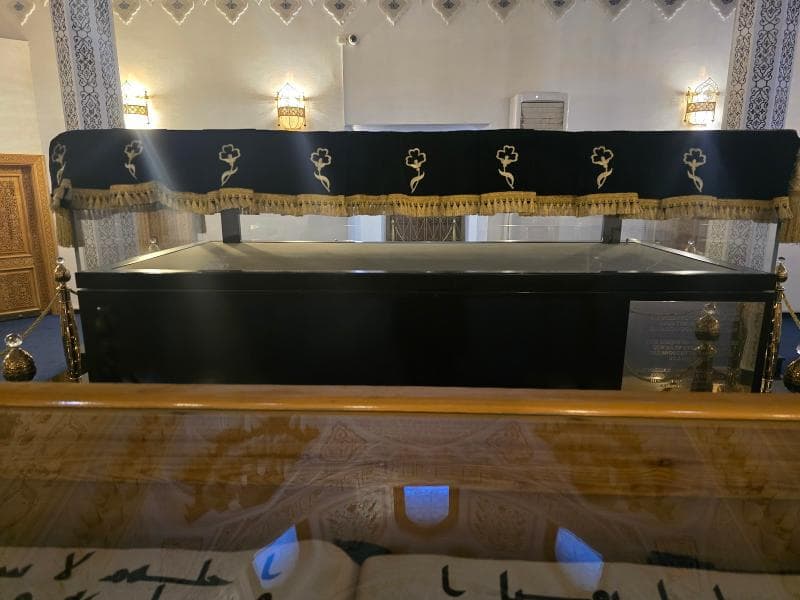
Explore Muyi Muborak Library in Tashkent, Uzbekistan, home to the Uthman Quran, one of the world's oldest Islamic manuscripts.
Overview
Nestled within the historic Hazrat Imam Complex in Tashkent, Uzbekistan, the Muyi Muborak Library stands as a beacon of Islamic heritage and knowledge. More than just a library, this esteemed institution is a spiritual heart of the complex, drawing visitors from across the globe. It is particularly renowned as the custodian of some of the world's most ancient and revered Islamic manuscripts, most notably the Uthman Quran. The library's name itself, 'Muyi Muborak,' meaning 'Sacred Hair,' hints at another precious relic it is believed to house, further deepening its spiritual significance.
History & Cultural Background
The Muyi Muborak Library began its life as the Muyi Muborak Madrasah, an Islamic educational institution. Originally established in the 16th century, the madrasah was later rebuilt between 1856 and 1857 under the patronage of Mirzo Ahmad Qushbegi. For centuries, it served as a vital center for religious learning and scholarship within Central Asia's rich Islamic tradition. At various times, it even provided shelter for dervishes, ascetic monks devoted to spiritual practices.
The library is an integral part of the larger Hazrat Imam Complex, an architectural ensemble spanning from the 16th to the 20th centuries. The complex is named after Abu Bakr Muhammad Kaffal al-Shashi, a revered 10th-century scholar known as Hazrat Imam, meaning 'Holy Imam.' This spiritual center has evolved over a thousand years, with various structures added around the tomb of Hazrat Imam. Remarkably, the Kaffal ash-Shashi mausoleum and surrounding buildings survived the devastating 1966 earthquake that leveled much of old Tashkent, preserving a tangible link to the city's ancient past.
What Makes It Special
The undisputed centerpiece of the Muyi Muborak Library's collection is the Uthman Quran, often referred to as the Uthman Mushaf. This monumental manuscript is considered one of the oldest surviving copies of the Quran in the world, dating back to the 7th century, specifically between 644 and 648 AD. Written in the ancient Kufic script on deer skin, its sheer size and age are awe-inspiring.
The Uthman Quran has a storied and remarkable journey. It is believed to have traveled from Medina to Kufa, before being brought to Samarkand by the formidable conqueror Amir Temur in the 14th century. Later, in 1868, it was taken to St. Petersburg by Russian authorities. However, in a gesture of goodwill, Vladimir Lenin returned it to Tashkent in 1924, where it has since been a cherished national treasure. Legend holds that this sacred text bears the bloodstains of Caliph Uthman, who was said to be reading it at the time of his assassination in 655 AD. While its exact age and direct connection to Caliph Uthman are subjects of academic debate, its profound historical and spiritual significance remains undiminished.
Beyond the Uthman Quran, the Muyi Muborak Library houses an extensive collection of rare Islamic manuscripts and historical texts. The library of the Muslim Board of Uzbekistan, which is located here, contains approximately 20,000 books, including nearly 3,000 ancient manuscripts and various translations of the Quran in over 30 languages. Furthermore, the madrasah's very name, 'Muyi Muborak,' meaning 'Sacred Hair,' derives from the belief that it preserves a hair of the Prophet Muhammad, making it a site of immense reverence for many.
Stories, Fun Facts & Local Details
The journey of the Uthman Quran is a testament to the tumultuous and intertwined history of Central Asia and the broader Islamic world. Its passage through the hands of caliphs, conquerors like Amir Temur, and even Soviet leaders, underscores its enduring value as both a religious artifact and a symbol of power and heritage. The tale of its return to Tashkent by Lenin after being confiscated highlights a rare instance of cultural restitution during a period of significant political upheaval.
The 'Sacred Hair' legend adds another layer of mystique to the Muyi Muborak Library. This belief has contributed to the madrasah's spiritual standing and its role as a place of pilgrimage and veneration. The madrasah's conversion into a museum allows these precious relics to be displayed and preserved for future generations, transforming a historical educational institution into a public treasury of faith and learning.
The Hazrat Imam Complex itself, particularly as evening approaches, transforms into an enchanting scene. With architectural lighting illuminating its historic buildings, the square often takes on a serene and almost fairytale-like ambiance, inviting quiet contemplation.
Visitor Perspective
Visiting the Muyi Muborak Library and the broader Hazrat Imam Complex offers a profound dive into Uzbekistan's rich spiritual and historical tapestry. As you step into the tranquil atmosphere of the library, the sense of history is palpable, particularly when standing before the ancient Uthman Quran displayed in its protective, climate-controlled sarcophagus. While photography inside the library is often prohibited, this encourages visitors to truly immerse themselves in the moment and appreciate the artifacts without digital distractions.
Given the religious significance of the site, visitors are encouraged to dress modestly, ensuring shoulders and knees are covered. For women, bringing a headscarf is advisable, especially when entering mosques or other sacred spaces within the complex. Removing shoes before entering certain buildings is also customary. It's worth noting that while the experience is invaluable, some visitors have reported that the ticket price for foreigners can be perceived as high for what is a relatively brief visit, and there might be ongoing construction in parts of the complex. However, the opportunity to witness such an ancient and pivotal manuscript, alongside exploring the other historical buildings of the Hazrat Imam Complex, makes it an unforgettable experience for anyone interested in culture, history, and Islamic heritage.
Coordinates: 69.2633, 41.3147
View on Google Maps💬 How Travelers Describe This Place
Based on community votes
Photogenic
886Unique
443Beautiful
310Must See
277Interesting
233
Traveler Stories
Discover memorable experiences shared by travelers who have visited this place.
No traveler stories yet.
Be the first traveler to share what made this place memorable.

Tour
By
Spot
Discover amazing places around the world. Your journey starts here.
Explore
© 2026 TourBySpot. All rights reserved.