Gyeongbokgung Palace
Seoul, South Korea
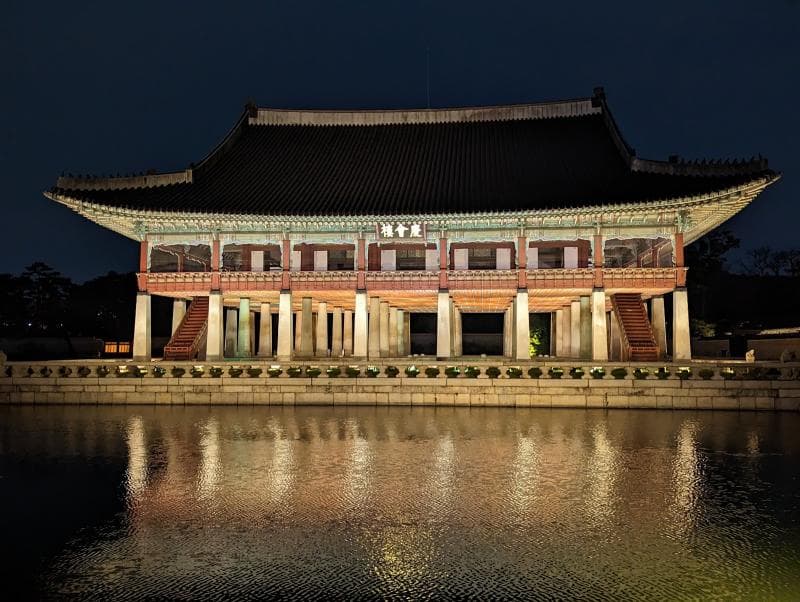
Explore Gyeongbokgung Palace in Seoul, South Korea – the Joseon Dynasty's grandest royal palace. Discover its rich history, stunning architecture, and cultural significance.
Overview
Gyeongbokgung Palace, majestically located in Seoul, South Korea, stands as the largest and arguably most beautiful of the Five Grand Palaces built during the Joseon Dynasty. Its name, 'Gyeongbokgung', translates to 'Palace Greatly Blessed by Heaven', a fitting title for this iconic royal residence. Constructed in 1395, it served as the primary palace and the symbolic heart of the Joseon Dynasty for centuries, embodying the nation's rich history and cultural heritage.
History & Cultural Background
The history of Gyeongbokgung Palace is deeply intertwined with the foundation and evolution of the Joseon Dynasty. It was first built in 1395 by King Taejo, the founder and first king of the Joseon Dynasty, just three years after he established the new regime and moved the capital to Hanyang (modern-day Seoul).
The palace saw a period of significant flourishing during the reign of King Sejong the Great (1418–1450). It was within these very walls that the Korean alphabet, Hunminjeongeum, later known as Hangul, was created and distributed, a monumental achievement that profoundly shaped Korean identity and literacy.
However, the palace's grandeur was not without challenges. In 1592, during the Japanese invasions (Imjin War), Gyeongbokgung was tragically burned to the ground and left in ruins for nearly three centuries. It was not until 1867, under the leadership of Heungseon Daewongun during King Gojong's reign, that a grand restoration project brought the palace back to its former glory. Sadly, it faced further damage during the Japanese colonial period (1910-1945), when many of its structures were systematically dismantled. Since the 1990s, extensive restoration efforts have been ongoing, aiming to return the palace to its original magnificent state, and it continues to be a work in progress.
What Makes It Special
Gyeongbokgung's special allure lies in its magnificent architecture and thoughtful integration with its natural surroundings. The palace's design meticulously followed geomancy principles, known as 'pungsu-jiri', ensuring harmony with the adjacent Bugaksan Mountain and the city's waterways. Its layout reflects Confucian ideals of hierarchy and order, evident in its symmetrical courtyards and carefully spaced buildings.
Key architectural highlights include the imposing Gwanghwamun Gate, the palace's main entrance, which serves as a grand introduction to its historical depth. Inside, Geunjeongjeon Hall, the main throne hall, stands as a testament to royal authority where important state affairs and coronations took place. The picturesque Gyeonghoeru Pavilion, seemingly floating on a tranquil lotus pond, was once the venue for lavish royal banquets and diplomatic receptions, embodying the delicate balance between architecture and nature. Additionally, the serene Hyangwonjeong Pavilion, with its elegant two-story structure, offers a peaceful retreat. The palace grounds also house the National Palace Museum of Korea and the National Folk Museum of Korea, offering deeper insights into the Joseon Dynasty's culture and daily life.
Stories, Fun Facts & Local Details
Beyond its historical facade, Gyeongbokgung holds countless stories and intriguing details. Its very name, meaning 'Palace Greatly Blessed by Heaven' or 'great fortune', was chosen to symbolize prosperity for the new dynasty. A significant historical event within its walls was the creation of the Hangul script by King Sejong the Great, an act of cultural independence. A somber event in the palace's history was the assassination of Empress Myeongseong in 1895, after which the imperial family largely abandoned Gyeongbokgung.
Visitors can discover a fascinating array of symbolic guardian animals throughout the palace grounds, including the mythical Haechi (a creature distinguishing good from evil), phoenixes, and dragons, each strategically placed to protect the royal residence. For instance, a bronze dragon statue was placed in the pond of Hyangwonjeong to prevent future fires. A popular and immersive experience for many visitors is to rent and wear a 'hanbok', traditional Korean attire. Not only does this offer incredible photo opportunities, but wearing a hanbok also grants free entry to Gyeongbokgung Palace. Be sure to witness the captivating Royal Guard Changing Ceremony, a vibrant reenactment of centuries-old traditions that brings the palace's past to life with colorful costumes and rhythmic movements at Gwanghwamun Gate.
Visitor Perspective
Gyeongbokgung Palace is open most days of the week, but remember that it is typically closed on Tuesdays, unlike some other palaces in Seoul. For a truly magical experience, seasonal night viewings are occasionally offered, allowing visitors to see the illuminated palace structures under the stars. To enhance your visit and gain deeper insights, free guided tours are available in various languages, starting from the information center at Heungnyemun Gate. Located at 161 Sajik-ro, Jongno-gu, Seoul, the palace is easily accessible. To fully appreciate its grandeur and explore the vast grounds, it is recommended to allocate at least two to three hours for your visit. Comfortable footwear is advised as you wander through this expansive historical treasure.
Coordinates: 126.9768, 37.579884
View on Google Maps💬 How Travelers Describe This Place
Based on community votes
Must See
944Beautiful
638Interesting
409Unique
363Photogenic
12
Traveler Stories
Discover memorable experiences shared by travelers who have visited this place.
No traveler stories yet.
Be the first traveler to share what made this place memorable.
Things to see at Gyeongbokgung Palace



Tour
By
Spot
Discover amazing places around the world. Your journey starts here.
Explore
© 2026 TourBySpot. All rights reserved.