Royal Guard Changing Ceremony
Seoul, South Korea
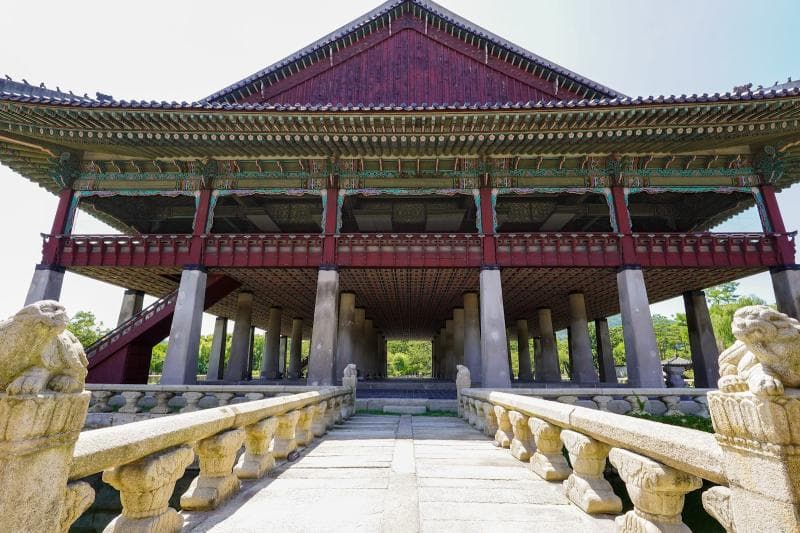
Witness the historic Royal Guard Changing Ceremony at Gyeongbokgung Palace in Seoul, South Korea. Experience Joseon Dynasty traditions and vibrant culture.
Overview
Step back in time at the Gyeongbokgung Palace Royal Guard Changing Ceremony, a vibrant and meticulously recreated historical event in Seoul, South Korea. This captivating spectacle takes place at the main gates of Gyeongbokgung Palace, primarily Gwanghwamun Gate and Heungnyemun Gate. The ceremony, a dazzling display of traditional Korean military culture, is performed twice daily, usually at 10:00 AM and 2:00 PM, and lasts approximately 20 minutes. Please note that Gyeongbokgung Palace is closed on Tuesdays, so no ceremonies are held on that day. It's a must-see for anyone visiting Seoul, offering a unique glimpse into the country's rich past without an admission fee to view the ceremony itself.
History & Cultural Background
The Royal Guard Changing Ceremony is a faithful reenactment of an important royal court custom from the Joseon Dynasty (1392-1910). During this era, royal guards, known as 'Wanggung Sumunjang', held the crucial responsibility of protecting the king and guarding the palace's main gates. Their duties included controlling access, inspecting visitors, and maintaining surveillance over the royal residence. This sophisticated palace guard system was officially institutionalized in 1469 during the first year of King Yejong's reign. Historical records, such as the 'Joseonwangjosillok' (Annals of the Joseon Dynasty), provided the foundation for recreating these procedures. While the original ceremony took place at the primary royal palace where the king resided, including Gyeongbokgung during the early Joseon period, it later shifted to other palaces like Deoksugung after Gyeongbokgung was burned down during the Imjin War. The modern reenactment, meticulously researched and restored, was first introduced to the public in 1996, becoming a significant tourist attraction. It stands today as a living testament to Joseon-era military traditions, reflecting values of respect, honor, and duty.
What Makes It Special
What truly sets the Gyeongbokgung Royal Guard Changing Ceremony apart is its immersive authenticity and vibrant theatricality. Spectators are treated to a stunning visual feast of guards adorned in brilliantly colorful traditional uniforms, each color signifying their rank and role. They carry traditional weapons like swords and spears, moving with precise, disciplined formations. The ceremony is accompanied by the stirring sounds of traditional Korean instruments, including drums, the 'taepyeongso' (a double-reed oboe), and the 'jing' (a large gong), played by musicians in red garb. A highlight is the symbolic exchange of keys between the commanders of the incoming and outgoing guard units, signifying the transfer of responsibility. This detailed reenactment offers more than just a performance; it provides a tangible connection to Korea's imperial past, showcasing the aesthetic and organizational sophistication of the Joseon court's military. It's a vivid, dynamic, and completely free experience that offers an invaluable photo opportunity and a deep dive into Korean heritage.
Stories, Fun Facts & Local Details
Beyond the main changing of the guard, Gyeongbokgung Palace offers several related events that enrich the visitor experience. These include the Gwanghwamun Gate Guard-on-Duty performance and Public Military Training sessions, which typically occur at different times throughout the day. On weekends, a special Gyeongbokgung Guard Patrol Ceremony may also be observed, sometimes extending its march beyond the palace grounds into areas like Insadong, offering visitors a chance to see the guards up close and even take photographs with them. An interesting local detail for travelers is that admission to Gyeongbokgung Palace itself is often free for those wearing a 'hanbok', the traditional Korean dress. This encourages visitors to immerse themselves fully in the cultural experience, often leading to a beautiful tableau of colorful hanboks against the palace's historic backdrop. Many visitors compare this ceremony to the Changing of the Guards at Buckingham Palace in London, highlighting its status as a world-class cultural attraction.
Visitor Perspective
Attending the Royal Guard Changing Ceremony is an experience that many travelers describe as both beautiful and captivating, evoking a powerful sense of stepping back in time. The atmosphere around Gwanghwamun Gate before a ceremony is often palpable with excitement and anticipation, as crowds, many dressed in hanbok, gather to witness the event. To ensure a good viewing spot, arriving a little early is recommended, especially for the popular 10:00 AM ceremony. Some seasoned travelers suggest a clever approach: while the largest crowds gather for the ceremony, consider heading into the palace grounds to enjoy a quieter experience of the interiors, then catching the second ceremony later. Regardless of how you choose to experience it, the ceremony serves as an excellent starting point for engaging with Korean culture and history. It's an opportunity to deepen your understanding of the country's rich traditions and witness a piece of its living heritage. The sheer pomp and pageantry make it an unforgettable part of any trip to Seoul.
Coordinates: 126.9768, 37.579884
View on Google Maps💬 How Travelers Describe This Place
Based on community votes
Unique
961Beautiful
555Interesting
448Must See
387Photogenic
156
Traveler Stories
Discover memorable experiences shared by travelers who have visited this place.
No traveler stories yet.
Be the first traveler to share what made this place memorable.

Tour
By
Spot
Discover amazing places around the world. Your journey starts here.
Explore
© 2026 TourBySpot. All rights reserved.