Hyangwonjeong Pavilion
Seoul, South Korea
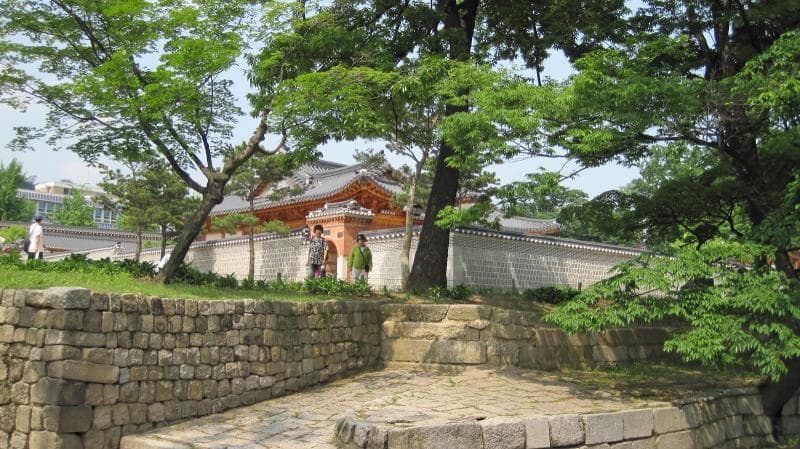
Discover Hyangwonjeong Pavilion, a serene hexagonal royal retreat in Gyeongbokgung Palace, Seoul, South Korea. Explore its history, unique 'ondol' heating, and picturesque setting amidst a lotus pond.
Overview
Nestled gracefully within the expansive grounds of Gyeongbokgung Palace in Seoul, South Korea, Hyangwonjeong Pavilion stands as a testament to Joseon Dynasty's architectural elegance and the royal family's pursuit of natural serenity. Its name, meaning 'Pavilion of Far-spreading Fragrance,' perfectly encapsulates the tranquil ambiance that surrounds this exquisite structure. A two-story, hexagonal pavilion, Hyangwonjeong is perched on a small artificial island in the middle of Hyangwonji Pond, creating a picturesque scene that seems to float on water. Connected to the palace grounds by the charming Chwihyanggyo Bridge, this hidden gem offers visitors a peaceful escape, reflecting a harmonious blend of traditional Korean design and its natural surroundings.
History & Cultural Background
Hyangwonjeong Pavilion was primarily constructed between 1867 and 1873 during the reign of King Gojong, the last monarch of the Joseon Dynasty. Historical records indicate it was designed as a private royal retreat, a place for the king and his family to find leisure and relaxation, a stark contrast to the grander, more public Gyeonghoeru Pavilion used for official events. The pavilion's design philosophy reflects a deep appreciation for the natural world, a core tenet of Korean aesthetics, where architecture was meant to complement, not dominate, its environment. Over the centuries, Gyeongbokgung Palace, and by extension Hyangwonjeong, endured periods of destruction, particularly during the Japanese invasions and the Korean War. The pavilion itself survived the Korean War but suffered damage, notably the destruction of its original bridge. Significant restoration efforts have been undertaken, with recent projects completed in 2019 and unveiled in 2022, aimed at bringing the pavilion closer to its original form and ensuring its preservation for future generations.
What Makes It Special
Hyangwonjeong Pavilion's unique charm lies in several distinctive features. Its hexagonal shape, which in Korean tradition often symbolizes water, is a fitting choice for a structure surrounded by a pond. The pavilion is a two-story wooden structure adorned with red-and-green beams, creating a vibrant yet earthy aesthetic that harmonizes with the seasonal changes of its landscape. One particularly fascinating discovery made during recent excavations is the presence of an 'ondol' floor heating system within the pavilion. While ondol was common, Hyangwonjeong's system was unique, with smoke traveling along the sides of the first floor rather than through the middle, suggesting it was designed for year-round comfort, allowing royals to enjoy the winter scenery from a warm interior. The pavilion's location on an artificial island in Hyangwonji Pond, accessible via the elegant Chwihyanggyo Bridge, creates an illusion of a floating sanctuary. The pond itself, a square shape with gently rounded corners, is home to lotus flowers and carp, adding to the serene atmosphere. Originally, Chwihyanggyo Bridge was the longest purely wooden bridge built over a pond during the Joseon Dynasty, historically positioned on the north side of the island. Though it was rebuilt on the south side after the Korean War, it was meticulously relocated to its original northern position during the 2019 restoration, underscoring efforts to restore historical accuracy.
Stories, Fun Facts & Local Details
- The 'Curse of the Goblins' and Early Electrification: In a curious tale from 1887, King Gojong's progressive attempt to introduce electricity to the palace led to an unexpected incident. The water from Hyangwonji Pond was used to cool the generator for newly installed light bulbs. However, this heated the pond water, leading to the unfortunate electrocution of fish. Frightened by this event, locals, attributing it to evil spirits, temporarily called it the 'curse of the goblins.'
- A Royal Skating Rink: Imagine the tranquil pond transformed! In 1894, Western missionaries introduced the royal family to figure skating on the frozen Hyangwonji Pond, offering a rare glimpse into a more playful side of palace life.
- The Bridge's Journey: Chwihyanggyo Bridge has a compelling story of its own. Originally built on the north side of the island, it was destroyed during the Korean War. When it was reconstructed in 1953, it was mistakenly placed on the south side. However, meticulous restoration efforts in 2019 finally returned it to its intended northern connection, restoring the original flow and perspective intended for the pavilion.
- Hidden Staircases: A subtle detail beneath the hexagonal structure reveals small staircases leading to the pond. These once connected directly to the bridge, but with the bridge's relocation and subsequent restoration, they now stand as vestiges of a past layout, silent witnesses to the changes over time.
Visitor Perspective
Visiting Hyangwonjeong Pavilion offers a uniquely contemplative experience within the grandeur of Gyeongbokgung Palace. Located in the northern, quieter section of the palace, it provides a tranquil respite from the more bustling main halls. Travelers often find themselves drawn to its serene beauty, particularly when the surrounding landscape transforms with the seasons. The pavilion is particularly enchanting during spring, when cherry blossoms frame the pond, in summer with vibrant lotus blooms, and in autumn, as the maple leaves paint the scenery in brilliant golds and reds. Many visitors choose to rent a traditional Korean hanbok, which not only enhances their photography experience against this historic backdrop but also grants free entry to Gyeongbokgung Palace. Standing on Chwihyanggyo Bridge, gazing at the pavilion's reflection on the still water of Hyangwonji Pond with Bugaksan Mountain in the distance, it's easy to feel transported back in time, connecting with the history and natural beauty that once captivated Joseon royalty. This spot is highly recommended for those seeking not just a photo opportunity, but a moment of peaceful reflection and an appreciation for Korea's rich cultural heritage.
Coordinates: 126.97694, 37.58222
View on Google Maps💬 How Travelers Describe This Place
Based on community votes
Interesting
726Photogenic
720Beautiful
597Must See
300Unique
300
Traveler Stories
Discover memorable experiences shared by travelers who have visited this place.
No traveler stories yet.
Be the first traveler to share what made this place memorable.

Tour
By
Spot
Discover amazing places around the world. Your journey starts here.
Explore
© 2026 TourBySpot. All rights reserved.