National Palace Museum
Seoul, South Korea
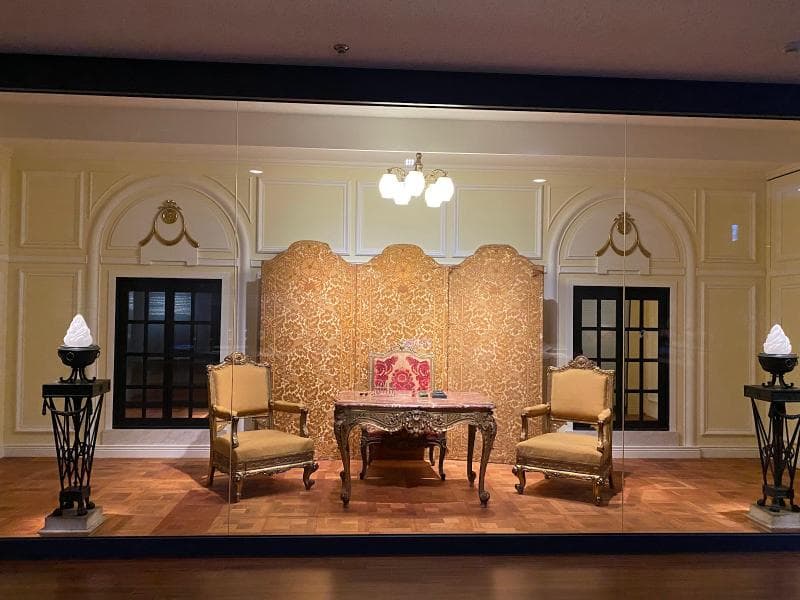
Explore the National Palace Museum of Korea in Seoul, South Korea, home to over 40,000 artifacts from the Joseon Dynasty and Korean Empire.
Overview
Nestled within the majestic grounds of Gyeongbokgung Palace in Seoul, South Korea, the National Palace Museum of Korea stands as a testament to the nation's rich royal heritage. This esteemed institution is dedicated to preserving and showcasing the artifacts of the Joseon Dynasty and the Korean Empire. With a vast collection exceeding 40,000 artifacts, the museum offers visitors a comprehensive journey through 500 years of Korea's royal history. Admission to this treasure trove of history is free, inviting all curious travelers to explore its magnificent exhibits. Conveniently located, it serves as an excellent complement to a visit to Gyeongbokgung Palace itself.
History & Cultural Background
The origins of the National Palace Museum of Korea trace back to September 1908, when it was first established as the 'Korean Imperial Museum' within Changgyeonggung Palace. Its journey through the turbulent 20th century saw several transformations. During Japanese rule in 1938, it was unfortunately renamed the 'Museum of Yi dynasty'. Following Korea's liberation in March 1946, it was rightfully renamed the 'Deoksugung Museum'. The museum found its current, permanent home in a modern building inside Gyeongbokgung Palace in 2005, marking a significant milestone in its history. The museum's core mission is to promote and preserve the culture of the Joseon royal and Korean imperial courts, reflecting an era that profoundly shaped much of contemporary Korean culture through its Neo-Confucian ideology. The Joseon Dynasty, which spanned from 1392 to 1897, reigned for over five centuries and encompassed 27 generations of the royal Lee family.
What Makes It Special
The National Palace Museum of Korea distinguishes itself through its incredibly diverse and historically significant collections. It meticulously preserves and displays records, state rites, architecture, clothing, and cultural practices from the Joseon Dynasty's ruling era, offering profound insights into royal life and education. Among its most prized possessions are 14 National Treasures of South Korea, highlighting the exceptional quality and importance of its holdings. Visitors can marvel at the royal seal of King Gojong, a historically poignant artifact that was used for his diplomatic correspondence and later recovered from a US-based collector in 2009. Another fascinating exhibit is the royal vehicle of Emperor Sunjong, a 1918 General Motors Cadillac Limousine, offering a glimpse into the changing times of the early 20th century. The museum also showcases the ingenuity of the Joseon era with inventions like the rain gauge pedestal. A particularly meaningful special collection includes 1,200 volumes of historical texts, notably 150 copies of Uigwe, which are royal protocols repatriated from Japan in 2011. These precious documents chronicle the elaborate royal rituals of King Gojong and King Sunjong, the last emperors of the Joseon Dynasty. Beyond static displays, the museum offers a dynamic 'Experiencing Royal Culture' learning program, enhancing visitor engagement. Its permanent exhibitions are thoughtfully organized, covering themes such as the Kings of the Joseon Dynasty, Joseon Palaces & Royal Court Life, the Korean Empire & Joseon Science, and the vibrant aspects of Royal Court Paintings, Music, and the ancestral shrine of Jongmyo.
Stories, Fun Facts & Local Details
The National Palace Museum of Korea is more than just a collection of objects; it's a repository of powerful narratives. The repatriation of the Uigwe texts from Japan in 2011, for example, symbolizes Korea's unwavering efforts to reclaim and preserve its invaluable cultural heritage, a journey often fraught with historical complexities. The museum's relocation to Gyeongbokgung Palace in 2005 also speaks to a larger national endeavor to restore the palace to its former glory, particularly after significant demolition during the Japanese occupation. A unique feature within the museum allows visitors to witness this transformation firsthand: two detailed floor models display Gyeongbokgung and its surroundings as they appeared in 1868 and then after 1910, starkly illustrating the profound impact of historical events. Art enthusiasts will appreciate the royal court decorative paintings, such as the 'Shipjangsaengdo,' depicting the ten symbols of longevity, and 'Morando,' featuring peonies, both of which embody traditional wishes for prosperity and honor. For a truly immersive experience, visitors to the adjacent Gyeongbokgung Palace can receive free admission if they wear traditional Korean attire, known as 'Hanbok,' a fun and colorful way to connect with the past.
Visitor Perspective
Visiting the National Palace Museum of Korea is an enriching experience for anyone interested in Korean history and culture. Its prime location within Gyeongbokgung Palace makes it a natural and essential stop on any itinerary exploring the royal complex. The museum is easily accessible via public transportation, with Gyeongbokgung Station (Exit 5) and Gwanghwamun Station (Exit 1) just a short walk away. To enjoy a more tranquil visit and avoid larger crowds, weekdays are generally recommended. The seasons of spring and autumn offer particularly pleasant weather for exploring both the museum's indoor exhibits and the expansive outdoor grounds of Gyeongbokgung Palace. The museum also provides guided tours in English, which can greatly enhance understanding and appreciation of the artifacts and their historical context. As a comprehensive and engaging cultural institution, the National Palace Museum of Korea provides a captivating window into the heart of Korea's royal legacy, offering clear explanations and a deep dive into its fascinating past.
Coordinates: 126.98696343083617, 37.56294735657112
View on Google Maps💬 How Travelers Describe This Place
Based on community votes
Must See
944Beautiful
638Interesting
409Unique
363Photogenic
12
Traveler Stories
Discover memorable experiences shared by travelers who have visited this place.
No traveler stories yet.
Be the first traveler to share what made this place memorable.

Tour
By
Spot
Discover amazing places around the world. Your journey starts here.
Explore
© 2026 TourBySpot. All rights reserved.