Geunjeongjeon Hall
Seoul, South Korea
Explore Geunjeongjeon Hall, the magnificent main throne hall of Gyeongbokgung Palace in Seoul, South Korea. Discover its rich history and cultural significance.
Overview
Nestled within the grand Gyeongbokgung Palace in Seoul, South Korea, Geunjeongjeon Hall stands as the palace's principal throne hall and a beacon of Joseon Dynasty architecture and history. This magnificent structure, a designated National Treasure of South Korea, was the heart of royal governance. It served as the primary venue for significant state affairs, including coronations, official assemblies, and receiving foreign envoys, embodying the power and dignity of the Joseon monarchs.
Its very name, 'Geunjeongjeon' (勤政殿), translates to 'Governing Diligently Hall', reflecting the profound belief that a ruler's diligence was paramount for effective state governance. As you approach this stately building, its imposing presence and the vast courtyard before it immediately transport you to an era of elaborate royal ceremonies and crucial historical decisions. It is considered the most magnificent building in the palace, truly representing royal authority.
History & Cultural Background
Geunjeongjeon Hall was first constructed in 1394, during the third year of King Taejo's reign, marking the nascent stages of the Joseon Dynasty. However, like much of Gyeongbokgung Palace, it faced tragic destruction by fire during the Japanese invasions of Korea between 1592 and 1598. For centuries, the palace lay in ruins. It wasn't until 1867, under the reign of King Gojong, that Geunjeongjeon was meticulously reconstructed, showcasing the finest architectural techniques of its time.
This hall witnessed the enthronement of several Joseon kings, including King Jeongjong and the revered King Sejong, who ruled during the early years of the dynasty. The restoration efforts in the late 19th century breathed new life into the palace, allowing Geunjeongjeon to reclaim its central role as a symbol of Korean sovereignty and cultural heritage.
What Makes It Special
The unique grandeur of Geunjeongjeon lies in its architectural details and symbolic elements. It is a striking two-story building, characterized by its elegant, '八' shaped roof and robust wooden pillars. The hall stands proudly on a double-tiered stone platform, known as a 'woltae', which elevates its stature and signifies its importance.
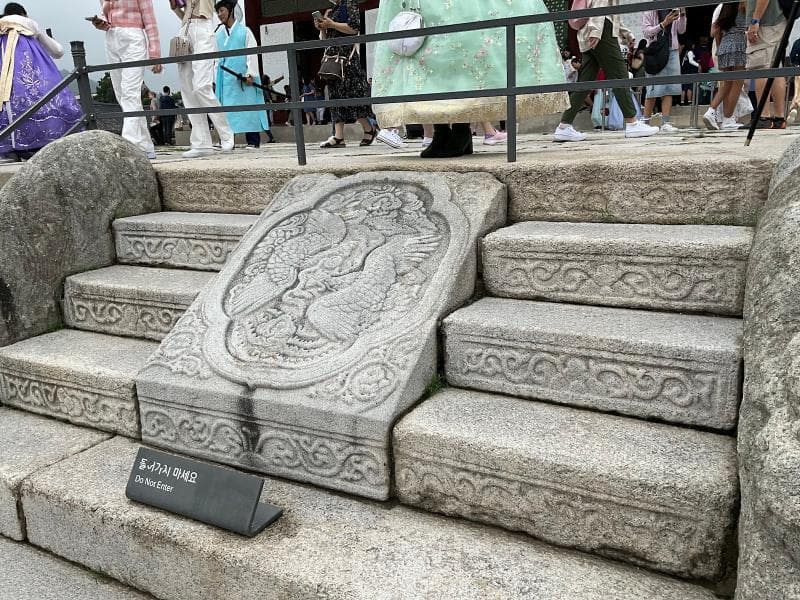
The stone platforms are intricately carved with various animal ornaments, including the 12 Chinese zodiac signs, which were believed to ward off evil and symbolize auspiciousness. In the spacious courtyard leading up to the hall, visitors can observe 'rank stones' ('p'umgyesŏk'). These stones marked the precise positions where civil and military officials of different ranks would stand during royal assemblies and ceremonies, creating a powerful visual of Joseon court hierarchy.
Inside, the king's throne (eojwa) is centrally located, backed by a stunning folding screen depicting the sun, moon, and five peaks – a cosmic landscape symbolizing the universe and the king's divine authority. Above the throne, a golden dragon coils within the intricately painted ceiling, further emphasizing the king's imperial power.
Stories, Fun Facts & Local Details
The name 'Geunjeongjeon' itself offers a glimpse into the Joseon philosophy of governance, emphasizing the king's commitment to diligent rule. Imagine the sheer spectacle of the New Year's greetings, where officials would gather in the courtyard to wish the king well, their ranks perfectly aligned according to the stone markers. These weren't merely administrative gatherings; they were elaborate rituals imbued with deep cultural and political significance.
While Geunjeongjeon Hall has always been a focal point of Gyeongbokgung, its interior was not always accessible to the general public. Historically, access was limited to prevent damage to the cultural treasure and ensure safety. This limited access adds to the mystique and special feeling when one does get a glimpse inside, allowing a more intimate connection with the past.
The building's design, from its broad stone foundations to the majestic dragons on the ceiling, was intended to enhance the dignity and authority of the monarch. The very height of the ceilings and pillars around the hall contributes to this imposing atmosphere, symbolizing royal power.
Visitor Perspective
Visiting Geunjeongjeon Hall offers a truly immersive journey into Korea's royal past. As you walk through its grand gates and across the expansive courtyard, it's easy to visualize the historical events that unfolded here. The sheer scale and meticulous detail of the architecture evoke a sense of awe and respect for the craftsmanship of the Joseon era. The vibrant colors ('dancheong') and intricate carvings on the wooden structures and roof are a feast for the eyes, offering countless photographic opportunities.
The harmony between the hall and the surrounding natural landscape, particularly the backdrop of Bugaksan Mountain, creates a serene yet powerful vista. Geunjeongjeon Hall is more than just an old building; it is a living testament to centuries of Korean history, culture, and artistry, inviting curious travelers to delve into the stories of kings and queens who once graced its floors. It remains a highlight of any visit to Gyeongbokgung Palace, offering a profound appreciation for Korea's royal legacy.
Coordinates: 126.977157448378, 37.5785607101944
View on Google Maps💬 How Travelers Describe This Place
Based on community votes
Photogenic
881Unique
733Beautiful
642Interesting
375Must See
12
Traveler Stories
Discover memorable experiences shared by travelers who have visited this place.
No traveler stories yet.
Be the first traveler to share what made this place memorable.

Tour
By
Spot
Discover amazing places around the world. Your journey starts here.
Explore
© 2026 TourBySpot. All rights reserved.