Gwanghwamun Gate
Seoul, South Korea
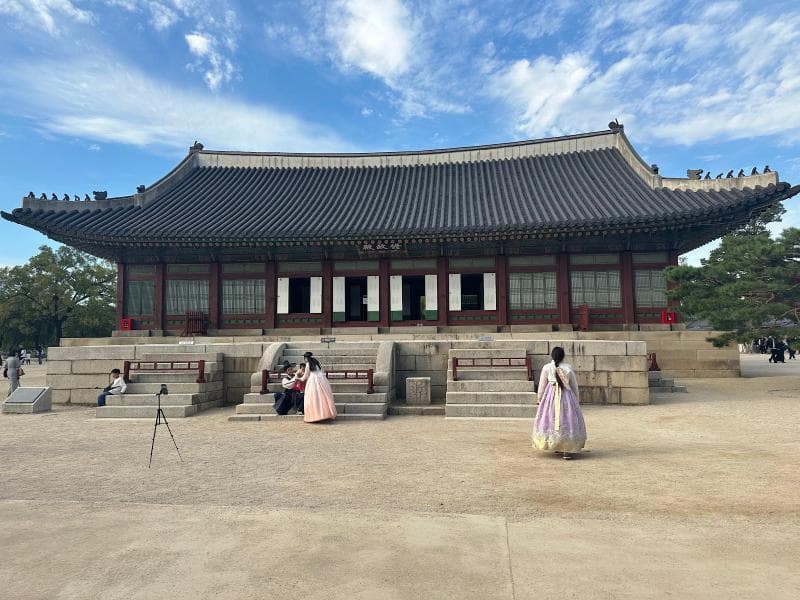
Discover Gwanghwamun Gate in Seoul, South Korea. Explore its rich history, iconic architecture, and the fascinating Changing of the Royal Guard ceremony.
Overview
Gwanghwamun Gate, the majestic main entrance to Gyeongbokgung Palace in Seoul, South Korea, stands as a profound symbol of the nation's rich history and enduring spirit. More than just an entryway, it is a grand architectural statement that has witnessed centuries of Korean triumphs and tribulations. Positioned at the northern end of Sejongno, the gate forms the heart of a vibrant historical district where ancient traditions seamlessly blend with modern urban life. Visitors often find themselves transported back in time upon approaching its imposing structure, sensing the weight of its legacy as the gateway to the Joseon Dynasty's premier royal residence.
Its grandeur and intricate details make it a popular destination for those seeking to understand Korea's royal past and cultural identity. The gate serves not only as a ceremonial passage but also as a powerful reminder of the resilience of the Korean people through periods of destruction and meticulous restoration.
History & Cultural Background
The story of Gwanghwamun Gate begins in 1395, built under the reign of King Taejo, the founder of the Joseon Dynasty. It was originally named Nammun (South Gate) or Omun, later receiving its current name from Sejong the Great in 1426. The name 'Gwanghwamun' roughly translates to 'may the light of enlightenment blanket the world' or 'spreading the king's virtue far and wide', encapsulating the ideals of governance during that era.
Throughout its long history, Gwanghwamun has faced numerous periods of destruction and rebuilding. It was severely damaged during the Imjin War (Japanese invasions) from 1592 to 1598, remaining in ruins for nearly three centuries. It was eventually reconstructed in 1864 during the reign of King Gojong. However, the early 20th century brought further misfortune; during the Japanese colonial rule, the gate was demolished and relocated in 1927 to make way for the Japanese Government-General building. The Korean War (1950-1953) saw its wooden superstructure completely burned down, leaving only the stone base.
A controversial reconstruction in 1968 used concrete and repositioned the gate slightly. A significant restoration project commenced in 2006, concluding on August 15, 2010, on Korea's Liberation Day. This meticulous effort disassembled the concrete structure, moved the gate back to its original location and alignment, and reconstructed it using traditional materials like granite and pine wood. This painstaking restoration returned Gwanghwamun to its authentic Joseon-era appearance, symbolizing national pride and the enduring spirit of Korea.
What Makes It Special
Gwanghwamun Gate is distinguished by its magnificent architectural design, featuring three arched passages: the central one reserved exclusively for the king, and the two outer arches for the crown prince and royal officials. The tall granite base is topped by an elegant wooden gate tower, adorned with vibrant *Dancheong* – traditional Korean multicolored patterns – that not only protect the wood but also signify authority.
Flanking the gate are two mythical *Haetae* sculptures, lion-like beasts believed to protect the palace from fire and misfortune. These guardians add a layer of mystical symbolism to the gate's already impressive presence. The gate's position at the beginning of Gwanghwamun Square connects it directly to statues of revered historical figures, King Sejong the Great and Admiral Yi Sun-sin, further cementing its role as a cultural focal point in Seoul. The square often hosts cultural events and serves as a significant public space.
Stories, Fun Facts & Local Details
One of the most captivating traditions associated with Gwanghwamun Gate is the daily Changing of the Royal Guard ceremony. This colorful spectacle, featuring guards in traditional Joseon Dynasty costumes, takes place multiple times a day and offers a vivid glimpse into Korea's past, bringing history to life for onlookers. It's an experience that draws crowds and allows visitors to feel a direct connection to the royal heritage.
The gate's resilience through repeated destruction and rebuilding makes it a powerful symbol of the Korean people's unwavering spirit. It has stood witness to the evolution of Seoul, from the capital of the Joseon Dynasty (then known as Hanyang) to the bustling modern metropolis it is today. The area immediately in front of the gate once housed *Yukjo Street*, where the central government organs conducted their business, highlighting the gate's historical importance as a political and administrative hub.
For a truly immersive experience, many visitors choose to rent and wear traditional Korean attire, *Hanbok*. Wearing a *Hanbok* grants free entry into Gyeongbokgung Palace, and it's a popular way to enhance the feeling of stepping back in time while exploring the palace grounds.
Visitor Perspective
Approaching Gwanghwamun Gate is often described as stepping through a portal. The sheer scale and intricate craftsmanship evoke a sense of awe, creating an immediate connection to Korea's imperial past. As you pass through its grand arches, the modern cityscape behind you recedes, and the expansive grounds of Gyeongbokgung Palace unfold, framed by the majestic Bugaksan Mountain in the distance. This deliberate axial layout, emphasizing order and hierarchy, guides visitors deeper into the historical complex.
The gate itself is free to view and walk through, allowing everyone to appreciate its exterior details and historical significance. The royal guard changing ceremony is a highlight, offering a dynamic and authentic cultural experience that should not be missed. The surrounding Gwanghwamun Square provides additional historical context with statues of national heroes and an underground museum dedicated to King Sejong the Great, offering a deeper dive into Korean achievements. The accessibility of Gwanghwamun by subway (Gwanghwamun Station, Line 5) makes it an easy and essential starting point for any exploration of Seoul's royal palaces.
Coordinates: 126.9770194, 37.5760444
View on Google Maps💬 How Travelers Describe This Place
Based on community votes
Beautiful
881Unique
598Photogenic
555Interesting
387Must See
375
Traveler Stories
Discover memorable experiences shared by travelers who have visited this place.
No traveler stories yet.
Be the first traveler to share what made this place memorable.

Tour
By
Spot
Discover amazing places around the world. Your journey starts here.
Explore
© 2026 TourBySpot. All rights reserved.