Ertuğrul Gazi Mosque
Ashgabat, Turkmenistan
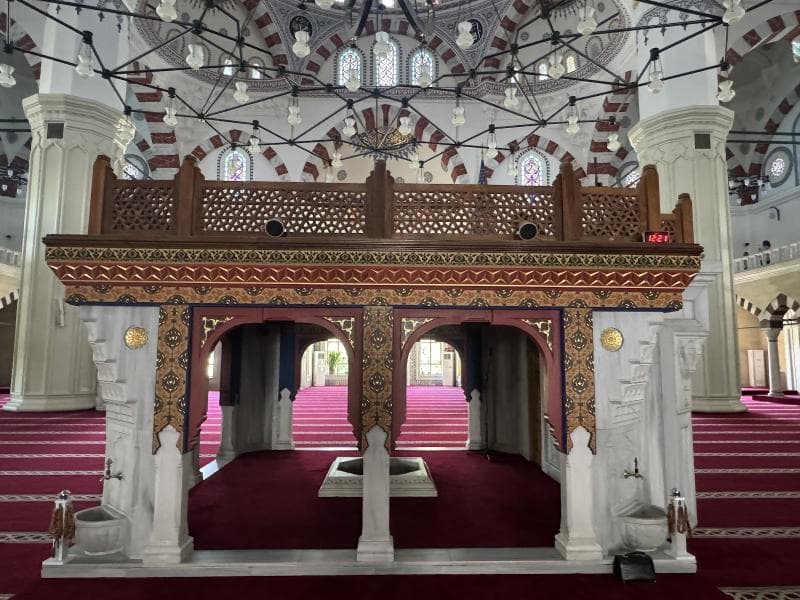
Discover the Ertuğrul Gazi Mosque in Ashgabat, Turkmenistan. Explore its Ottoman architecture, rich history, and cultural significance.
Overview
The Ertuğrul Gazi Mosque, also widely known as the Azadi Mosque, stands as a magnificent landmark in Ashgabat, the capital city of Turkmenistan. This grand structure is one of the largest mosques in Ashgabat, capable of accommodating up to 5,000 worshippers at once. Its striking white marble exterior and prominent four minarets make it an unmissable feature of the city's architectural landscape. The mosque's design draws heavily from classical Ottoman architecture, echoing the famous Blue Mosque of Istanbul, and incorporates elements of Islamic and Byzantine styles. It is not merely a place of worship but a significant cultural and historical symbol, representing the spiritual revival of Turkmenistan post-independence and the enduring ties between Turkmenistan and Turkey.
History & Cultural Background
The history of the Ertuğrul Gazi Mosque is closely intertwined with Turkmenistan's re-emergence as an independent nation. The idea for its construction was first proposed in 1992 during an official visit by then-Turkish Prime Minister Süleyman Demirel. Construction officially began in January 1993, and the mosque was ceremonially opened in 1998, marking a pivotal moment for the local Muslim community. Named in honor of Ertuğrul Gazi, the revered father of Osman I, the founder of the Ottoman Empire, the mosque serves as a testament to the deep cultural and historical connections between the Turkic nations. It was one of the first major religious edifices built in Ashgabat following Turkmenistan's sovereignty, symbolizing a spiritual and architectural renaissance.
What Makes It Special
What truly sets the Ertuğrul Gazi Mosque apart is its breathtaking architectural fusion and meticulous craftsmanship. The mosque's exterior, often described as shimmering white marble, is adorned with intricate calligraphy and geometric patterns. Its four elegant minarets soar to a height of 62 meters, flanking a grand central dome. Inside, visitors are greeted by a serene and lavish interior, where the prayer halls showcase exquisite stained glass windows, ornate paintings, and gilded accents. The large wooden doors, crafted by Turkish artisans, are a marvel in themselves, reportedly assembled without the use of a single nail. Furthermore, the use of over 160 tons of lead for the roof and domes highlights the scale and dedication to quality in its construction. The mosque also features a spacious courtyard with a beautiful fountain, offering a peaceful space for reflection.
Stories, Fun Facts & Local Details
Beyond its architectural grandeur, the Ertuğrul Gazi Mosque carries intriguing local stories. During its construction, reports of several accidental deaths led to a widespread belief among some locals that the mosque was 'cursed'. Despite these anecdotes, the mosque has become a vital hub for Ashgabat's Muslim community, serving as a center for major religious holidays like Kurban Bayrami and Ramadan. It hosts various cultural and educational activities, including libraries, classrooms, and lectures, fostering a sense of community and deeper understanding of Islamic teachings. The mosque's interior is thoughtfully designed with separate spaces for men and women during prayer, with the first floor dedicated to men and the second to women, ensuring comfort and reverence for all worshippers.
Visitor Perspective
For a curious traveler, visiting the Ertuğrul Gazi Mosque offers a profound experience of cultural immersion and architectural appreciation. The tranquil atmosphere inside, created by the interplay of light and shadow on its rich decorations, provides a spiritual ambiance for contemplation. Non-Muslim visitors are generally welcome outside of prayer times, allowing an opportunity to respectfully observe the intricate craftsmanship and serene environment. It is recommended to dress modestly to show respect for the sacred space. Exploring the mosque's vast courtyard and admiring the details of its domes and minarets allows one to fully grasp its significance as a symbol of Turkmenistan's heritage and its connections to the wider Turkic and Islamic world.
Coordinates: 58.39889, 37.93306
View on Google Maps💬 How Travelers Describe This Place
Based on community votes
Interesting
953Beautiful
695Photogenic
658Must See
396Unique
22
Traveler Stories
Discover memorable experiences shared by travelers who have visited this place.
No traveler stories yet.
Be the first traveler to share what made this place memorable.
Things to see at Ertuğrul Gazi Mosque



Tour
By
Spot
Discover amazing places around the world. Your journey starts here.
Explore
© 2026 TourBySpot. All rights reserved.