Marble Entrances
Ashgabat, Turkmenistan
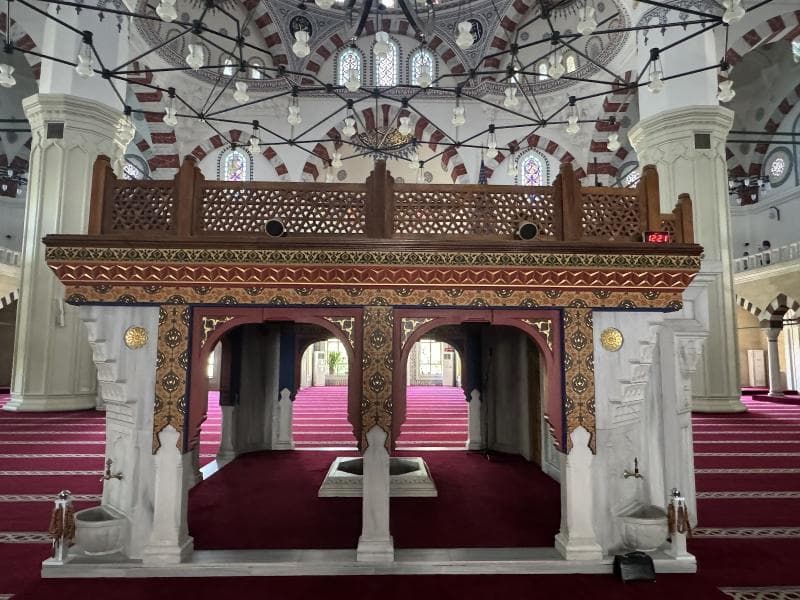
Explore the stunning Marble Entrances of Ertuğrul Gazi Mosque in Ashgabat, Turkmenistan. Discover its Ottoman architecture and rich history.
Overview
Nestled within the gleaming white city of Ashgabat, Turkmenistan, the Ertuğrul Gazi Mosque stands as a majestic beacon of Islamic art and architecture. A prominent landmark, this mosque is renowned for its striking Ottoman style, often drawing comparisons to Istanbul's iconic Blue Mosque. Its exterior, a dazzling expanse of white marble, gleams under the Turkmen sun, immediately commanding attention. The 'Marble Entrances' of this grand edifice are not merely functional doorways but intricate gateways that introduce visitors to a sanctuary of spiritual serenity and artistic brilliance.
Completed in 1998, shortly after Turkmenistan gained independence, the Ertuğrul Gazi Mosque is more than just a place of worship; it symbolizes renewed cultural and religious identity. Its four towering minarets pierce the sky, while a grand central dome crowns the structure, reflecting a blend of Islamic and Byzantine architectural traditions. The sheer scale and meticulous craftsmanship evident in every detail, particularly around its entrances, make it a must-visit for any traveler exploring Ashgabat's unique urban landscape.
History & Cultural Background
The Ertuğrul Gazi Mosque carries a name steeped in history, honoring Ertuğrul, the revered father of Osman I, the founder of the Ottoman Empire. This naming choice reflects the deep cultural ties and shared heritage between Turkmenistan and Turkey. Built by Turkish architects, including Hilmi Şenalp, its construction after Turkmenistan's independence from the Soviet Union in 1990 was a significant moment, marking a re-embracing of religious freedom and cultural expression for the nation's predominantly Muslim population.
Known also as the Azadi Mosque, owing to its location on Azadi Street, the mosque quickly became the largest in Ashgabat, capable of accommodating up to 5,000 worshippers. Its construction was not without its trials; a local belief persists that the mosque is 'cursed' due to several accidental deaths during its building, adding a somber, mystical layer to its otherwise grand narrative. Yet, despite this dark lore, it remains a vibrant center for religious life and cultural activities, embodying the resilience and spiritual devotion of the Turkmen people.
What Makes It Special
The defining characteristic that makes the Ertuğrul Gazi Mosque truly special is its pervasive use of brilliant white marble. This opulent material is not confined to mere accents but forms the very essence of its exterior, including its magnificent entrances. The 'Marble Entrances' are thus a microcosm of the mosque's overall grandeur – portals framed by expertly cut and polished white marble, radiating a sense of purity, peace, and timeless elegance.
These entrances are more than just architectural elements; they are canvases for intricate Islamic artistry. Visitors are greeted by delicate yet profound calligraphy and geometric patterns adorning the marble surfaces around the doorways. The doors themselves, described as 'thinnest work decorated with six-sided ornaments,' are crafted with extraordinary precision by Turkish professionals, featuring joinery that eschews visible fastenings, making them works of art in their own right. The entry into the courtyard, often featuring writing above and an inset reminiscent of a mihrab, prepares the visitor for the spiritual journey within.
Stories, Fun Facts & Local Details
One fascinating aspect often shared by locals is the aforementioned 'dark history' or 'curse' attributed to the mosque due to construction accidents. This local lore, while unsettling, adds an element of intrigue and mystery to the site, making it a subject of hushed conversations and contemplative reflections among visitors and residents alike.
Beyond the marble, the interior of the mosque is a riot of lavish decoration. Stepping through the marble entrances, one is enveloped by a world of rich paintings, gilding, and exquisite stained-glass windows that bathe the prayer hall in a soft, ethereal light. The vibrant blue and white stripes seen in the courtyard can give way to red and white patterns inside, creating a dynamic visual experience that shifts as you explore. The mosque also features a large courtyard with a serene fountain, offering a peaceful space for reflection before or after entering the main prayer hall through its ornate marble thresholds.
Visitor Perspective
Approaching the Ertuğrul Gazi Mosque, particularly its 'Marble Entrances', is an experience that evokes a sense of awe and reverence. The gleaming white marble, contrasted against the often-clear Ashgabat sky, creates a truly photogenic scene. The meticulous detail in the carvings and the sheer scale of the doorways convey both power and an invitation to tranquility. Many travelers find themselves pausing at the entrance, taking in the intricate design and the historical weight of the structure before stepping inside.
The transition from the bright, expansive marble exterior to the richly decorated interior is a journey in itself, preparing the mind for contemplation and appreciation. Whether you are a history enthusiast, an architecture lover, or someone seeking a moment of spiritual peace, the Ertuğrul Gazi Mosque, with its magnificent marble entrances acting as its grand prologue, offers an unforgettable cultural immersion into Turkmenistan's heritage. It stands not only as an architectural marvel but as a testament to the nation's identity and deep spiritual roots.
Coordinates: 58.39903449768865, 37.932912468911205
View on Google Maps💬 How Travelers Describe This Place
Based on community votes
Unique
836Interesting
797Photogenic
286Beautiful
255Must See
86
Traveler Stories
Discover memorable experiences shared by travelers who have visited this place.
No traveler stories yet.
Be the first traveler to share what made this place memorable.

Tour
By
Spot
Discover amazing places around the world. Your journey starts here.
Explore
© 2026 TourBySpot. All rights reserved.