Decorative Interiors
Ashgabat, Turkmenistan
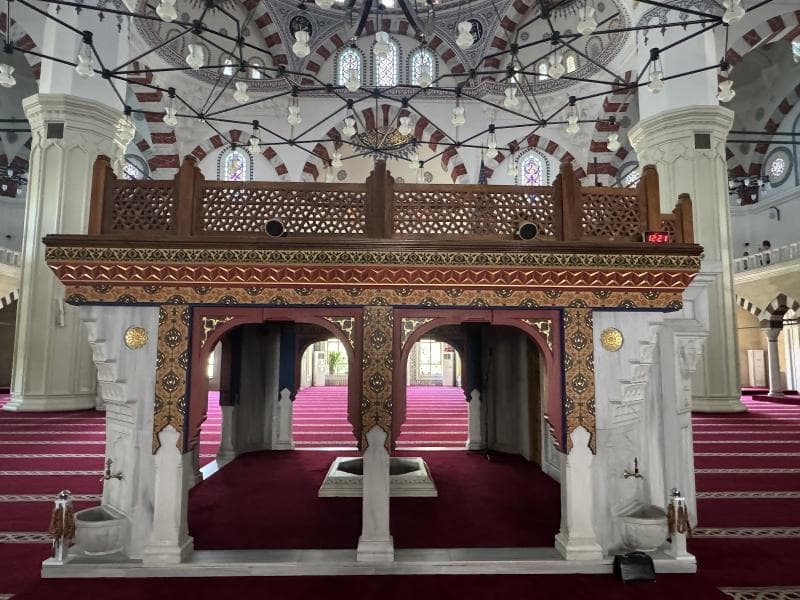
Explore the lavish decorative interiors of Ertuğrul Gazi Mosque in Ashgabat, Turkmenistan. Discover intricate calligraphy, stained glass, and gilding in this Ottoman-style architectural marvel.
Overview
Nestled in the heart of Ashgabat, Turkmenistan, the Ertuğrul Gazi Mosque stands as a majestic beacon of Islamic architecture, often regarded as one of the country's most beautiful Muslim mosques. While the mosque itself is a grand spectacle, its true splendor is perhaps best appreciated within its 'Decorative Interiors'—a captivating world of intricate artistry and meticulous craftsmanship. This inner sanctum is not merely a place of worship; it is a profound testament to cultural heritage and spiritual devotion, drawing parallels with the iconic Blue Mosque of Istanbul due to its Ottoman-style design and opulent embellishments. Its sheer size and rich decoration make it a focal point in the city, inviting curious travelers to step inside and experience a serene atmosphere born from centuries of artistic tradition.
History & Cultural Background
The Ertuğrul Gazi Mosque, also known locally as the Azadi Mosque due to its location on Azadi Street, was inaugurated in 1998, a significant period shortly after Turkmenistan declared its independence from the Soviet Union. Its construction marked a vital return to religious practice for the Turkmen people, establishing it as a potent symbol of freedom and national identity. The mosque is named after Ertuğrul Gazi, the revered father of Osman I, who founded the Ottoman Empire, underscoring deep historical and cultural ties within the broader Turkic and Islamic world. Designed by a Turkish architect, the mosque beautifully blends classical Ottoman influences with Islamic and Byzantine architectural styles, creating a unique aesthetic that speaks to both grandeur and refinement.
What Makes It Special
The 'Decorative Interiors' of the Ertuğrul Gazi Mosque are where its exceptional nature truly shines. Upon entering, visitors are immediately enveloped in a serene and contemplative ambiance, a result of the mosque's meticulously crafted design. The prayer hall, capable of accommodating up to 5,000 worshippers, is a feast for the eyes, richly adorned with a vibrant array of paintings, elaborate gilding, and exquisite stained glass windows that cast colorful light throughout the space. Islamic calligraphy, featuring gilded words from the Quran often entered manually, adds profound spiritual depth and artistic detail to the walls and domes. Observers will notice the striking inner domes and striped arches; blue and white in the courtyard give way to warm red and white hues inside, a subtle yet impactful transition that guides the eye. The entire interior is a testament to meticulous craftsmanship, showcasing intricate geometric patterns and refined decorations that contribute to its status as a significant religious and cultural site in Turkmenistan.
Stories, Fun Facts & Local Details
Beyond its visual splendor, the Ertuğrul Gazi Mosque carries fascinating stories and local quirks that add to its character. Its striking resemblance to Istanbul's Blue Mosque is not coincidental but a deliberate design choice that honors a shared cultural heritage. Interestingly, the mosque has an intriguing 'dark history' from its construction period, with several accidental deaths leading to a local belief that the mosque might be 'cursed'. Despite these tales, the mosque is cherished for its genuine atmosphere, a quality some travelers find particularly appealing amidst Ashgabat's often uniform white marble cityscape. The mosque's grand doors, crafted by Turkish professionals, are another highlight, featuring incredibly thin work decorated with six-sided ornaments. Inside, traditional Islamic practices are observed with separate prayer areas: the first floor is designated for men, and the second floor for women, ensuring a harmonious and respectful environment for all worshippers.
Visitor Perspective
For a curious traveler, a visit to the 'Decorative Interiors' of the Ertuğrul Gazi Mosque offers a rich cultural and architectural experience. The mosque welcomes visitors daily and is technically open 24/7, allowing one to witness its beauty under the morning sun or the enchanting glow of evening illumination. However, it is generally advised to avoid visiting the inner halls during Friday prayers (Jumu'ah) or on major Islamic holidays, as the mosque will be bustling with worshippers. Most travelers find that one to two hours is sufficient time to leisurely explore the intricate details, admire the craftsmanship of the woodcarvers, appreciate the stained glass, and capture beautiful photographs. For those seeking a deeper spiritual connection or quiet contemplation by the courtyard's fountain, allocating a bit more time is recommended. Located centrally on Azadi Street, the mosque is easily accessible by taxi or local shuttle buses, its prominent white minarets serving as an unmistakable landmark in Ashgabat. Visitors consistently praise the mosque's beauty, cleanliness, and the peaceful, almost emotional, impact it leaves upon them.
Coordinates: 58.399, 37.9329
View on Google Maps💬 How Travelers Describe This Place
Based on community votes
Unique
791Interesting
514Beautiful
457Must See
252Photogenic
207
Traveler Stories
Discover memorable experiences shared by travelers who have visited this place.
No traveler stories yet.
Be the first traveler to share what made this place memorable.

Tour
By
Spot
Discover amazing places around the world. Your journey starts here.
Explore
© 2026 TourBySpot. All rights reserved.