Chandeliers
Ashgabat, Turkmenistan
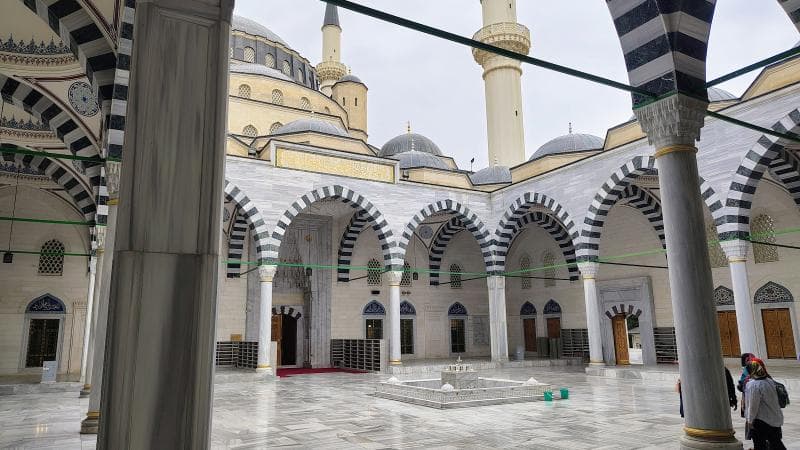
Discover the grand chandeliers within Ashgabat's Ertuğrul Gazi Mosque, Turkmenistan. Explore its opulent Ottoman-inspired interior and spiritual ambiance.
Overview
Nestled amidst the gleaming white marble city of Ashgabat, Turkmenistan, the Ertuğrul Gazi Mosque stands as a magnificent testament to architectural grandeur and spiritual devotion. Often referred to as the Azadi Mosque, it is one of the largest and most beautiful Muslim mosques in the nation, capable of accommodating up to 5,000 worshippers at a time. Its striking white marble exterior, crowned with an impressive central dome and four towering minarets, instantly evokes the classical Ottoman style, reminiscent of Istanbul's iconic Blue Mosque. While the entire mosque is a visual spectacle, the interior's lavish decoration, particularly its grand illuminating fixtures, plays a pivotal role in orchestrating a breathtaking interplay of light and color, essential for the mosque's contemplative ambiance. These impressive chandeliers, though not individually documented with specific historical narratives, are integral to the mosque's opulent internal design, enhancing the meticulous craftsmanship evident in every detail.
History & Cultural Background
The Ertuğrul Gazi Mosque holds a significant place in Turkmenistan's modern history. Inaugurated in 1998, it was constructed shortly after the nation gained its independence from the Soviet Union in 1990. This timing symbolizes a revitalized commitment to religious freedom and cultural identity after decades of suppression. The mosque is named after Ertuğrul Gazi, the revered father of Osman I, who was the founder of the Ottoman Empire. This naming serves as a profound testament to the enduring historical and cultural ties between Turkmenistan and the broader Turkic world. Designed by Turkish architect Hilmi Şenalp, its construction in the classical Ottoman style reflects this deep connection, making it a prominent symbol of shared heritage. The mosque incorporates both Islamic and Byzantine architectural elements, further enriching its historical tapestry. Its presence in Ashgabat underscores the city's religious and cultural diversity, attracting visitors from around the world interested in Turkmenistan's heritage and Islamic traditions.
What Makes It Special
The true magic of the Ertuğrul Gazi Mosque, and particularly its sub-spot of 'Chandeliers' (grand illuminating fixtures), lies in its opulent interior, where every detail contributes to a profound sensory and spiritual experience. The prayer hall abounds with exquisite paintings, delicate gilding, and fine stained glass windows, all meticulously designed to capture and filter light, bathing the space in a soft, ethereal glow. The impressive chandeliers are central to this luminosity, acting not merely as light sources but as integral components of the decorative scheme. They complement the intricate calligraphy and geometric patterns that adorn the walls and domes, creating a sophisticated interplay of light and shadow. While specific historical accounts or unique anecdotes about individual chandeliers are not widely documented, their overall design and placement ensure that light is distributed evenly, enhancing the mosque's vast scale and intricate artistry. In Islamic architecture, light often symbolizes divine guidance, knowledge, and enlightenment, making these fixtures embodiments of spiritual ideals. The materials and craftsmanship, typically involving fine metals and glass, contribute to their elegance and durability, reflecting traditional artistry and the sanctity of the space. The subtle brilliance emanating from these fixtures draws the eye upwards, leading to the majestic dome and fostering a deep sense of reverence and wonder.
Stories, Fun Facts & Local Details
Beyond its architectural beauty, the Ertuğrul Gazi Mosque carries a few intriguing elements that add to its character. A notable anecdote, though somber, is the belief among some locals that the mosque is 'cursed' due to accidental deaths that occurred during its construction. This adds a layer of mystical folklore to its modern history. Despite this, many visitors find the mosque to be a uniquely 'genuine' and calming space, contrasting with the often perceived artificiality of some other grand structures in Ashgabat. The mosque's resemblance to Istanbul's Blue Mosque is not merely coincidental; it's a deliberate design choice that speaks to the shared cultural and architectural language between Turkey and Turkmenistan. The fine stained glass windows, mentioned alongside the lavish interior, contribute significantly to the mosque's atmosphere by casting vibrant colors and patterns that shift with the daylight, creating an ever-changing visual spectacle. These design elements, including the grand chandeliers, not only illuminate but also tell a story of cultural revival and pride in Islamic heritage following Turkmenistan's independence. The intricate six-sided ornaments on its doors, created by Turkish professionals, further highlight the meticulous attention to detail that defines the entire edifice.
Visitor Perspective
For a curious traveler, stepping into the Ertuğrul Gazi Mosque offers an immediate immersion into an atmosphere of serenity and awe. The interior's meticulously crafted elements, from the vibrant stained glass to the intricate gilding and patterns, are brought to life by the grand illuminating fixtures. These chandeliers provide a soft, balanced glow that highlights the delicate brushwork of the paintings and the gleam of the gilded surfaces, drawing the eye naturally towards the majestic central dome. It's a space where the interplay of natural light filtering through the windows and the artificial light from the chandeliers creates a tranquil and reflective environment. Visitors often describe feeling a profound sense of peace and wonder, a testament to the mosque's role as a sanctuary for prayer and contemplation. The sheer scale and meticulous attention to these decorative elements, including the impressive fixtures that provide illumination, distinguish the mosque as a masterpiece of Islamic art and architecture. It invites one to pause, appreciate the dedication to artistry and faith, and connect with the profound cultural and religious heritage of Turkmenistan, leaving a lasting impression on all who have the privilege to visit.
Coordinates: 58.39903449768865, 37.932912468911205
View on Google Maps💬 How Travelers Describe This Place
Based on community votes
Interesting
989Unique
613Photogenic
581Must See
514Beautiful
207
Traveler Stories
Discover memorable experiences shared by travelers who have visited this place.
No traveler stories yet.
Be the first traveler to share what made this place memorable.

Tour
By
Spot
Discover amazing places around the world. Your journey starts here.
Explore
© 2026 TourBySpot. All rights reserved.