Elephant Cave
Bali, Indonesia
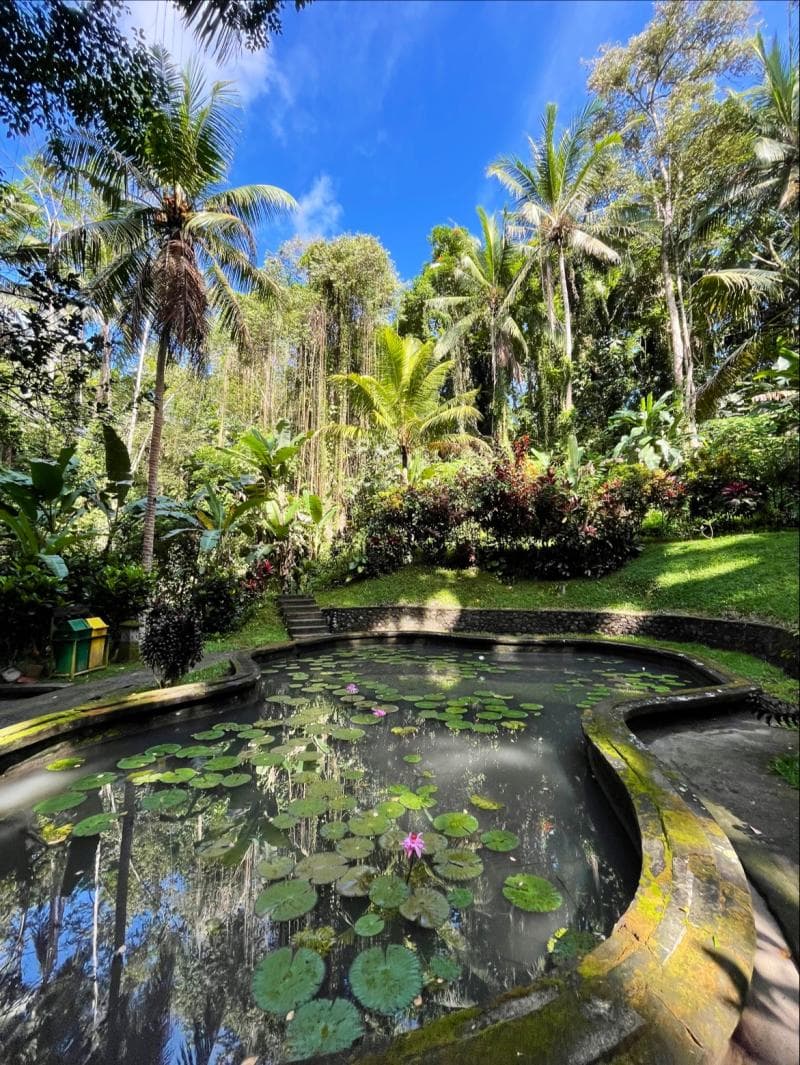
Explore Goa Gajah, the ancient Elephant Cave in Bali, Indonesia. Discover its unique Hindu-Buddhist heritage, intricate carvings, and sacred bathing pools near Ubud.
Overview
Nestled amidst the lush landscapes of Bedulu Village, near the vibrant town of Ubud in Bali, Indonesia, lies Goa Gajah, famously known as the Elephant Cave. This enigmatic archaeological site offers a profound journey into Bali's spiritual past, serving as a testament to the island's rich cultural tapestry. More than just a cave, Goa Gajah is a sprawling temple complex featuring intricate rock carvings, ancient bathing pools, and serene pathways that invite contemplation. It stands as a cherished heritage site, inviting curious travelers to uncover its secrets and experience a unique blend of history and spirituality.
Visitors are greeted by a dramatically carved entrance, often described as a menacing giant's mouth, which leads into the dimly lit heart of the cave. Beyond the cave, the complex extends to reveal sacred bathing pools, fed by ancient waterspouts, and further trails through verdant jungle to a tranquil river. Goa Gajah is not only a site of historical importance but remains an active place of worship for local Balinese Hindus, where daily offerings and ceremonies continue to honor its sacred grounds.
History & Cultural Background
The origins of Goa Gajah trace back to at least the 9th century, with some archaeological evidence suggesting its development through the 11th century during the reign of ancient Balinese Hindu-Buddhist kingdoms. It was primarily conceived as a sanctuary for spiritual meditation, serving both Hindu priests and Buddhist monks. This dual religious influence is a remarkable aspect of Goa Gajah, showcasing a period of harmony and shared spiritual practices on the island, a rare combination that symbolizes unity among different faiths.
The site's historical significance is further underscored by its mention in the Javanese poem Desawarnana, written in 1365. After centuries of being lost to the encroaching jungle, Goa Gajah was rediscovered by Dutch archaeologists in 1923. However, it was not until 1954 that the elaborate bathing pools, buried beneath layers of earth, were excavated, revealing more of the site's ancient glory and function as a place of ritual purification.
What Makes It Special
What truly sets Goa Gajah apart is its extraordinary synthesis of Hindu and Buddhist architectural and spiritual elements. The cave itself is adorned with a captivating, larger-than-life carving around its entrance, resembling a fierce creature's gaping mouth. This striking imagery is believed to be that of the Hindu earth god Bhoma or a mythological guardian, designed to ward off evil spirits and protect those entering the sacred space.
Inside the T-shaped cave, visitors encounter ancient Hindu and Buddhist relics. You'll find a shrine dedicated to the Hindu elephant-headed god Ganesha, along with the symbolic lingam and yoni, representing Shiva and the male and female principles of creation. Just outside the cave, the meticulously restored bathing pools are a sight to behold. Six stone figures, once thought to represent celestial maidens or Nagas, serve as waterspouts, channeling water believed to possess purifying properties. These spouts are said to symbolize the seven holy rivers of India, adding another layer of profound spiritual meaning to the site.
Stories, Fun Facts & Local Details
The name 'Goa Gajah' translates directly to 'Elephant Cave,' yet no elephants are native to Bali nor have ever lived at the site. The most widely accepted theory attributes the name to the statue of Ganesha, the elephant-headed Hindu deity, found within the cave. Another theory suggests it might be named after the nearby Petanu River, which was historically referred to as the 'Elephant River.' Local folklore also offers a more fantastical explanation, claiming the legendary giant Kebo Iwa carved the cave with his fingernail in a single night.
Goa Gajah was considered for UNESCO World Heritage status in 1995. However, in 2015, the Balinese government opted to withdraw several sites, including Goa Gajah, from the tentative list. This decision reflected a desire to prioritize the temples' function as living places of worship for the Balinese people over their designation as global tourist attractions.
Visitor Perspective
Visiting Goa Gajah offers a tranquil escape and a deep dive into Bali's spiritual heritage. The complex is best explored in the early morning, allowing for a serene experience before the crowds arrive and the tropical heat intensifies. The peaceful atmosphere provides ample opportunity for quiet reflection amidst the ancient carvings and natural beauty. Expect to spend approximately one to two hours discovering the cave, the bathing pools, and the surrounding lush gardens, which feature mossy steps and pathways leading down to a river junction, considered sacred.
As a sacred site, respectful attire is mandatory. Visitors are required to wear a sarong and sash, which are typically provided at the entrance, ensuring shoulders and legs are covered. It's also customary for women during menstruation to respectfully abstain from entering the most sacred areas of the temple. Comfortable walking shoes are recommended for navigating the steps and varied terrain of the complex. Goa Gajah truly provides a 'true Balinese' vibe, where nature and culture harmoniously converge to create a peaceful and profoundly meaningful experience.
Coordinates: 115.28785, -8.52291
View on Google Maps💬 How Travelers Describe This Place
Based on community votes
Unique
963Must See
897Interesting
723Beautiful
463Photogenic
274
Traveler Stories
Discover memorable experiences shared by travelers who have visited this place.
No traveler stories yet.
Be the first traveler to share what made this place memorable.
Things to see at Elephant Cave



Tour
By
Spot
Discover amazing places around the world. Your journey starts here.
Explore
© 2026 TourBySpot. All rights reserved.