Meditation Cave
Bali, Indonesia
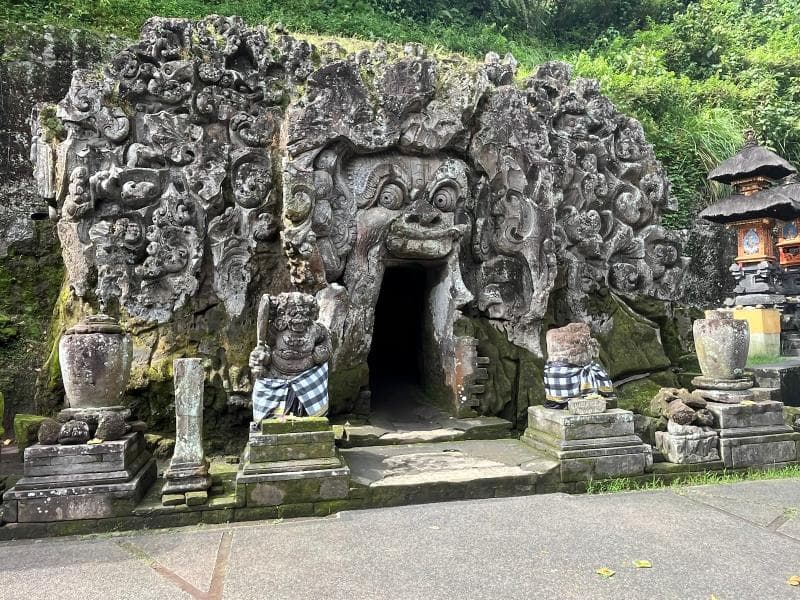
Explore the Meditation Cave inside Bali's ancient Goa Gajah (Elephant Cave) in Gianyar, Indonesia. Discover its rich Hindu-Buddhist history and tranquil meditation niches.
Overview
Deep in the lush landscape of Bali, Indonesia, near the vibrant town of Ubud, lies the ancient archaeological site of Goa Gajah, famously known as the Elephant Cave. Within this revered complex, the ‘Meditation Cave’ refers to the heart of the site: the rock-cut sanctuary itself, with its unique T-shaped interior and carved niches. This sacred space stands as a profound testament to Bali's rich spiritual heritage, blending both Hindu and Buddhist influences. Believed to have been constructed as a sanctuary for meditation and spiritual rituals, Goa Gajah invites visitors into a realm where history, spirituality, and nature converge in a truly captivating way.
The most striking feature of Goa Gajah is its enigmatic entrance, carved into a menacing giant face with a gaping mouth, which is often interpreted as a protector warding off evil spirits. Stepping through this ancient maw leads you into the cool, dimly lit chamber, where the true 'Meditation Cave' unveils its secrets. It was here that priests and monks once sought enlightenment and performed their sacred practices, leaving an palpable aura of peace and devotion.
History & Cultural Background
The origins of Goa Gajah are steeped in history, dating back to at least the 9th century, with some archaeological evidence suggesting its construction during the 11th century, likely under the Warmadewa Dynasty. It served as a hermitage, a place of spiritual retreat for both Hindu priests and Buddhist monks, reflecting Bali's unique early religious development where these two major traditions often coexisted harmoniously.
The name 'Goa Gajah' literally translates to 'Elephant Cave,' yet there are no actual elephants at the site. The naming has been the subject of several theories. Some scholars suggest it derives from the nearby Petanu River, once known as 'Lwa Gajah' or 'Elephant River.' Another popular theory attributes the name to the Hindu elephant-headed deity Ganesha, whose statue is prominently featured inside the cave. It was rediscovered by Dutch archaeologists in 1923, with further excavations in the 1950s revealing more of its extensive complex, including the sacred bathing pools.
What Makes It Special
The core of Goa Gajah's uniqueness lies within its 'Meditation Cave' – the inner sanctum. The cave's interior is a T-shaped chamber, meticulously carved into the rock. Along its walls are small niches, which historians and archaeologists believe were used as individual meditation cells for priests and monks seeking solace and spiritual focus. These silent alcoves, blackened with age and the smoke of countless incense offerings, evoke a powerful sense of the past spiritual practices that unfolded within them.
Inside, visitors encounter sacred relics that embody the blend of Hinduism and Buddhism. A statue of Ganesha, the remover of obstacles, stands prominently, representing the Hindu influence. To the right, a chamber houses lingam and yoni symbols, representing the Hindu god Shiva and his consort. The discovery of Buddhist stupas and images of meditating Buddha fragments near the river also underscores the site's rare duality, making it a profound symbol of unity among different faiths.
Stories, Fun Facts & Local Details
Beyond its tangible history, Goa Gajah is intertwined with local folklore and fascinating details. One popular legend suggests the cave was created by the fingernail of the mythical giant Kebo Iwa. The site remains an active place of worship for local Balinese Hindus, with daily offerings of flowers, rice, and incense maintaining its sacred atmosphere.
Outside the main cave lies an extensive bathing place, excavated in the 1950s. This purification complex features intricate carvings of six female figures holding water pitchers, from which holy spring water flows into the pools. These pools were historically used for ritual cleansing, believed to possess spiritual and healing properties, a practice still observed by some. The serene lotus pond nearby further adds to the tranquil ambiance, symbolizing purity and peace.
Visitor Perspective
A visit to the Meditation Cave within Goa Gajah is an immersive journey into Bali's spiritual past. As you descend the long flight of stairs and pass through the carved entrance, a tangible shift in atmosphere occurs. The cool, earthy air and the faint scent of incense create an immediate sense of reverence. Exploring the narrow passage and discovering the meditation niches, one can almost hear the echoes of ancient chants and feel the presence of those who once sought inner peace here.
Observing the intricate carvings, the sacred statues, and the subtle offerings left by devotees provides a deeper understanding of Balinese spiritual life. The blending of Hindu and Buddhist iconography within this single, ancient space offers a unique insight into the island's inclusive spiritual traditions. It is a place that encourages quiet contemplation, inviting you to connect with the timeless devotion that has shaped this remarkable site for centuries. Remember to dress modestly as a sign of respect for this active religious site.
Coordinates: 115.286331, -8.523389
View on Google Maps💬 How Travelers Describe This Place
Based on community votes
Must See
540Photogenic
252Unique
147Beautiful
114Interesting
19
Traveler Stories
Discover memorable experiences shared by travelers who have visited this place.
No traveler stories yet.
Be the first traveler to share what made this place memorable.

Tour
By
Spot
Discover amazing places around the world. Your journey starts here.
Explore
© 2026 TourBySpot. All rights reserved.