Bathing Pools
Bali, Indonesia
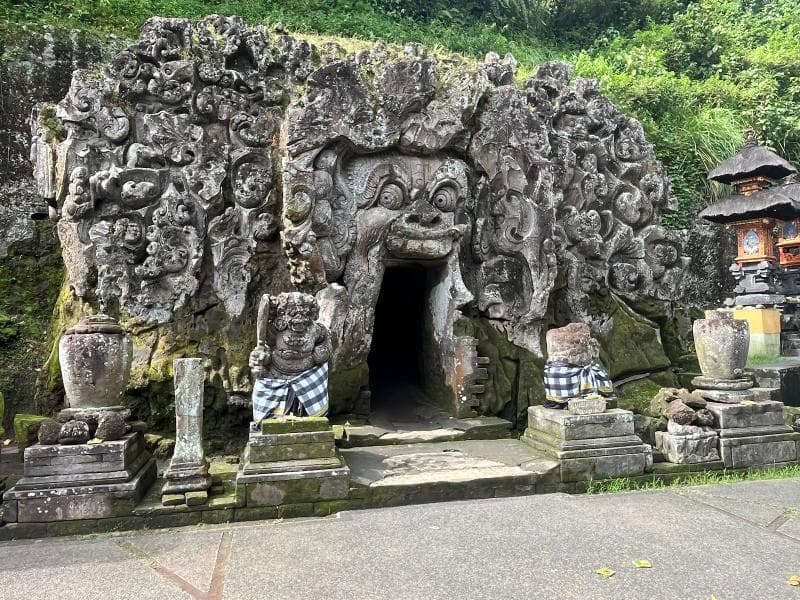
Discover the sacred Bathing Pools at Elephant Cave (Goa Gajah) in Bali, Indonesia. Explore ancient purification rituals and carved statues.
Overview
Nestled within the ancient archaeological complex of Goa Gajah, famously known as the Elephant Cave, the Bathing Pools offer a captivating glimpse into Bali's spiritual heritage. Located near Ubud in Bedulu village, Gianyar Regency, Indonesia, these sacred pools are a prominent feature of a site that harmoniously blends Hindu and Buddhist influences. Discovered relatively recently in 1954, these extensive bathing facilities served as a vital part of purification rituals for ancient worshippers before they entered the mystical cave itself. The rectangular pools, adorned with intricately carved statues, remain a powerful symbol of spiritual cleansing and connection to sacred rivers.
Descending into the tranquil area of the Bathing Pools, visitors are greeted by a serene atmosphere, where water gently flows from the stone figures. This sub-spot within Goa Gajah represents more than just an architectural marvel; it embodies a profound cultural and religious significance that has been preserved through centuries. The site, dating back to the 9th to 11th centuries, was once a sanctuary for meditation and prayer, attracting both Hindu priests and Buddhist monks.
History & Cultural Background
The history of the Bathing Pools at Goa Gajah is intertwined with the broader narrative of the Elephant Cave temple complex. While the cave itself is believed to have been constructed around the 9th century, serving as a spiritual meditation site, the bathing pools remained hidden for centuries. Dutch archaeologists first rediscovered the main cave in 1923, but it wasn't until 1954 that the extensive bathing complex was excavated. This discovery revealed a sophisticated system designed for ritual purification, known as 'melukat' in Balinese tradition.
Culturally, the pools are deeply significant. They are adorned with six, and originally perhaps seven, statues of celestial maidens, often referred to as nymphs or Hindu angels (Widyadara-Widyadari). Each figure holds a water spout, from which spring water flows into the main pool. These seven statues symbolically represent the Sapta Tirtha, the seven holy rivers of India (Ganga, Sarasvati, Yamuna, Godavari, Sindhu, Kaveri, and Narmada), drawing a powerful connection between Bali's local spiritual practices and the broader Hindu traditions of the subcontinent.
What Makes It Special
The Bathing Pools of Goa Gajah are special for several compelling reasons, primarily their profound spiritual symbolism and historical context. Unlike many other ancient sites, these pools offer a tangible connection to the purification rituals of the past. The graceful stone figures, perpetually pouring water, evoke a sense of timeless devotion and cleansing. The meticulous carving and the strategic layout, reflecting a balance between the cave (mountain) and the pools (water), highlight the advanced spiritual understanding and artistry of their ancient creators.
The blend of Hindu and Buddhist elements within the larger Goa Gajah complex is also a remarkable feature, demonstrating a period of shared worship and spiritual harmony on the island. The pools, with their connection to the holy rivers of India, serve as a focal point for understanding the syncretic nature of Balinese spirituality. The fact that the water is considered sacred, believed to have healing properties and the ability to purify body and spirit, imbues the site with a mystical allure that transcends mere historical interest.
Stories, Fun Facts & Local Details
One of the intriguing 'fun facts' about Goa Gajah, including its bathing pools, is its name, 'Elephant Cave'. Despite the absence of actual elephants, theories suggest the name might derive from the nearby Petanu River, once known as 'Lwa Gajah' (Elephant River), or from the elephant-headed Hindu deity Ganesha, whose statue resides within the cave. Another theory posits that the cave's intricately carved entrance, depicting a menacing face, was once thought to resemble an elephant, or perhaps the tusk-like fangs led to the association.
Locally, the water from the spouts in the Bathing Pools is considered 'tirta,' or holy water. Worshippers traditionally used these pools for ritual cleansing before engaging in prayer or meditation, a practice that continues today with 'melukat' ceremonies. It's believed that bathing in these waters was thought to bestow youth and purification. The layout of the pools, with segregated areas for men and women, also reflects ancient societal customs regarding ritual purity. The confluence of two rivers near the site further reinforces its sacredness in Balinese cosmology, where such junctions are considered magical.
Visitor Perspective
For the curious traveler, visiting the Bathing Pools at Goa Gajah is an experience steeped in serenity and historical wonder. After descending a flight of stairs into the lower section of the complex, one arrives at the excavated pools. The atmosphere is notably different from the bustling main cave entrance, offering a peaceful retreat. Observing the steady flow of water from the ancient statues into the clear pools provides a meditative moment, allowing for quiet reflection on the centuries of spiritual devotion that unfolded here.
While visitors are generally encouraged to be respectful and are usually able to dip their hands or feet in the water, actual swimming is typically not permitted out of reverence for its sacred purpose. The surrounding lush gardens and the distant sound of nature contribute to the tranquil ambiance. Exploring the pools offers a deeper understanding of the site's function as a place of purification and spiritual preparation, complementing the exploration of the main Elephant Cave. It's an opportunity to connect with Bali's living traditions and the enduring spiritual practices of its people.
Coordinates: 115.28785, -8.52291
View on Google Maps💬 How Travelers Describe This Place
Based on community votes
Interesting
791Photogenic
514Unique
457Beautiful
252Must See
19
Traveler Stories
Discover memorable experiences shared by travelers who have visited this place.
No traveler stories yet.
Be the first traveler to share what made this place memorable.

Tour
By
Spot
Discover amazing places around the world. Your journey starts here.
Explore
© 2026 TourBySpot. All rights reserved.