Ancient Relics
Bali, Indonesia
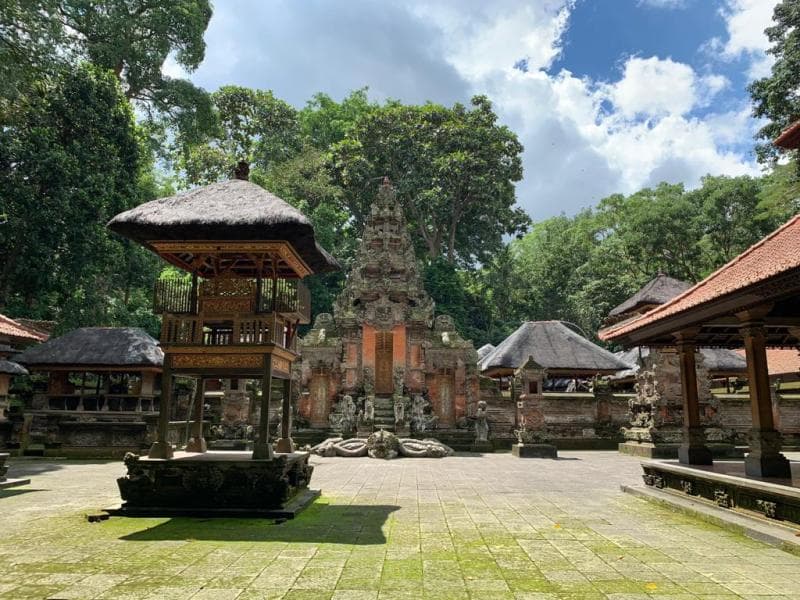
Explore the Ancient Relics within Elephant Cave (Goa Gajah) in Bali, Indonesia. Discover Hindu and Buddhist carvings, sacred bathing pools, and historical mysteries.
Overview
Deep within the heart of Bali, Indonesia, lies the ancient and mysterious Elephant Cave, locally known as Goa Gajah. This historical site, a spiritual sanctuary dating back centuries, offers a captivating glimpse into the island's rich past and its unique blend of Hindu and Buddhist influences. The sub-spot named 'Ancient Relics' within Goa Gajah specifically refers to the array of historical artifacts, carvings, and structures found both inside the iconic cave and throughout the surrounding complex. Visitors step through the famously carved entrance, often described as a 'demonic mouth' or a protective guardian, to discover a world of spiritual contemplation and archaeological wonders.
Goa Gajah is more than just a cave; it is a sprawling complex encompassing meditation chambers, elaborate bathing pools, and various stone carvings and statues that tell tales of ancient Balinese civilization. The site's importance extends beyond being merely a place of worship, providing crucial insights into Bali's pre-Majapahit era, a period before significant Javanese Hindu influence shaped the island's religious and cultural landscape. It stands as a testament to Bali's long history of devotion, where the presence of both Hindu and Buddhist relics serves as a reminder of the island's diverse spiritual roots.
History & Cultural Background
The origins of Goa Gajah are somewhat shrouded in mystery, though it is widely believed to have been established as a sanctuary for spiritual meditation. Most sources suggest its construction dates back to the 9th century, with some elements potentially from the 11th century during the reign of the Warmadewa Dynasty. Archaeological evidence, including Sanskrit inscriptions, indicates its use as a hermitage for both Hindu priests and Buddhist monks, a rare and unifying combination for the time.
The name 'Goa Gajah' translates to 'Elephant Cave,' but there is no concrete evidence of elephants ever inhabiting the area. Theories about its naming range from its proximity to the Petanu River, once known as the 'Elephant River' (Lwa Gajah), to the presence of a Ganesha statue inside the cave, a Hindu deity with an elephant's head. The site was rediscovered by Dutch archaeologists in 1923, and significant excavations in the 1950s unearthed the ancient bathing pools, further revealing the complex's scope.
What Makes It Special
The 'Ancient Relics' within Goa Gajah are special due to their unique blend of Hindu and Buddhist iconography, illustrating a period of harmonious coexistence between the two faiths in Bali. Inside the T-shaped cave, visitors encounter significant Hindu relics, including a statue of the elephant-headed god Ganesha, positioned in a niche. Opposite this, within another niche, are the Shiva lingams and their female counterpart, the yoni, known as the Trilingga, symbolizing fertility and prosperity. The walls of the cave also bear ancient inscriptions and show black soot marks from centuries of burning incense, indicating its continuous use as a place of spiritual meditation.
Outside the cave, one of the most striking discoveries is the extensive bathing place. This sacred fountain, buried for centuries and rediscovered in 1954, features seven statues of celestial maidens (though one was destroyed by an earthquake), from which water flows. These figures are believed to symbolize the seven holy rivers of India, holding purifying and protective properties. Nearby, fragments of Buddhist stupas and images of meditating Buddhas have also been found, particularly near the Pangkung River, underscoring the site's dual religious heritage.
Stories, Fun Facts & Local Details
One popular folklore suggests the cave was not carved by human hands but created by the fingernail of the legendary giant Kebo Iwa. While this enchanting tale adds to the mystique, archaeological evidence points to its meticulous construction as a meditation hermitage. The menacing face carved above the cave's entrance, with its wide eyes and gaping mouth, is a subject of fascinating speculation. Some believe it represents Bhoma, the Hindu earth god, or a mythological Balinese guardian designed to ward off evil spirits. Others suggest it might be the child-eating witch Rangda from Balinese mythology, although its protective function remains the most accepted theory.
Goa Gajah was mentioned in the Javanese poem Desawarnana from 1365, indicating its significance even centuries ago. Today, the site remains an active place of worship, with local Balinese Hindus making daily offerings of flowers, rice, and incense, maintaining a sacred atmosphere that has endured for centuries. The temple's anniversary, celebrated on the 'Anggara Kasih Prangbakat' Tuesday of the Balinese calendar (around September or October), is a vibrant time to experience traditional Balinese dances and gamelan performances.
Visitor Perspective
Visiting the Ancient Relics at Goa Gajah offers a profound journey into Bali's spiritual past. As you descend the stone steps into the complex, you are greeted by the lush, jungle-clad surroundings and the intricate details of the ancient carvings. The experience of walking through the 'demonic mouth' entrance into the cool, incense-scented cave is both mysterious and serene, inviting quiet contemplation.
Beyond the cave, the rediscovered bathing pools with their water-spouting figures provide a tranquil setting, reflecting the historical practices of ritual purification. Exploring the pathways that lead to further ancient fragments, like the Buddhist stupa remains near the river, reveals the layered history of this sacred site. To fully appreciate the spiritual and cultural depth of Goa Gajah, it's recommended to take your time, observe the intricate details, and feel the enduring energy of a place where history and devotion intertwine. Remember to dress modestly, as it is a sacred site, and sarongs are provided at the entrance.
Coordinates: 115.2851, -8.5207
View on Google Maps💬 How Travelers Describe This Place
Based on community votes
Unique
934Must See
879Beautiful
741Interesting
276Photogenic
30
Traveler Stories
Discover memorable experiences shared by travelers who have visited this place.
No traveler stories yet.
Be the first traveler to share what made this place memorable.

Tour
By
Spot
Discover amazing places around the world. Your journey starts here.
Explore
© 2026 TourBySpot. All rights reserved.