Eggenberg Palace
Graz, Austria
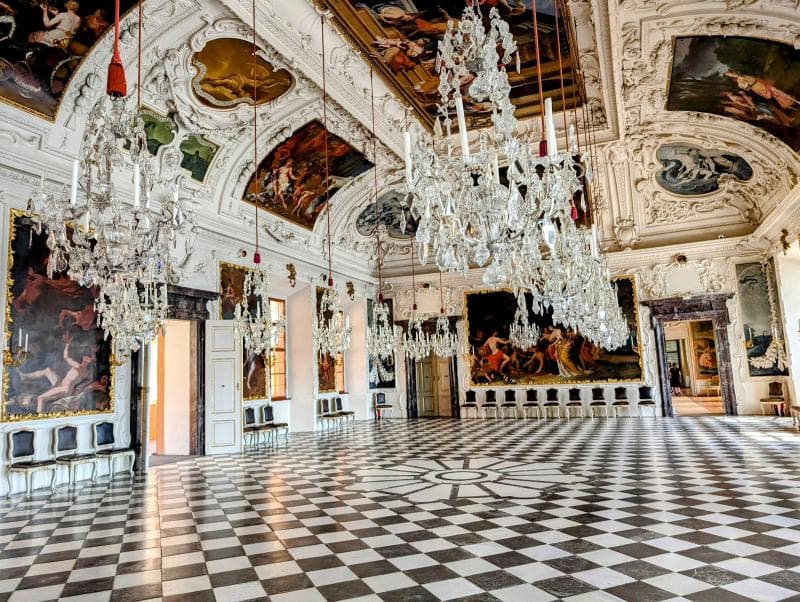
Discover Eggenberg Palace in Graz, Austria—a stunning Baroque masterpiece and UNESCO World Heritage site, rich in history, art, and cosmic symbolism.
Overview
Nestled on the western edge of Graz, Austria, Eggenberg Palace, or Schloss Eggenberg, stands as a profound testament to Baroque architecture and a deeply symbolic representation of the universe. This magnificent complex, a UNESCO World Heritage site since 2010, is more than just a historical building; it is a meticulously planned 'cosmic allegory' designed to reflect the order of the world and the cosmos. Surrounded by extensive historic gardens and home to several museums, Eggenberg Palace offers visitors a captivating journey through art, history, and astronomical philosophy.
A visit to Eggenberg invites you to explore its opulent state rooms, wander through its serene parks, and discover a wealth of cultural treasures, including the Old Gallery, the Coin Cabinet, and the Archaeology Museum. It is a place where every architectural detail tells a story, making it one of Austria's most significant cultural monuments.
History & Cultural Background
The origins of Eggenberg Palace trace back to the 15th century when Balthasar Eggenberger, a financier to Emperor Frederick III, acquired the property. However, it was his great-grandson, Hans Ulrich von Eggenberg, a powerful and influential statesman under Emperor Ferdinand II, who commissioned the grand Baroque transformation starting in 1625.
Hans Ulrich von Eggenberg envisioned a residence that would not only display his elevated status but also embody his desire for harmony and order in a chaotic era. The palace's design, primarily attributed to court architect Giovanni Pietro de Pomis, ingeniously incorporates numerical symbolism, creating an architectural masterpiece that functions as a calendar and an astronomical clock.
This unique blend of architecture and philosophy made Eggenberg Palace a powerful political statement and a sophisticated legitimation for the Eggenberg family's rule. The palace evolved over centuries, with further embellishments in the 17th and 18th centuries, preserving an almost untouched ensemble of Baroque and Rococo interiors.
What Makes It Special
What truly sets Eggenberg Palace apart is its extraordinary cosmological program embedded within its very structure. The palace was designed as an architectural allegory of the universe, with its numbers echoing cosmic and temporal values. It boasts 365 exterior windows, one for each day of the year.
Within, the palace contains 24 state rooms, reflecting the hours of a day, and 52 doors, symbolizing the weeks in a year. Each floor has 31 rooms, representing the maximum number of days in a calendar month. This intricate numerical system, based on the Gregorian calendar, transforms the palace into a 'built cosmos.'
The highlight is undoubtedly the Planetary Hall, completed in 1685. Its breathtaking cycle of over 500 ceiling paintings by Hans Adam Weissenkircher depicts astrological and hermetic ideas, merging numerical symbolism and family mythology into a complex allegory of the universe and the Eggenberg dynasty's glory. The art in this hall features the seven classical 'planets' known to antiquity, the four elements, and the 12 signs of the zodiac, creating a magnificent spectacle of a 'star-studded sky.'
Stories, Fun Facts & Local Details
Imagine strolling through the palace grounds and encountering free-roaming peacocks, adding to the fairytale ambiance of the place. These impressive birds, especially during their spring mating season, display their colorful tail feathers, captivating visitors and lending a distinct atmosphere to the historic gardens.
The palace park itself is a blend of Baroque design and 19th-century English landscape garden aesthetics, offering a tranquil escape from the city. It's considered one of the most valuable historic garden monuments in the region.
Beyond the architectural marvel, Eggenberg Palace houses diverse collections. The Archaeology Museum, for instance, holds an impressive array of artifacts, including the famous Cult Wagon of Strettweg. The Coin Cabinet, located in the former rooms of Balthasar Eggenberger, showcases centuries of numismatic history, while the Alte Galerie displays European art from the medieval to early modern periods.
Visitor Perspective
Exploring Eggenberg Palace is an immersive experience that transports you back in time. While the palace park and gardens are open year-round for independent exploration, a visit to the opulent state rooms is exclusively possible through guided tours. This ensures the preservation of these exquisite historic interiors and allows visitors to fully appreciate their intricate details and stories.
Allow at least two to three hours to comfortably explore the state rooms, museums, and the expansive park. The palace is easily accessible from Graz city center by tram, making it a convenient and enriching cultural excursion. Whether you're captivated by historical grandeur, artistic mastery, or profound symbolism, Eggenberg Palace offers a truly unforgettable journey into Austria's rich cultural heritage.
Coordinates: 15.39129, 47.07389
View on Google Maps💬 How Travelers Describe This Place
Based on community votes
Beautiful
639Unique
569Photogenic
476Interesting
128Must See
93
Traveler Stories
Discover memorable experiences shared by travelers who have visited this place.
No traveler stories yet.
Be the first traveler to share what made this place memorable.
Things to see at Eggenberg Palace



Tour
By
Spot
Discover amazing places around the world. Your journey starts here.
Explore
© 2026 TourBySpot. All rights reserved.