Planetary Hall
Graz, Austria
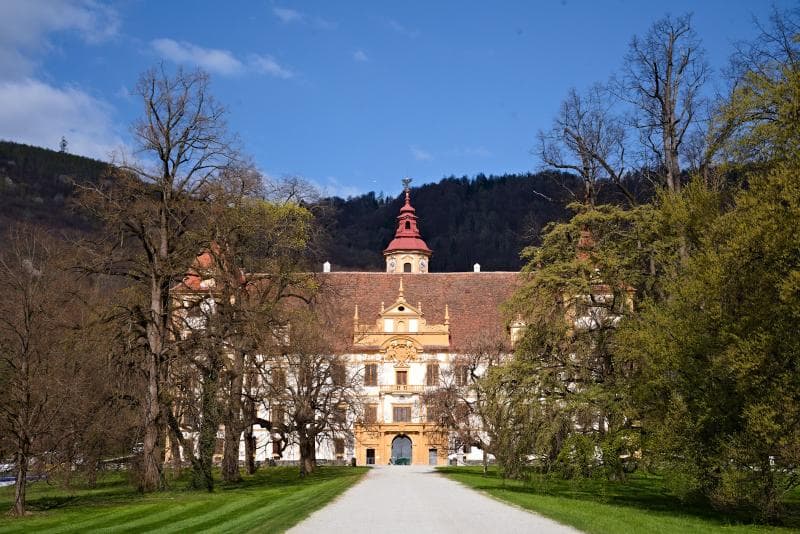
Discover the Planetary Hall at Eggenberg Palace in Graz, Austria. Explore its Baroque artistry, cosmic symbolism, and fascinating history reflecting the universe.
Overview
Step into a world where art and science intertwine at the Planetary Hall, a captivating highlight within the magnificent Eggenberg Palace in Graz, Austria. This Baroque masterpiece, a UNESCO World Heritage Site, is far more than just a grand residence; it is a meticulously designed architectural allegory of the universe itself. The Planetary Hall, or 'Planetensaal' in German, stands as the crown jewel among the palace's twenty-four opulent state rooms, drawing visitors into a cosmic journey through its breathtaking artistry and profound symbolism.
As you explore this significant cultural treasure, you'll discover how the principles of astronomy and astrology guided its very creation, reflecting a worldview deeply rooted in the 17th century. The hall's elaborate decorations and paintings are a testament to the Eggenberg family's vision, aiming to portray an ordered and harmonious cosmos.
History & Cultural Background
The Planetary Hall, completed in 1685, represents the pinnacle of an ambitious project initiated by Prince Hans Ulrich von Eggenberg. Fascinated by the celestial spheres and the prevailing scientific understanding of his time, Prince Hans Ulrich envisioned a palace that would embody the universe in its very structure. The entire Eggenberg Palace, constructed from 1625 onwards, was conceived as a 'cosmic program in stone'.
The task of bringing this celestial vision to life in the Planetary Hall fell to the talented court artist, Hans Adam Weissenkircher. His work in the hall is a complex tapestry of astrological and hermetical ideas, interwoven with intricate number symbolism and the rich mythology of the Eggenberg dynasty. This grand artistic program was designed not only to celebrate the family's prestige but also to translate the Baroque era's understanding of time and the world's order into a visually stunning narrative.
What Makes It Special
The true magic of the Planetary Hall lies in its unparalleled integration of art, science, and philosophy. The hall's vaulted ceiling is adorned with a cycle of paintings depicting the seven celestial bodies known at the time—including the sun, moon, and visible planets—grouped around a central sun. These celestial representations are cleverly linked to the days of the week, various Roman gods, alchemical metals, and even specific members of the illustrious Eggenberg family, creating a deeply personal and symbolic narrative.
Further enhancing this cosmic panorama, the walls below feature large oil paintings of the twelve signs of the zodiac, completing the astronomical tableau. This intricate artwork, part of over 500 ceiling paintings found throughout the palace's state rooms, is remarkably preserved, offering an authentic glimpse into early Baroque interior decoration. The Planetary Hall's complex artistic program and its exceptional state of preservation solidify its reputation as one of Central Europe's most impressive early Baroque interiors.
Stories, Fun Facts & Local Details
The cosmic allegories extend far beyond the Planetary Hall itself. The entire palace is a marvel of numerical architecture, reflecting the Gregorian calendar and astronomical cycles. For instance, the palace boasts 365 exterior windows, symbolizing the days of the year. There are 31 rooms on each floor, 24 state rooms (representing the hours of the day) featuring 52 doors (the weeks of the year), and four corner towers, all meticulously crafted to embody the order of the cosmos.
Adding to the palace's charm, the extensive gardens surrounding Eggenberg Palace are home to freely roaming peacocks, a beloved symbol of the estate that delight visitors. Even the modern 'Planetengarten' (Planetary Garden) continues this fascinating iconography, with sections designed according to the Renaissance concept of planetary signatures, where plants and colors are assigned to different celestial bodies. The palace also houses other valuable collections, such as the Alte Galerie, the Coin Cabinet, and the Archaeology Museum, making it a multifaceted cultural destination.
Visitor Perspective
To truly appreciate the grandeur and intricate details of the Planetary Hall and the surrounding state rooms, visitors embark on a guided tour. These tours are essential for preserving the delicate Baroque interiors and offer insightful explanations into the profound symbolism woven into every corner.
A guided tour of the state rooms, including the Planetary Hall, typically lasts around 50 minutes, providing ample time to absorb the celestial wonders. For a comprehensive experience, allowing two to three hours is recommended, as this timeframe permits exploration of the palace's various museums and a leisurely stroll through the beautiful palace gardens. As part of the Universalmuseum Joanneum, Eggenberg Palace ensures a rich and educational visit for all curious travelers.
Coordinates: 15.39129, 47.07389
View on Google Maps💬 How Travelers Describe This Place
Based on community votes
Photogenic
547Interesting
336Unique
219Beautiful
186Must See
80
Traveler Stories
Discover memorable experiences shared by travelers who have visited this place.
No traveler stories yet.
Be the first traveler to share what made this place memorable.

Tour
By
Spot
Discover amazing places around the world. Your journey starts here.
Explore
© 2026 TourBySpot. All rights reserved.