Coin Cabinet
Graz, Austria
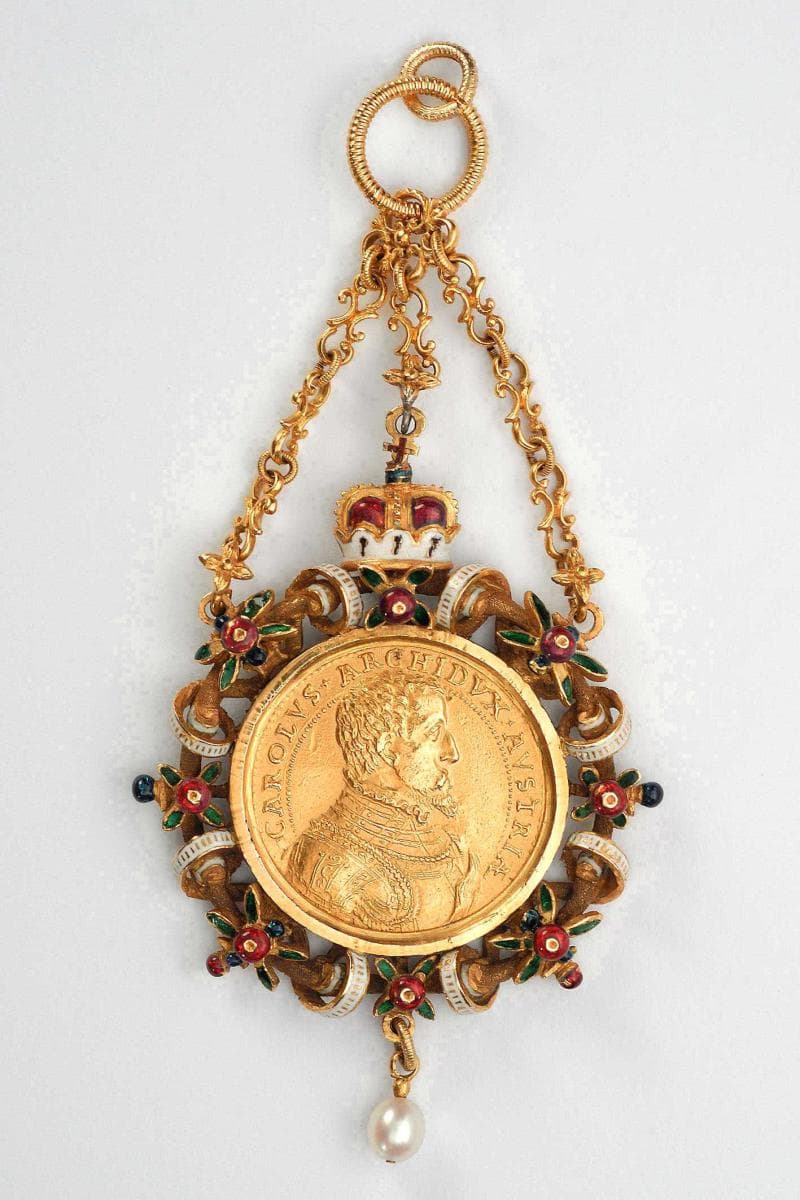
Explore the Coin Cabinet at Eggenberg Palace in Graz, Austria, home to Austria's second-largest public coin collection. Discover centuries of numismatic history.
Overview
Tucked within the majestic Eggenberg Palace in Graz, Austria, the Coin Cabinet (Münzkabinett) offers a captivating journey through centuries of economic and cultural history. As a proud component of the Universalmuseum Joanneum, Austria's oldest museum, this sub-spot houses the nation's second-largest public coin collection, boasting approximately 70,000 objects. The exhibition is thoughtfully arranged across two rooms situated in the oldest part of the palace, a structure that predates the Baroque splendor of the main residence and dates back to the 15th century. Here, visitors can explore the rich narrative of Styrian coinage, tracing its evolution from ancient times to the Baroque era. It is more than a mere display of currency; it is a profound reflection of political shifts, cultural identities, and the societal spirit of each epoch.
History & Cultural Background
The very location of the Coin Cabinet provides a deep connection to its historical roots, residing in rooms once occupied by Balthasar Eggenberger. This astute financier, who served Emperor Friedrich III and held an imperial minting license in the Late Middle Ages, was Graz's wealthiest citizen and instrumental in laying the groundwork for the Eggenberg dynasty's ascent. The 'Balthasar Eggenberger' room delves into his life and times, including a fascinating account of the 'Schinderlinge' monetary crisis around 1460, when inferior copper penny coins caused significant economic turmoil. Centuries later, Hans Ulrich von Eggenberg, Balthasar's great-grandson and the visionary behind the Baroque palace, secured the esteemed right to strike his own coins from Emperor Ferdinand II in 1625. The 'Hans Ulrich von Eggenberg' room continues this narrative, presenting an extensive overview of Styrian coinage and the circulation of money from antiquity through to the close of the 18th century. This includes a detailed look at the Graz mint, which operated for about 500 years, producing coins from around 1215 until its closure under Maria Theresa in 1772.
What Makes It Special
The Coin Cabinet distinguishes itself not only as the second-largest public numismatic collection in Austria but also through its remarkable ability to transform what might seem like mundane objects into vivid historical chronicles. Each coin, medal, and piece of currency on display acts as a tangible artifact, reflecting the political, cultural, and social zeitgeist of its time. Highlights of the collection include the impressive panther thaler minted in Graz, the distinctive Celtic 'wuschelkopf' types, a gold coin from Flavia Solva ingeniously repurposed as jewelry, and a Renaissance medal gem belonging to Archduke Karl II. The exhibition particularly excels in showcasing coins not just as monetary instruments, but as powerful mirrors of historical developments – illustrating narratives of power, dominance, economic crises, and transformative reforms. Its unique placement within the oldest, 15th-century section of the grand UNESCO World Heritage site, Eggenberg Palace, further enhances its allure, creating an immersive historical setting for its precious contents.
Stories, Fun Facts & Local Details
Beyond the sheer volume of its collection, the Coin Cabinet enchants with compelling stories. Imagine Balthasar Eggenberger, the medieval financial magnate, navigating the treacherous waters of economic crises like the 'Schinderlinge' debacle, where poor quality coinage wreaked havoc on the economy. Then there is the fascinating privilege bestowed upon Hans Ulrich von Eggenberg, allowing him and his descendants to mint coins bearing their own likenesses – a rare mark of imperial favor that underscored their immense status. Though not directly within the Coin Cabinet, the palace itself is an architectural allegory of the universe, with its design influenced by Johannes Kepler's astronomical theories. This cosmic connection subtly extends to the numismatic symbolism found within the palace's overall context. Interestingly, the Austrian Mint honored the palace's significance in 2002 with a 10-euro commemorative coin, featuring Eggenberg Palace and an image of Kepler. For a deeper appreciation of the intricate details, the Coin Cabinet employs modern display techniques, including magnifiers and interactive screens, to provide visitors with enhanced views and additional historical context for selected pieces.
Visitor Perspective
Visiting the Coin Cabinet is an enriching experience, offering an impressive voyage of discovery through the ages. As part of the Universalmuseum Joanneum, it provides a crucial lens into the history of Styria and beyond. To fully appreciate the extensive collections within the palace, including the Coin Cabinet, and to explore the beautiful surrounding park, visitors should allocate approximately two to three hours. The Coin Cabinet, like many other sections of the palace, is typically open seasonally, usually from spring through autumn, and generally operates from Tuesday to Sunday. Located conveniently on the western edge of Graz, Eggenberg Palace is easily accessible via public transportation, with tram lines 1 and 7 offering direct routes, making it a hassle-free destination for curious travelers. While the palace park is largely accessible, visitors with disabilities should note that access to some historical state rooms may be limited due to the building's ancient structure.
Coordinates: 15.39129, 47.07389
View on Google Maps💬 How Travelers Describe This Place
Based on community votes
Beautiful
953Unique
658Photogenic
585Interesting
69Must See
22
Traveler Stories
Discover memorable experiences shared by travelers who have visited this place.
No traveler stories yet.
Be the first traveler to share what made this place memorable.

Tour
By
Spot
Discover amazing places around the world. Your journey starts here.
Explore
© 2026 TourBySpot. All rights reserved.