Dubrovnik City Walls
Dubrovnik, Croatia
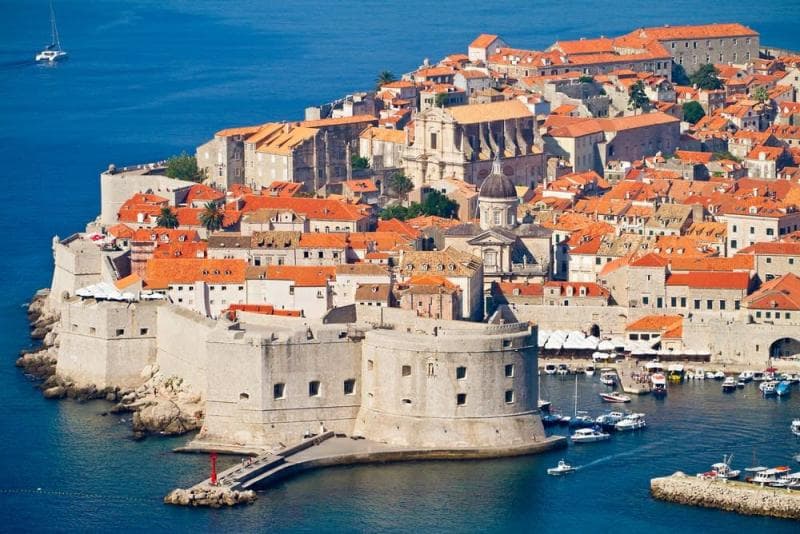
Explore the historic Dubrovnik City Walls in Croatia, a UNESCO World Heritage site. Discover its rich history, unique architecture, and breathtaking views.
Overview
Perched majestically above the shimmering Adriatic Sea, the City Walls of Dubrovnik in Croatia stand as an enduring testament to human resilience and architectural prowess. This unbroken circuit of defensive stone walls envelops the entirety of Dubrovnik's Old Town, creating an almost mythical silhouette against the sky. Stretching approximately 1,940 metres (6,360 ft) in length, these formidable ramparts reach an impressive maximum height of about 25 metres (82 ft) in places. Their sheer scale and exceptional state of preservation earned the Old City of Dubrovnik, including its magnificent walls, a coveted place on the UNESCO World Heritage List in 1979.
Walking along these historic walls offers a unique vantage point, revealing a captivating tapestry of terracotta rooftops, labyrinthine streets, and the endless blue of the sea. It's a journey through time, allowing visitors to glimpse the strategic genius and artistic craftsmanship that defined the independent Republic of Ragusa for centuries. The walls vary in thickness, measuring between 1.5 to 5 metres (4.9 to 16.4 ft) on the seaward side, while the landward defenses are even more robust, ranging from 4 to 6 metres (13 to 20 ft) thick.
History & Cultural Background
The origins of Dubrovnik's fortifications can be traced back to the early Middle Ages, with initial ramparts protecting settlements as early as the 8th and 9th centuries. The city, originally known as Ragusa, was founded by refugees from Epidaurum and gradually grew on the islet of Laus. A pivotal moment came in the 11th century when the sea channel separating the city from the mainland was filled, uniting the two areas and necessitating a more comprehensive defense system.
While earlier fortifications existed, the current shape and substantial construction of the City Walls predominantly took place between the 13th and 17th centuries. The 14th and 15th centuries marked a period of intense building, particularly after Dubrovnik gained full independence from Venetian rule. This era saw the addition of numerous towers and forts, transforming the walls into the impenetrable barrier seen today. Despite a devastating earthquake in 1667 that reshaped much of the city's Baroque architecture, the robust walls largely withstood the tremors, a testament to their superior engineering.
What Makes It Special
What truly sets the Dubrovnik City Walls apart is their remarkable state of preservation and the comprehensive nature of their defensive network. They are considered among the best-preserved medieval fortifications in the world, having never been breached by a hostile army during the Republic of Ragusa's long history. This architectural marvel incorporates a complex system of forts, towers, and bastions, each playing a crucial role in the city's defense. Prominent features include the circular Minčeta Tower, often seen as a symbol of Dubrovnik's unconquerable spirit and the highest point on the walls, and Fort Bokar, an ancient casemate fortress guarding the western sea approach.
Other significant structures include the formidable Revelin Fortress protecting the eastern access and the large St. John's Fortress safeguarding the city harbor. Beyond the main circuit, the freestanding Fort Lovrijenac, often called 'Dubrovnik's Gibraltar,' stands on a 37-meter-high cliff, offering an additional layer of protection from both land and sea.
Stories, Fun Facts & Local Details
Dubrovnik has long been heralded as the 'Pearl of the Adriatic,' a title often attributed to the splendor of its walled city. Legend has it that the Venetians planned to build a fortress on the site of Lovrijenac, but the resourceful people of Dubrovnik preempted them, constructing their own fort in a mere three months. When the Venetian ships arrived with building materials, they found a completed fortress, forcing them to turn back. A fascinating detail from the medieval period suggests that every visitor to the Old Town was once required to bring a stone to contribute to the ongoing strengthening of the walls, underscoring their vital importance to the city's survival.
In more recent times, the iconic walls have gained global recognition as a primary filming location for King's Landing in the popular fantasy series 'Game of Thrones,' drawing new waves of admirers to their ancient stones.
Visitor Perspective
For any curious traveler, walking the Dubrovnik City Walls is an essential experience. The entire circuit typically takes between 1.5 to 2 hours to complete, allowing ample time for stunning photographs and reflection. The main entrance is conveniently located near Pile Gate, though other access points exist at Ploče Gate and near St. John's Fortress. To fully enjoy the walk and avoid the intense summer heat and crowds, it is highly recommended to start early in the morning or late in the afternoon. There is little shade on the walls, so comfortable shoes, sun protection, and plenty of water are advisable. Tickets for the City Walls often include access to Fort Lovrijenac, enriching the historical exploration. This journey atop the ramparts offers not just breathtaking views, but a profound connection to the spirit of Dubrovnik's illustrious past.
Coordinates: 18.10909, 42.64125
View on Google Maps💬 How Travelers Describe This Place
Based on community votes
Must See
965Interesting
743Photogenic
719Beautiful
629Unique
176
Traveler Stories
Discover memorable experiences shared by travelers who have visited this place.
No traveler stories yet.
Be the first traveler to share what made this place memorable.
Things to see at Dubrovnik City Walls



Tour
By
Spot
Discover amazing places around the world. Your journey starts here.
Explore
© 2026 TourBySpot. All rights reserved.