Sea-facing Walls
Dubrovnik, Croatia
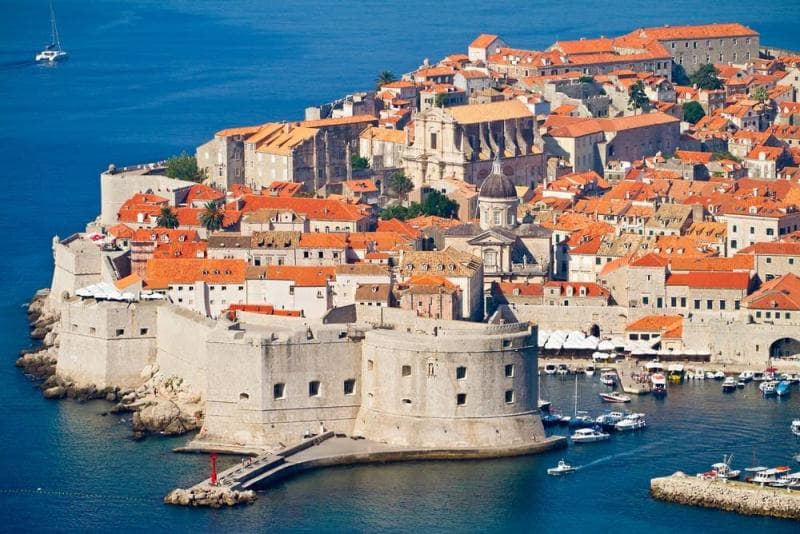
Explore Dubrovnik's Sea-facing Walls, a vital part of the historic Dubrovnik City Walls in Croatia, offering stunning Adriatic views and rich history.
Overview
Perched majestically above the turquoise waters of the Adriatic Sea, the Sea-facing Walls of Dubrovnik represent a vital segment of the city's iconic fortifications. These impressive stone ramparts, part of the larger Dubrovnik City Walls, encircle the Old Town and offer a continuous panoramic vista of the open sea and the enchanting Lokrum Island. Unlike their landward counterparts, these seaward defenses are strategically built into the natural cliffs, their very presence speaking volumes of Dubrovnik's maritime heritage and its historical need for robust protection from the sea.
While the entire circuit of the Dubrovnik City Walls stretches approximately 1,940 meters, the sea-facing sections are distinctly narrower, ranging from 1.5 to 5 meters in thickness, a deliberate design choice given the natural protection offered by the sheer coastline and the different types of threats faced from the sea.
History & Cultural Background
The genesis of Dubrovnik's formidable defenses dates back to early medieval times, with the city first being fortified as early as the 7th or 9th century. However, the Sea-facing Walls as we largely see them today were constructed and systematically reinforced between the 13th and 17th centuries. The primary motivation for their construction was to safeguard the independent Republic of Ragusa (as Dubrovnik was known) from naval attacks, particularly from formidable rivals like the Republic of Venice, which was often considered a significant threat, and from pirate incursions.
The evolution of these walls reflects centuries of strategic military architecture, adapted to counter changing warfare techniques and to ensure the city's sovereignty. The completion of these robust fortifications, culminating in their definitive form around the 17th century, marked the zenith of Dubrovnik's 'Golden Age,' allowing it to thrive as a significant trading and naval power in the Adriatic.
What Makes It Special
The Sea-facing Walls are a marvel of medieval engineering, characterized by their unique placement and the formidable forts that punctuate their length. Key among these are the St. John Fortress, Fort Bokar, and the magnificent, freestanding Fort Lovrijenac.
- St. John Fortress: Located on the south-eastern side, this colossal fort was crucial for protecting the city's old harbor. Its rounded sea-facing side and inclined lower wall were designed to absorb cannon fire, while the side facing the port features flat vertical walls.
- Fort Bokar: Guarding the western sea approach, Fort Bokar features curved walls specifically designed to deflect incoming cannonballs. Part of it stands on a detached rock, strategically protecting the western entrance and the small bay beneath.
- Fort Lovrijenac: Often referred to as 'Dubrovnik's Gibraltar,' this impressive detached fortress stands on a 37-meter-high cliff outside the western city walls. Its sea-facing walls are exceptionally thick, reaching almost 12 meters, a testament to its critical role in defending against both land and sea assaults.
These structures, combined with the sheer drop of the walls into the sea, create an almost impregnable barrier that allowed Dubrovnik to maintain its independence for centuries through both military strength and shrewd diplomacy.
Stories, Fun Facts & Local Details
The Sea-facing Walls are steeped in stories of resilience and ingenuity. The Republic of Ragusa, a small maritime state, relied heavily on these defenses to maintain its freedom, famously playing great powers like Venice and the Ottoman Empire against each other. The construction of these walls was a continuous effort, with citizens contributing to their upkeep and expansion over generations, reflecting a collective commitment to liberty.
A fascinating detail is the varying thickness of the walls: while the landward sections can be up to 6 meters thick, the sea-facing parts are intentionally thinner. This is not a weakness but a testament to clever engineering, leveraging the natural protection of the cliffs and the specific trajectory of naval artillery. Fort Lovrijenac, according to local legend, was built in just three months by the people of Dubrovnik to preempt a Venetian invasion, a tale that underscores the city's determination.
Visitor Perspective
Walking along the Sea-facing Walls offers a truly immersive experience, transporting visitors back in time while providing some of the most breathtaking views in Croatia. As you traverse this historic pathway, you'll be treated to an uninterrupted panorama of the vast, sparkling Adriatic, dotted with sailboats and framed by the lush greenery of Lokrum Island.
The experience is a sensory journey: the salty sea breeze, the sound of waves crashing against the rocks far below, and the feeling of ancient stone beneath your feet. From this vantage point, the iconic red-tiled rooftops of the Old Town spread out on one side, while the endless blue expanse of the sea captivates on the other. It's an opportunity to appreciate the strategic genius of Dubrovnik's builders and to reflect on the city's enduring spirit of independence, all while soaking in the stunning natural beauty of the Dalmatian coast.
Coordinates: 18.108, 42.64
View on Google Maps💬 How Travelers Describe This Place
Based on community votes
Photogenic
755Must See
728Beautiful
481Unique
183Interesting
28
Traveler Stories
Discover memorable experiences shared by travelers who have visited this place.
No traveler stories yet.
Be the first traveler to share what made this place memorable.

Tour
By
Spot
Discover amazing places around the world. Your journey starts here.
Explore
© 2026 TourBySpot. All rights reserved.