Cannon Platforms
Dubrovnik, Croatia
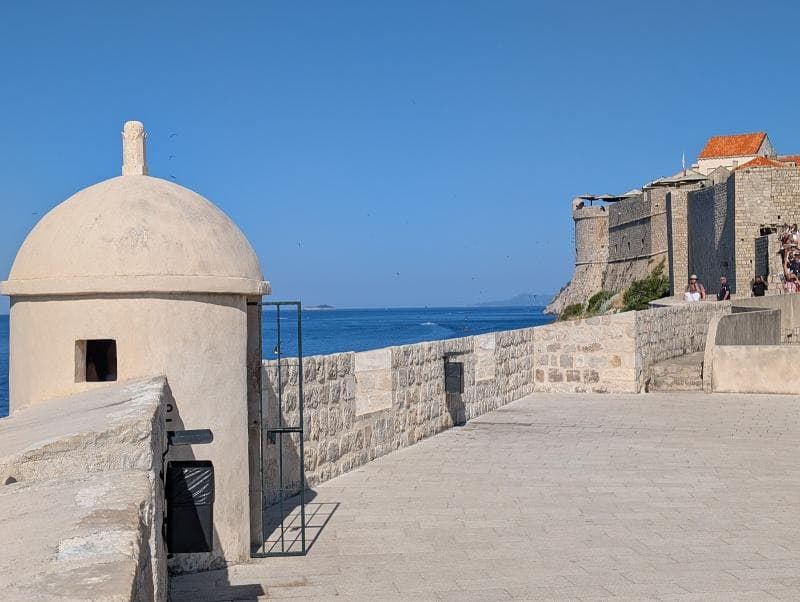
Explore the Cannon Platforms of Dubrovnik City Walls, Croatia. Discover their historical defense, incredible engineering, and panoramic views.
Overview
Perched majestically atop the ancient ramparts of Dubrovnik City Walls in Croatia, the Cannon Platforms offer a tangible connection to the city's formidable past. These platforms, strategically positioned within various towers and fortresses along the nearly two-kilometer-long defensive perimeter, were once crucial for protecting the independent Republic of Ragusa. Today, they stand as silent sentinels, inviting visitors to explore Dubrovnik's rich military history and marvel at the engineering prowess of its forebears. The entire City Walls complex, a UNESCO World Heritage site, encapsulates centuries of defense and offers breathtaking panoramic views of the Adriatic Sea and the Old Town's iconic terracotta rooftops.
These platforms are not merely static displays; they are integral parts of a complex defensive system that includes 16 towers, three fortresses, and six bastions, all built to withstand both land and sea assaults. Walking along the walls, one encounters these formidable positions, each telling a story of vigilance and resilience.
History & Cultural Background
The construction of Dubrovnik's City Walls spanned from the 13th to the 17th centuries, evolving significantly over time to adapt to new warfare technologies. While early fortifications date back even further, to the 7th and 9th centuries, the walls as they largely appear today began taking shape in the 14th century.
A pivotal period of reinforcement occurred in the 15th century with the advent of firearms. To counteract the destructive power of cannons, the Republic of Ragusa initiated a 'defensive revolution.' Walls were thickened considerably, reaching up to six meters on the landward side, and innovative gun platforms and casemates (vaulted niches for artillery) were integrated into the design. Cannon embrasures were opened in towers, and bastions were designed to accommodate heavy artillery. This extensive fortification effort was a direct response to the continuous threats from powerful entities like the Venetian Republic and the Ottoman Empire, demonstrating Dubrovnik's unwavering commitment to its cherished independence. At its peak, the city's defensive system boasted more than 120 cannons.
What Makes It Special
The Cannon Platforms are special not just for their historical role but for how they showcase the ingenuity of medieval and Renaissance military engineering. They represent a city's determination to protect its sovereignty through architectural innovation.
- Minčeta Tower: As the highest point of the landward defenses, Minčeta Tower stands as a symbol of Dubrovnik's unconquerable spirit. Its walls are six meters thick, and it once housed nine cannons, including a notable bronze masterpiece by Ivan Rabljanin. Its circular design, adapted for artillery, offered superior protection against land attacks.
- Fort Lovrijenac: Often called 'Dubrovnik's Gibraltar,' this freestanding fortress, situated on a 37-meter-high cliff outside the main walls, was critical for defending the western approach. Its sea-facing walls are an impressive 12 meters thick, and it was defended by ten large cannons. Its unique design included thinner walls on the side facing the city, a strategic vulnerability to allow its destruction if captured by an enemy.
- Fort Bokar: This distinctive circular casemate fortress was strategically placed to protect the Pile Gate, the main entrance to the Old Town. Its curved walls were specifically designed to deflect cannon fire, while its wide embrasures provided effective coverage against approaching forces.
- St. John's Fortress: Located at the southeastern corner, this fort was essential for safeguarding Dubrovnik's old harbor entrance.
Beyond their defensive significance, these platforms offer some of the most spectacular views in Croatia, allowing visitors to appreciate the strategic layout of the city and the breathtaking Adriatic coastline.
Stories, Fun Facts & Local Details
The history embedded in these platforms is rich with compelling stories. Perhaps the most famous is that of 'Lizard,' the largest cannon on Fort Lovrijenac. Cast by master Ivan Rabljanin in 1537, this five-meter-long, three-ton bronze cannon was a potent deterrent. While sources suggest it was never fired in wartime, a local legend claims it was used after the devastating 1667 earthquake to ward off Venetian galleons attempting to breach the damaged walls. Tragically, when the Austrians tried to transport 'Lizard' to a museum in Vienna in the 19th century, the ropes holding it broke, and it plunged into the sea, where some believe it still rests.
Above the entrance to Fort Lovrijenac, an inscription boldly declares, 'NON BENE PRO TOTO LIBERTAS VENDITUR AURO'—'Freedom is not to be sold for all the treasures in the world.' This powerful motto perfectly encapsulates the spirit of Dubrovnik, whose independence was fiercely protected by these very walls and their cannons. The walls themselves have proven their enduring strength, surviving the colossal 1667 earthquake and the shelling during the Croatian War of Independence in 1991-1992. Fans of popular culture will also recognize many of these formidable structures, including Minčeta Tower and Fort Lovrijenac, as iconic filming locations for the television series 'Game of Thrones'.
Visitor Perspective
Walking the Dubrovnik City Walls is an unforgettable experience, offering a unique perspective on this historic city. The full circuit spans approximately 1,940 meters and typically takes most visitors between 1.5 to 2 hours to complete, allowing for photo stops and appreciation of the views.
Visitors should be prepared for a walk that involves numerous steps and uneven surfaces, so comfortable, sturdy shoes are highly recommended. During warmer months, it is advisable to visit earlier in the morning or later in the afternoon to avoid the midday heat and larger crowds. Hats, sunscreen, and water are essential. The panoramic vistas from the Cannon Platforms offer magnificent views of the Old Town's intricate layout, the sparkling Adriatic, and the lush Lokrum Island. A ticket to the City Walls often includes entry to the impressive Fort Lovrijenac, allowing for a comprehensive exploration of Dubrovnik's defensive heritage.
Coordinates: 18.10909, 42.64125
View on Google Maps💬 How Travelers Describe This Place
Based on community votes
Beautiful
585Unique
546Photogenic
503Interesting
92Must See
56
Traveler Stories
Discover memorable experiences shared by travelers who have visited this place.
No traveler stories yet.
Be the first traveler to share what made this place memorable.

Tour
By
Spot
Discover amazing places around the world. Your journey starts here.
Explore
© 2026 TourBySpot. All rights reserved.