Pile Gate Section
Dubrovnik, Croatia
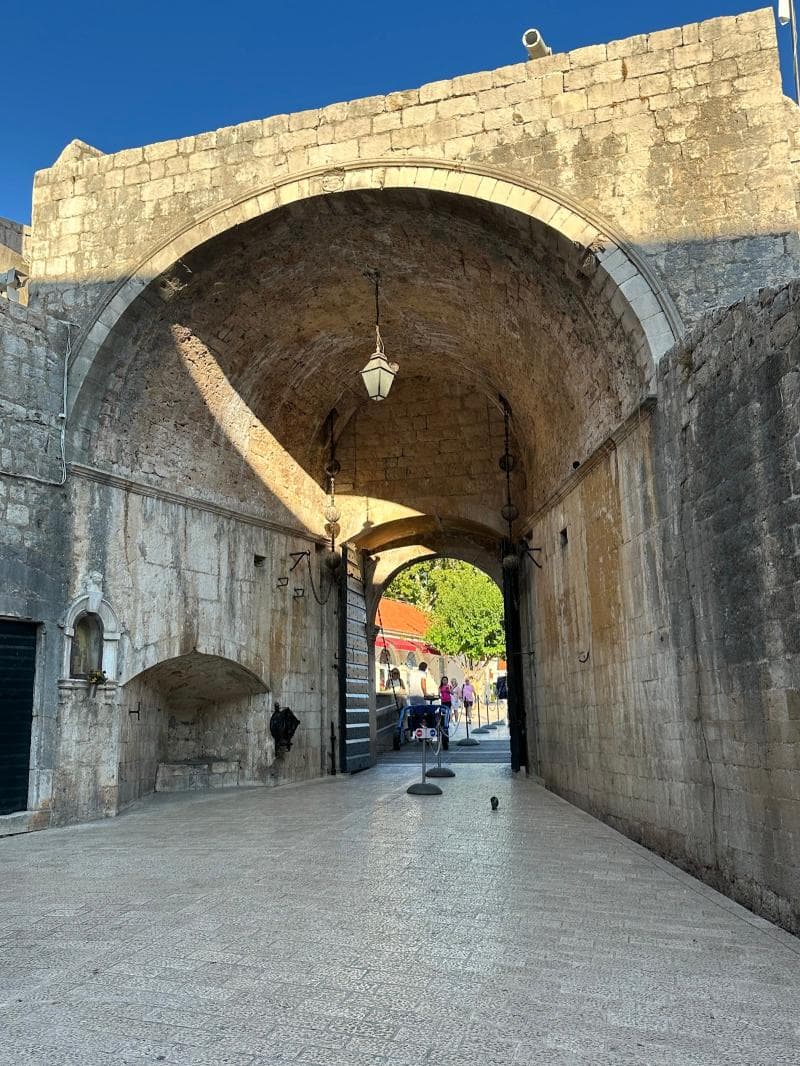
Discover the historic Pile Gate Section, the grand western entrance to Dubrovnik City Walls in Dubrovnik, Croatia. Explore its rich history, iconic architecture, and vibrant past.
Overview
The Pile Gate Section serves as the magnificent primary entrance to Dubrovnik's Old Town, positioned strategically on the western side of the city's formidable walls. It is far more than just an entry point; it is a complex of historical architecture, a symbol of resilience, and the quintessential starting point for any exploration of this UNESCO World Heritage site. Visitors stepping through this ancient portal find themselves immediately transported into the heart of Dubrovnik, with the famous Stradun, the city's main promenade, stretching out before them.
Comprising an outer gate, an inner gate, and a sturdy stone bridge spanning what was once a protective moat, the Pile Gate complex stands as a testament to medieval defensive ingenuity. Today, the moat is a peaceful green area, offering a glimpse into the past while serving as a verdant welcome to the bustling old city. The gate also acts as the primary access point for beginning a walk along Dubrovnik's iconic City Walls.
History & Cultural Background
The development of the Pile Gate occurred in several phases, reflecting Dubrovnik's evolving needs for defense and its growth as the Republic of Ragusa. While fortifications existed on this site as early as the 13th century, the inner gate, characterized by its Gothic arch, was constructed in 1460. The imposing outer gate, built in Renaissance style, followed in 1537. This dual-gate system, flanked by the mighty Fort Bokar, was crucial in protecting the city from landward attacks.
Historically, access to the city through Pile Gate involved crossing a wooden drawbridge that was ceremoniously raised each night. This ritual not only deterred unwanted visitors but also signified the city's vigilance and self-governance, with the keys to the city traditionally handed to the Rector daily. Although the wooden drawbridge has long since been replaced by a permanent stone structure, the mechanical counterweights used to operate it are still visible, offering a tangible link to this ancient practice. Above both the inner and outer arches, a statue of Saint Blaise, Dubrovnik's revered patron saint, stands as a silent guardian, symbolizing spiritual protection over the city and its inhabitants.
What Makes It Special
What makes the Pile Gate truly special is its ability to evoke a sense of stepping back in time. It's an architectural marvel, seamlessly blending Gothic and Renaissance styles, showcasing the sophisticated engineering and artistic prowess of Dubrovnik's past. The layered defensive design, from the multi-arched stone bridge to the inner and outer gates, speaks volumes about the city-state's commitment to protecting its independence and wealth.
The Pile Gate represents more than just a physical barrier; it's a powerful symbol of Dubrovnik's enduring spirit and resilience. It has witnessed centuries of history, from grand processions to sieges, and yet it remains largely intact, a testament to its robust construction. Its direct connection to the famous City Walls and its role as the gateway to the historic Stradun solidify its status as an indispensable part of Dubrovnik's identity and its UNESCO World Heritage recognition.
Stories, Fun Facts & Local Details
The name 'Pile' itself is derived from the Greek word 'pylaj,' meaning 'gate,' highlighting its ancient purpose. Beyond its historical significance, the Pile Gate has garnered modern-day fame as a filming location for the popular television series 'Game of Thrones,' adding another layer of intrigue for contemporary visitors.
As you pass through the gate, look closely: immediately after the first door, a plaque commemorates the damage sustained by the city during the Homeland War between 1991 and 1995, serving as a poignant reminder of Dubrovnik's recent struggles and recovery. Another fascinating detail is that Napoleon's army famously entered Dubrovnik through these very gates in 1806, an event that marked the eventual end of the independent Republic of Ragusa. Today, the dry moat beneath the bridge has been transformed into a charming green space, often hosting local events and providing a tranquil contrast to the imposing stone walls.
Visitor Perspective
For most visitors, the Pile Gate Section is their first encounter with the historic heart of Dubrovnik. It serves as the main entry point and is often the starting location for guided tours of the Old Town and the City Walls. While the gate itself is free to enter, access to the City Walls requires a ticket.
Due to its popularity, the area around Pile Gate can become exceptionally crowded, particularly during peak tourist season and midday. Seasoned travelers often recommend visiting in the early morning or late evening to experience the gate's grandeur in a more serene atmosphere. From Pile Gate, visitors can easily access the main street Stradun, Onofrio's Fountain, and the Franciscan Monastery, making it a central hub for sightseeing. The area is also well-connected to modern Dubrovnik, serving as a transport hub for local buses and taxis.
Coordinates: 18.1054, 42.641
View on Google Maps💬 How Travelers Describe This Place
Based on community votes
Beautiful
585Unique
546Photogenic
503Interesting
92Must See
56
Traveler Stories
Discover memorable experiences shared by travelers who have visited this place.
No traveler stories yet.
Be the first traveler to share what made this place memorable.

Tour
By
Spot
Discover amazing places around the world. Your journey starts here.
Explore
© 2026 TourBySpot. All rights reserved.