Choeung Ek Genocidal Center
Phnom Penh, Cambodia
Explore the Choeung Ek Genocidal Center, Phnom Penh, Cambodia, a poignant memorial of the Khmer Rouge's atrocities and a site for remembrance.
Overview
The Choeung Ek Genocidal Center, tragically known worldwide as 'The Killing Fields,' stands as a profoundly somber memorial located approximately 15 to 17 kilometers south of Phnom Penh, Cambodia. This site, once a tranquil orchard and a Chinese cemetery, was transformed into one of the most horrific mass grave sites by the Khmer Rouge regime between 1975 and 1979. Today, it serves as a powerful testament to the Cambodian genocide, inviting visitors to reflect on a dark chapter in human history and honor the memory of countless victims.
History & Cultural Background
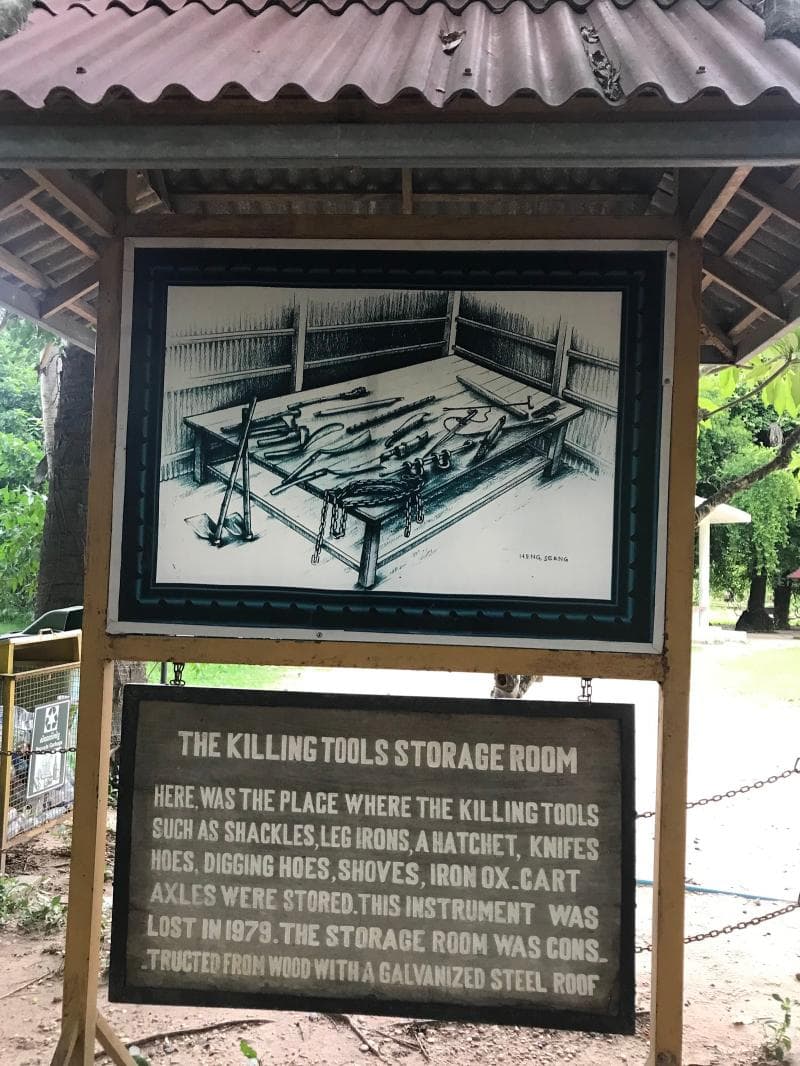
Between 1975 and 1979, Cambodia endured the brutal rule of the Khmer Rouge, led by Pol Pot. Their radical ideology aimed to create an agrarian socialist society, which resulted in a devastating genocide. An estimated 1.7 to 2.2 million Cambodians perished through executions, forced labor, starvation, and disease. Choeung Ek became a primary execution and burial ground for those deemed enemies of the regime, particularly prisoners transported from the notorious S-21 detention center (now the Tuol Sleng Genocide Museum) in Phnom Penh. The atrocities committed here were often carried out with crude instruments like pickaxes, hoes, and bamboo sticks, as bullets were considered too expensive.
What Makes It Special
The centerpiece of Choeung Ek is a towering Buddhist stupa, housing over 5,000 to 8,000 human skulls and other bone fragments, meticulously arranged by age and gender behind acrylic glass panels. Many of these skulls bear visible signs of the brutal blunt force trauma inflicted upon the victims. The site also contains 129 mass graves, with 86 deliberately left untouched out of respect. Visitors can walk along pathways, observing the depressions in the earth where these graves lie. After heavy rains, fragments of bone and clothing sometimes surface, which site personnel regularly collect. A particularly harrowing spot is the 'Killing Tree,' against which infants and children were brutally murdered, now adorned with bracelets as a memorial. An audio guide, included with admission, provides crucial historical context and poignant survivor testimonies, enhancing the visitor's understanding of the site's tragic past.
Stories, Fun Facts & Local Details
The term 'Killing Fields' gained international recognition largely due to Cambodian journalist Dith Pran, a survivor of the regime. A grim detail from the site's history is the use of loudspeakers playing loud music to mask the screams of victims during executions, preventing nearby villagers from hearing the atrocities. Out of respect for the deceased, many mass graves at Choeung Ek remain undisturbed. Annually, on May 9th, a memorial ceremony is held at the stupa to honor the victims. In Khmer Buddhist tradition, a violent death is seen as unfavorable, as it's believed the spirit may linger at the site of death, which can make some Cambodians reluctant to visit the stupa itself. Before its use by the Khmer Rouge, the area had a dual history as both an orchard and a Chinese cemetery.
Visitor Perspective
Visiting Choeung Ek is an undeniably deeply moving, somber, and emotionally challenging experience. It is not a typical tourist attraction but rather a place for quiet remembrance, solemn reflection, and education. Visitors are strongly advised to dress modestly, covering their shoulders and knees, as a sign of respect for the memorial. The comprehensive audio guide is highly recommended, as it offers invaluable context and personal stories that bring the history to life, albeit in a heartbreaking manner. Many travelers choose to combine their visit to Choeung Ek with the Tuol Sleng Genocide Museum (S-21) in Phnom Penh. Visiting S-21 first, where prisoners were interrogated, and then Choeung Ek, where many met their end, provides a more complete, albeit harrowing, understanding of the victims' journey and the full scale of the Khmer Rouge's brutality.
Coordinates: 104.90194, 11.48444
View on Google Maps💬 How Travelers Describe This Place
Based on community votes
Photogenic
965Must See
894Beautiful
862Unique
443Interesting
184
Traveler Stories
Discover memorable experiences shared by travelers who have visited this place.
No traveler stories yet.
Be the first traveler to share what made this place memorable.
Things to see at Choeung Ek Genocidal Center



Tour
By
Spot
Discover amazing places around the world. Your journey starts here.
Explore
© 2026 TourBySpot. All rights reserved.