Memorial Stupa
Phnom Penh, Cambodia
Explore the Memorial Stupa at Choeung Ek Genocidal Center, Phnom Penh, Cambodia. A poignant memorial to Khmer Rouge genocide victims, offering deep historical insight.
Overview
The Memorial Stupa stands as the solemn centerpiece of the Choeung Ek Genocidal Center, located approximately 17 kilometers south of Phnom Penh, Cambodia. This site, once a tranquil orchard and Chinese cemetery, transformed into one of the most infamous 'Killing Fields' during the brutal Khmer Rouge regime from 1975 to 1979. Today, the stupa is a poignant and powerful tribute to the thousands of lives tragically lost there. It houses the exhumed remains of countless victims, offering a tangible representation of the Cambodian genocide. The entire center is dedicated to remembrance, education, and fostering a profound understanding of this dark chapter in human history, serving as a constant reminder of the atrocities that occurred.
History & Cultural Background
Between 1975 and 1979, Cambodia was subjected to the horrific rule of the Khmer Rouge, led by Pol Pot, who sought to establish an agrarian socialist society. This radical ideology led to the systematic elimination of perceived enemies, including intellectuals, professionals, and anyone suspected of disloyalty. An estimated 1.7 to 2.2 million Cambodians perished during this period through execution, forced labor, starvation, and disease. Choeung Ek became a primary execution site for prisoners transferred from Security Prison 21 (S-21), also known as Tuol Sleng, in Phnom Penh. To conserve precious ammunition, executions were often carried out with crude tools such as pickaxes, shovels, and even sharpened bamboo sticks.
The Memorial Stupa itself was constructed in 1988 as a Buddhist tribute to the victims. In Khmer Buddhist tradition, it is believed that spirits of those who died violent deaths may linger, preventing reincarnation. The stupa, therefore, serves as a significant spiritual and cultural anchor, offering a place for mourning and remembrance. In 2025, Choeung Ek, along with Tuol Sleng, was collectively designated a UNESCO World Heritage Site as part of 'Cambodian Memorial Sites: From centres of repression to places of peace and reflection', acknowledging its critical role in global remembrance and peace education.
What Makes It Special
The Memorial Stupa at Choeung Ek is not merely a monument; it is a profound repository of history and human suffering. Rising in stark white and yellow, its acrylic glass sides enclose thousands of human skulls and other skeletal remains, exhumed from the mass graves around the site. These skulls are meticulously arranged by age and gender on multiple tiers, many bearing visible marks of the brutal violence they endured. This direct and unfiltered display makes the historical events undeniably real and deeply impactful for visitors.
Beyond the stupa, the grounds of Choeung Ek reveal the remnants of mass graves, some of which remain deliberately undisturbed. Fragments of bone, teeth, and scraps of clothing continue to surface, particularly after heavy rains, serving as an ongoing, visceral connection to the past. The site's powerful audio guide, narrated in part by survivors and former guards, offers poignant testimonies and historical context, transforming a visit into an immersive and emotional journey.
Stories, Fun Facts & Local Details
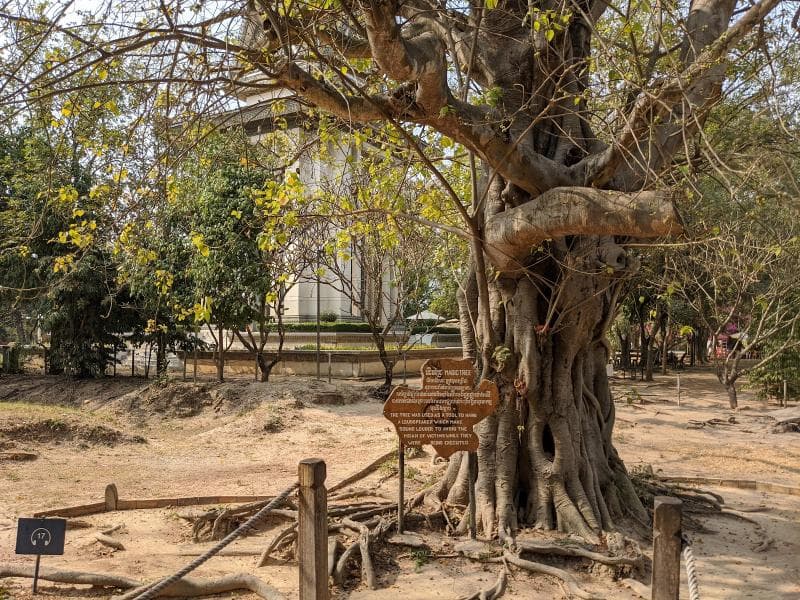
Among the most haunting aspects of Choeung Ek is the 'Killing Tree,' where infants and small children were tragically murdered, their heads bashed against its trunk to conserve bullets. The Khmer Rouge also used loudspeakers to play loud propaganda music, attempting to mask the screams of victims during night executions. The continuing emergence of human remains from the soil serves as a stark and enduring reminder of the atrocities, with visitors respectfully asked not to touch or move these fragments.
Every year on May 9th, Cambodia observes an annual Genocide Day, with a memorial ceremony held at the stupa to commemorate the millions of victims of Pol Pot's regime. While the site aims to educate and foster remembrance, some Cambodians, adhering to traditional beliefs about spirits of the violently deceased, may choose not to visit the stupa, out of respect for the lingering souls. The recent UNESCO World Heritage designation in 2025 highlights the international recognition of these sites as vital for promoting peace, education, and reconciliation.
Visitor Perspective
Visiting the Memorial Stupa and the Choeung Ek Genocidal Center is a profoundly moving, yet essential, experience for any traveler seeking to understand Cambodia's recent history. Located about 15-17 kilometers from downtown Phnom Penh, it is typically accessed via tuk-tuk or taxi, often combined with a visit to the Tuol Sleng Genocide Museum (S-21). Many recommend visiting S-21 first, as it traces the prisoners' journey to their ultimate fate at Choeung Ek, deepening the narrative flow.
Visitors are encouraged to dress modestly, maintain a respectful silence, and approach the site as a working memorial rather than a typical tourist attraction. The included audio guide is invaluable, providing personal accounts and historical details that bring context to the hallowed grounds. While undeniably somber, the experience offers a powerful lesson in human resilience, peace, and the critical importance of remembering the past to safeguard the future. It is a place for quiet contemplation, offering a unique insight into Cambodia's journey towards healing and reconciliation.
Coordinates: 104.9012, 11.484
View on Google Maps💬 How Travelers Describe This Place
Based on community votes
Beautiful
961Photogenic
710Must See
555Unique
448Interesting
156
Traveler Stories
Discover memorable experiences shared by travelers who have visited this place.
No traveler stories yet.
Be the first traveler to share what made this place memorable.

Tour
By
Spot
Discover amazing places around the world. Your journey starts here.
Explore
© 2026 TourBySpot. All rights reserved.