Blue Mosque
Yerevan, Armenia
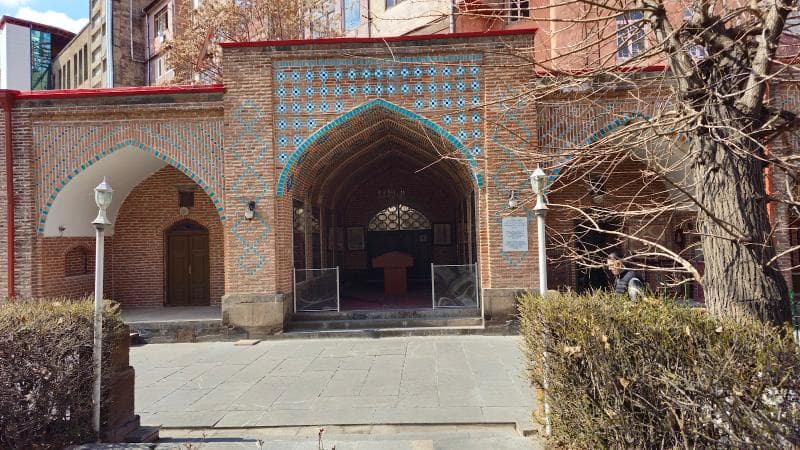
Discover the Blue Mosque in Yerevan, Armenia: an 18th-century Persian masterpiece, the only active mosque in the country, and a vibrant cultural hub.
Overview
Nestled amidst the vibrant urban landscape of Yerevan, Armenia, stands the majestic Blue Mosque, a captivating testament to 18th-century Persian Islamic architecture. Located at 12 Mesrop Mashtots Avenue in the city's central Kentron district, this iconic landmark serves as the only active mosque in all of Armenia, making it a profound symbol of cultural and religious endurance. Commissioned in 1765-1766 by Hussein Ali Khan, the then-ruler of the Erivan Khanate, the mosque is celebrated for its distinctive blue ceramic tiles that adorn its domes and minarets, lending it the evocative name 'Blue Mosque.' The complex spans an area of approximately 7,000 square meters and features a large rectangular plan, encompassing a serene inner courtyard, prayer halls, a 20-24 meter tall minaret, and numerous cells that once served various community functions. More than just a place of worship for the local Muslim community, particularly those of Iranian descent, the Blue Mosque functions as a dynamic spiritual and cultural hub, hosting events, exhibitions, and educational programs.
History & Cultural Background
The site where the Blue Mosque now stands has a storied past. It is believed that an earlier mosque, the Def Sultan Mosque, occupied this location before being tragically destroyed in a devastating earthquake in 1679. Roughly a century later, during a period when Armenia was under Persian dominion, Hussein Ali Khan initiated the construction of the current mosque between 1765 and 1766. It quickly became the largest and most prominent of Yerevan's eight mosques during the 19th century, reflecting the city's rich multi-ethnic and multi-religious heritage. Even under Russian imperial rule in the 19th century, the mosque largely retained its religious purpose, undergoing significant redecoration with intricate tiles around 1887-88.
However, the 20th century brought profound changes. During the Soviet era, from the mid-1920s, the Blue Mosque, like many religious institutions, was secularized and ceased to operate as a place of worship. Remarkably, through the dedicated efforts of Armenian intellectuals, including the renowned poet Yeghishe Charents, the building was preserved and repurposed. For over five decades, it housed the Yerevan History and Natural History Museums, and a smaller hall was even used as a planetarium, ensuring its physical survival during a time when many other religious structures were demolished. Following Armenia's independence in 1991, the mosque was returned to the Muslim community. Between 1994 and 1998, with substantial financial support and expertise from the Iranian government, the mosque underwent extensive reconstruction, meticulously restoring its original splendor. Further renovations, including the central dome, continued into the 2000s, solidifying its role once again as an active religious and cultural center. In 2015, the mosque was leased to the Iranian embassy for a period of 99 years, further cementing its role as a focal point for Iranian culture in Armenia.
What Makes It Special
The Blue Mosque's distinctiveness stems from several key aspects. Foremost is its status as the sole functioning mosque in Armenia, a predominantly Christian nation, highlighting a unique facet of the country's diverse historical tapestry. Architecturally, it stands as an exquisite example of 18th-century Persian Islamic design, characterized by its traditional rectangular layout and vibrant use of color. The mosque truly earns its name from the magnificent blue ceramic tiles that cover its domes and adorn its minaret and facades. These tiles, often featuring intricate geometric patterns and elegant Arabic calligraphy, create a visually stunning effect, especially when bathed in sunlight. The serene inner courtyard, with its lush trees and soothing fountains, provides a tranquil oasis amidst the urban bustle of Yerevan. Beyond its aesthetic appeal, the Blue Mosque is a powerful symbol of intercultural heritage, representing the historical and ongoing connections between Armenia and Iran. Its very existence and preservation, particularly its survival through the Soviet era when many religious buildings faced destruction, underscore its profound cultural significance and the dedication to safeguarding its legacy.
Stories, Fun Facts & Local Details
The Blue Mosque is known by several names, including Kapuyt Mzkit in Armenian, Masjed-e Kabud in Persian, and Gök Jami (meaning 'sky blue mosque') in Turkish, all referencing its iconic blue hues. A charming anecdote from the Soviet era recounts how the mosque's cozy inner courtyard became a favored gathering spot for Yerevan's intelligentsia—poets, artists, and writers—who would convene over cups of tea, turning it into an unexpected cultural salon. Today, the complex continues to serve as a beacon of learning and culture. It proudly houses a substantial Persian library, boasting over 8,000 books, and regularly offers free Farsi language classes, fostering a deeper understanding of Iranian culture. Visitors can observe a remarkable detail: some of the stone inscriptions adorning its walls were brought all the way from Isfahan, Iran, a testament to the architectural and cultural exchange between the regions. The mosque has captivated many travelers and historians throughout its history, with figures like the English traveler Henry Lynch marveling at its architecture in the late 19th century. Recognized by the Armenian government as a monument of national significance, there are ongoing efforts to have the Blue Mosque listed as a UNESCO World Heritage Site, acknowledging its universal value. Interestingly, the mosque's heritage is a point of discussion between Iran and Azerbaijan, both considering it a symbol of their respective historical connections to the region.
Visitor Perspective
The Blue Mosque offers a unique and enriching experience for curious travelers. Its central location on Mashtots Avenue makes it easily accessible, just a short walk from Republic Square. Entry is free, though visitors are welcome to contribute donations towards its upkeep. When visiting, it is essential to dress conservatively out of respect for its religious significance; this typically means covering shoulders and legs, and women should be prepared to cover their heads if entering the prayer hall. While generally welcoming, non-Muslim visitors may be restricted during prayer times, so it's advisable to be mindful of these schedules. The mosque's courtyard is a particularly peaceful spot, ideal for quiet contemplation and photography, with its blooming flowers and shady trees providing a cool respite from the city. Inside the complex, you might discover exhibition halls occasionally showcasing Iranian arts and crafts or historical photographs of Old Yerevan, offering further cultural insights. For a truly immersive experience, consider visiting on a Friday morning around 11 AM, when the small Iranian community gathers for prayers, providing a rare glimpse into the mosque's role as a living place of worship. A typical visit might last between 30 to 45 minutes, allowing ample time to appreciate its beauty and historical depth. Security personnel are present to ensure the sanctity of the grounds, kindly requesting visitors not to disturb the plants or pick from the fruit trees.
Coordinates: 44.5056, 40.1781
View on Google Maps💬 How Travelers Describe This Place
Based on community votes
Beautiful
799Interesting
424Photogenic
234Must See
181Unique
30
Traveler Stories
Discover memorable experiences shared by travelers who have visited this place.
No traveler stories yet.
Be the first traveler to share what made this place memorable.
Things to see at Blue Mosque



Tour
By
Spot
Discover amazing places around the world. Your journey starts here.
Explore
© 2026 TourBySpot. All rights reserved.