Prayer Hall
Yerevan, Armenia
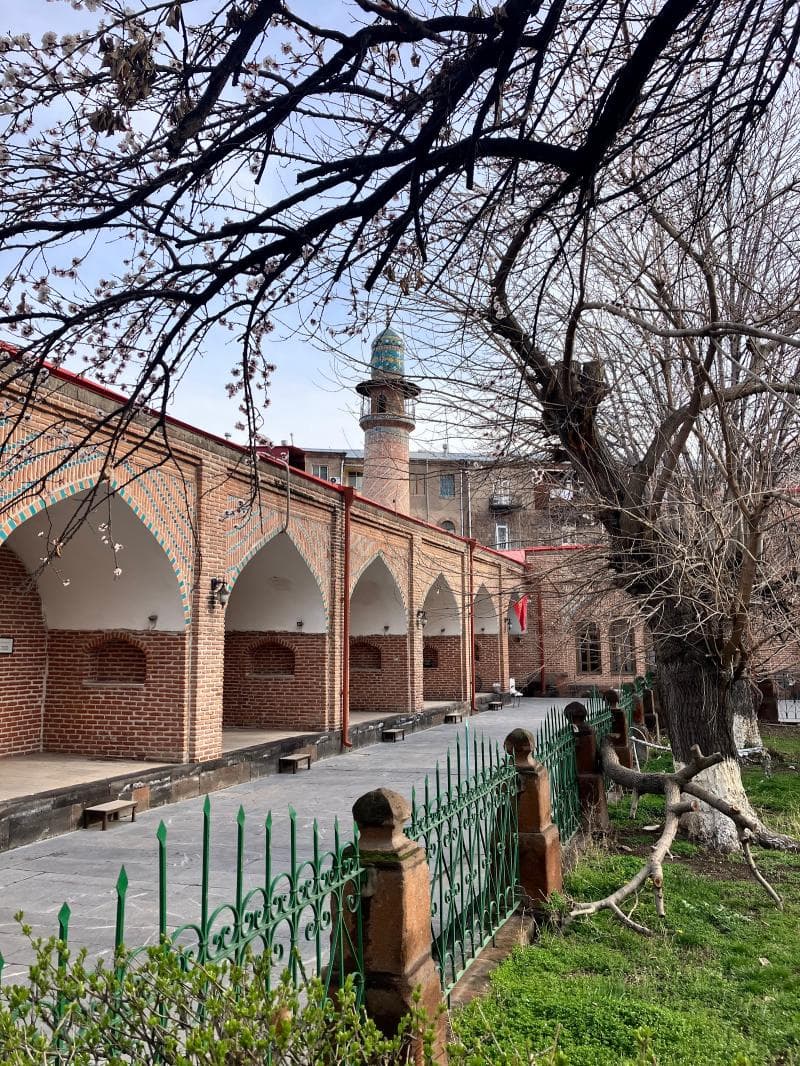
Discover the tranquil Prayer Hall of the Blue Mosque in Yerevan, Armenia. Explore its stunning Persian architecture and rich history.
Overview
Stepping into the Prayer Hall of the Blue Mosque in Yerevan, Armenia, is like entering a serene world where time seems to slow. This magnificent 18th-century structure, also known as Gyoy Djami or Huseyn Ali Khan Mosque, stands as a captivating testament to Persian architectural prowess and a vibrant center of Islamic culture in the heart of Armenia's bustling capital. It is the only active mosque in Armenia today, a unique and historically significant site. The prayer halls, particularly the main one, embody a tranquil sanctity that invites introspection and appreciation for centuries of artistic and spiritual devotion.
The Blue Mosque complex itself is an expansive area covering 7,000 square meters, featuring a large central courtyard, auxiliary rooms, and a towering minaret. The Prayer Hall serves as the spiritual core, its distinctive blue-tiled dome visible even from afar, hinting at the exquisite artistry found within. For travelers, it offers a rare opportunity to connect with a rich cultural tapestry that has woven itself into Yerevan's identity over generations.
History & Cultural Background
The Blue Mosque was commissioned by Hoseyn Ali Khan, the ruler of the Erivan Khanate, and constructed between 1765 and 1766. It was initially conceived as the city's main Friday mosque and quickly became the largest of the eight mosques operating in Yerevan during the 19th century. Its construction reflects the strong Persian influence in the region during that era, showcasing a pure Persian-Islamic architectural style.
The mosque's journey through history mirrors the region's complex past. During the Soviet era, like many religious institutions, it was secularized in the mid-1920s and ceased its original function. The main prayer hall underwent a remarkable transformation, housing a planetarium for several decades, while other parts of the complex served as the History Museum of Yerevan. Following Armenia's independence, the mosque underwent extensive restoration with crucial support from the Iranian government, commencing in 1995 and completed by 1999. This meticulous renovation returned the Blue Mosque to its original purpose, reinstating its role as a spiritual and cultural hub for the local Iranian community and Muslims residing in Armenia.
What Makes It Special
The Prayer Hall within the Blue Mosque is a masterpiece of Persian artistry. It is not a single space but rather comprises three arched, interconnected halls that together form the primary worship area. The main prayer hall alone spans an impressive 442 square meters and is crowned by a central dome reaching 20 meters in height. This dome, along with the minaret, is adorned with striking ceramic mosaics predominantly in shades of blue, which lend the mosque its popular name. These vibrant blue, yellow, and grey tiles create intricate curving lines and decorative patterns that captivate the eye.
A particularly mesmerizing feature is the Arabic calligraphy, specifically 'YA ALI' (يا علي), gracefully inscribed in mirror writing around the central dome. The interior of the dome is a kaleidoscope of more than 4,000 handmade ceramic tiles, each intricately painted with geometric patterns in deep cobalt and turquoise. This meticulous tilework, a hallmark of Safavid-Qajari architectural style, imbues the Prayer Hall with a profound sense of beauty and spiritual elevation, making it a unique example of Persian heritage in the South Caucasus.
Stories, Fun Facts & Local Details
Beyond its architectural grandeur, the Blue Mosque holds many stories. In the 1930s, even during its secularized period, the mosque's cozy inner yard, shaded by old trees, became a beloved gathering place for Yerevan's intelligentsia. Poets, artists, and writers would convene there over tea, fostering a vibrant intellectual atmosphere amidst the changing political landscape. This highlights the complex's enduring role as a community anchor, even when not serving purely religious functions.
The sheer number of handmade tiles on the dome's interior—over 4,000—speaks to the incredible dedication and craftsmanship involved in its design and restoration. Imagine the countless hours spent by artisans creating such a detailed and harmonious visual experience. Today, the mosque continues to be a living cultural center, hosting Farsi language classes and housing a library with thousands of books on Iranian history and culture. Visiting on a Friday morning, one can experience a 'sensory time capsule,' hearing the echoing call to prayer mingled with the gentle sounds of Persian tea being poured in the courtyard.
Visitor Perspective
The Prayer Hall of the Blue Mosque welcomes all visitors, offering a peaceful retreat from the urban environment. It's a place where history, art, and spirituality converge, providing a unique cultural experience. While entry to the mosque complex is generally free, visitors are encouraged to be mindful and respectful of its sacred nature.
When entering the Prayer Hall, it is customary and required to remove your shoes. Modest dress is also essential; shoulders and knees should be covered, and women are typically asked to wear a headscarf. Scarves are sometimes available on-site, but it's advisable to bring your own. Access to the Prayer Hall might be restricted during designated prayer times or special events, so it's wise to plan accordingly. Allowing 45-60 minutes for a visit gives ample time to appreciate the intricate tilework, the serene atmosphere, and the historical significance of this extraordinary landmark in Yerevan.
Coordinates: 44.5056, 40.1781
View on Google Maps💬 How Travelers Describe This Place
Based on community votes
Beautiful
539Interesting
517Photogenic
422Unique
251Must See
234
Traveler Stories
Discover memorable experiences shared by travelers who have visited this place.
No traveler stories yet.
Be the first traveler to share what made this place memorable.

Tour
By
Spot
Discover amazing places around the world. Your journey starts here.
Explore
© 2026 TourBySpot. All rights reserved.