Courtyard Garden
Yerevan, Armenia
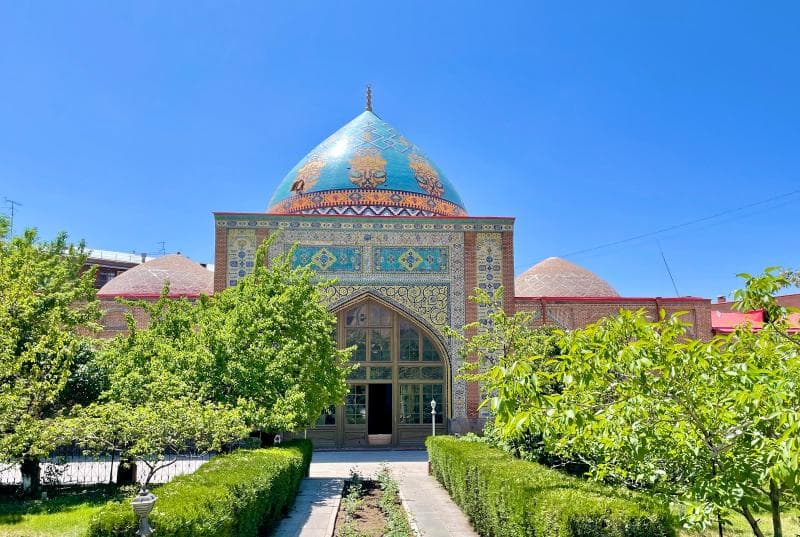
Discover the tranquil Courtyard Garden of the Blue Mosque in Yerevan, Armenia. Explore its Persian architecture, lush greenery, and cultural significance.
Overview
Stepping into the Courtyard Garden of the Blue Mosque in Yerevan, Armenia, is like entering a serene oasis amidst the bustling city. This eighteenth-century Iranian Twelver Shia mosque complex, a rare and significant relic of Yerevan's Persian past, dedicates a substantial portion of its 7,000 square meters to this tranquil outdoor space. The garden serves not only as a functional part of the mosque but also as a vibrant cultural heart, inviting contemplation and offering a peaceful retreat. With its meticulous landscaping, traditional Persian design, and the subtle scent of blossoming flora, the Courtyard Garden provides a profound sense of calm and beauty to all who visit. It is a central feature that beautifully complements the mosque's striking blue-tiled dome and intricate architecture, embodying a fusion of natural splendor and spiritual reverence.
History & Cultural Background
The Blue Mosque itself was commissioned by Hoseyn Ali Khan, the khan of the Erivan Khanate, and completed in 1765–1766 (1179 AH), making it one of the oldest extant structures in central Yerevan from the city's Iranian period. It was the largest of eight mosques in Yerevan during the nineteenth century and holds the unique distinction of being the only active mosque in Armenia today. The Courtyard Garden, an integral part of this historical complex, has witnessed centuries of change. During the Soviet era, like many religious institutions, the mosque was secularized and repurposed, housing various museums. The garden, too, likely saw transformations during this period. Following Armenia's independence, a significant restoration effort, supported by the Iranian government from 1994 to 1998, revitalized the entire complex, including its magnificent courtyard. This restoration not only preserved the mosque's architectural grandeur but also reinstated its role as a vital religious and cultural center, particularly for the Iranian community in Armenia.
What Makes It Special
The Courtyard Garden's unique charm lies in its thoughtful design and the harmonious blend of natural elements with stunning Persian architecture. Visitors are greeted by a neat patio surrounded by lush greenery, featuring mulberry and apricot trees, and vibrant rose bushes that add bursts of color and fragrance. The presence of a small fountain and a reflective pool further enhances the tranquil atmosphere, offering a visual delight as the mosque's famous turquoise dome and intricate tilework are often mirrored in the water. The garden is structured in layers: the repeating rhythm of brick arches, recesses, and narrow passages that form the mosque's perimeter, the concentrated blue and turquoise tilework of the prayer hall's facade, and the carefully chosen planting that creates a clear separation from the outside world. This design creates a profound sense of enclosure and peaceful isolation, making it a true sanctuary. It is a place where the grandeur of Persian artistry meets the simplicity and beauty of nature, creating a truly memorable experience.
Stories, Fun Facts & Local Details
The Courtyard Garden is more than just a beautiful space; it's a living canvas of cultural exchange and community life. On warm afternoons, a samovar might appear in a garden corner, offering visitors a taste of strong black tea with sugar cubes, Persian style, encouraging long conversations. The mosque complex also houses a library with a unique collection of Iranian paintings and photographs, and even offers free Farsi classes, making the garden a central point for learning and cultural immersion. It serves as a symbolic bridge, fostering friendship between Armenia and Iran, and is a gathering place for the local Iranian community, especially on weekends. The casual reverence with which locals treat the area, often seeing Iranian students sprawling on benches with books, underscores its role as a comfortable 'living room' for the faithful and the culturally curious alike. The sound of pigeons cooing in the mulberry trees often muffles the city traffic, adding to the garden's enchanting tranquility.
Visitor Perspective
For a curious traveler, the Courtyard Garden offers a calming and enriching experience. It's recommended to allocate about 45-60 minutes to leisurely explore the courtyard, appreciate the tilework, and immerse oneself in the peaceful surroundings. The contrast between the bustling Mashtots Avenue outside and the quiet serenity within the garden walls is striking, creating an immediate sense of escape. Visitors are encouraged to dress modestly, covering shoulders and knees, and women should be prepared to wear a headscarf if entering the prayer hall, although the garden itself does not typically require this. Photography is welcomed within the courtyard, particularly in the mid-morning when the sun illuminates the cobalt and turquoise mosaics. Stepping through the gates into this garden, one truly feels transported, gaining a deeper understanding of Yerevan's diverse history and the enduring legacy of Persian culture in Armenia. It's a place for quiet reflection, artistic appreciation, and a gentle immersion into a different cultural rhythm.
Coordinates: 44.5056, 40.1781
View on Google Maps💬 How Travelers Describe This Place
Based on community votes
Must See
517Beautiful
422Unique
394Interesting
269Photogenic
145
Traveler Stories
Discover memorable experiences shared by travelers who have visited this place.
No traveler stories yet.
Be the first traveler to share what made this place memorable.

Tour
By
Spot
Discover amazing places around the world. Your journey starts here.
Explore
© 2026 TourBySpot. All rights reserved.