Persian Tilework
Yerevan, Armenia
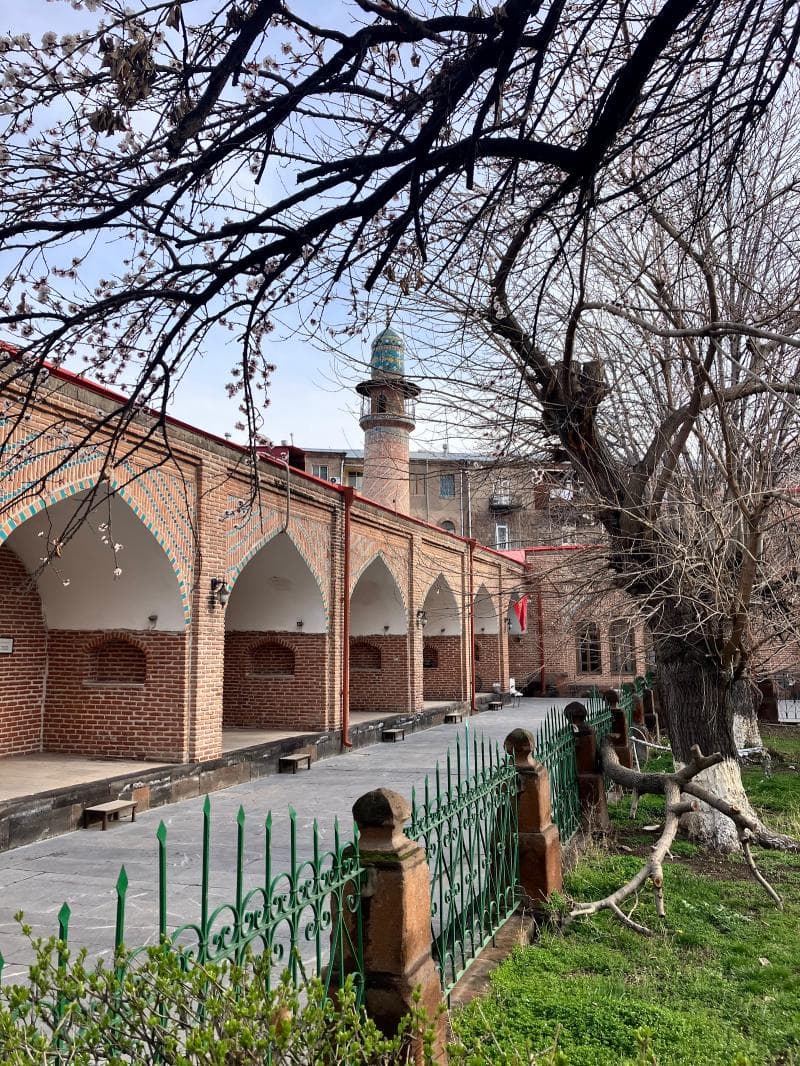
Discover the exquisite Persian tilework at Yerevan's Blue Mosque in Armenia, a vibrant 18th-century masterpiece and cultural hub.
Overview
Stepping into the Blue Mosque in Yerevan, Armenia, is like traversing a portal to a rich Persian heritage, a serene oasis amidst the bustling city. At the heart of its captivating beauty lies its exquisite Persian tilework, a vibrant testament to centuries of artistic tradition and cultural exchange. This 18th-century Iranian Twelver Shia mosque, also known by names such as Huseyn Ali Khan Mosque and Gök Jami, stands as the sole active mosque in Armenia, making its Persian tilework not just an architectural marvel but a living piece of history. Its distinctive cerulean-tiled domes and facades immediately draw the eye, giving the mosque its popular 'Blue' moniker.
The complex, encompassing approximately 7,000 square meters, features a large courtyard, a main prayer hall, and a towering minaret, all adorned with the intricate ceramic artistry. Visiting the Blue Mosque offers a unique opportunity to immerse oneself in a blend of religious devotion, historical significance, and breathtaking craftsmanship, particularly through the lens of its iconic tile decorations that reflect a deep artistic lineage with Iran.
History & Cultural Background
The Blue Mosque's origins trace back to 1765-1766 CE (1179 AH), when it was commissioned by Hoseyn Ali Khan, the then-ruler of the Erivan Khanate, a Persian-controlled territory. It quickly became the city's principal Friday mosque and remained the largest of Yerevan's eight mosques in the 19th century. The architectural style is deeply rooted in Iranian tradition, showcasing characteristics of the Safavid-Qajari period.
Over its long history, the mosque has witnessed significant transformations. During the Soviet era, it was secularized in the 1920s and served as the History Museum of Yerevan for over five decades. However, following Armenia's independence, the Blue Mosque underwent extensive renovation between 1996 and 1999, largely funded and supported by the Iranian government. This restoration brought in Iranian specialists, ensuring the authenticity and preservation of its Persian architectural and decorative elements, especially its famed tilework. Today, it functions not only as a place of worship but also as a vibrant cultural center, fostering Iranian-Armenian cultural exchange.
What Makes It Special
The Persian tilework of the Blue Mosque is its defining feature, a stunning visual narrative that captivates every visitor. What makes it truly special is the harmonious blend of intricate geometric patterns, symmetrical designs, and delicate floral motifs that are hallmarks of Persian artistry. The dominant use of vibrant blue and turquoise glazed tiles, which give the mosque its name, creates an ethereal and serene atmosphere, particularly on the central dome and the minaret.
Beyond the color, the craftsmanship itself is extraordinary. The tilework includes sophisticated techniques like mosaic tiling and possibly 'Haft Rang' (seven-color tiles), which were perfected in Persia. Arabic calligraphy, often featuring religious inscriptions, is intricately woven into these patterns, adding a layer of spiritual depth to the visual splendor. The tiles are not merely decorative; they transform the architectural spaces, creating a sense of grandeur and timeless beauty that reflects centuries of artistic evolution in the Muslim world.
Stories, Fun Facts & Local Details
The Blue Mosque is sometimes affectionately referred to as 'Gyoy Djami' or 'Gök Jami,' both of which translate to 'Blue Mosque,' highlighting the striking color of its tiles even in local parlance. Its survival through various historical periods, including the Soviet era when many religious buildings were demolished, is itself a remarkable story, partly attributed to the efforts of Armenian intellectuals who recognized its cultural value. During its time as a museum, it even housed a planetarium in one of its halls.
Today, the complex extends beyond a simple place of worship. It hosts an Iranian cultural center, offering free Farsi classes and housing a library with over 8,000 items, attracting young Armenians interested in Persian culture. This makes the tilework not just an artifact of the past, but part of a dynamic, living cultural hub where visitors can explore Persian arts and crafts through permanent exhibitions. The inner courtyard itself is a tranquil space, adorned with mulberry and apricot trees, offering a peaceful retreat from the city.
Visitor Perspective
For visitors, exploring the Persian tilework of the Blue Mosque is a journey into artistry and tranquility. As you approach, the vivid blue tiles on the domes and minaret shimmer under the sunlight, offering a captivating first impression. Once inside the walled complex, the serene courtyard provides a moment of calm, surrounded by lush gardens and the soft murmur of fountains, often with benches inviting contemplation.
Entry to the mosque is free, but visitors are encouraged to dress modestly, with women typically expected to cover their heads, shoulders, and knees. Scarves are often provided for this purpose. It's important to be respectful of prayer times, during which non-worshippers may not be allowed into the main prayer hall. Photography is generally permitted, but flash photography is usually prohibited to protect the delicate ancient tiles and maintain the peaceful atmosphere for worshippers. Taking your time to admire the intricate patterns, the delicate color variations, and the historical depth embedded in every tile will undoubtedly enrich your experience at this unique cultural gem in Yerevan.
Coordinates: 44.5056, 40.1781
View on Google Maps💬 How Travelers Describe This Place
Based on community votes
Must See
897Interesting
657Beautiful
498Unique
481Photogenic
299
Traveler Stories
Discover memorable experiences shared by travelers who have visited this place.
No traveler stories yet.
Be the first traveler to share what made this place memorable.

Tour
By
Spot
Discover amazing places around the world. Your journey starts here.
Explore
© 2026 TourBySpot. All rights reserved.