Minaret
Yerevan, Armenia
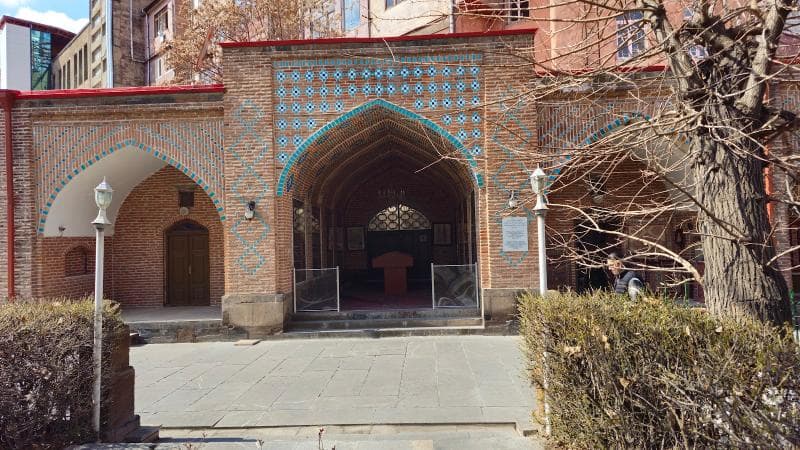
Explore the historic Minaret of the Blue Mosque in Yerevan, Armenia. Discover its 18th-century Persian architecture, cultural significance, and rich history.
Overview
Nestled amidst the bustling streets of Yerevan, Armenia, within the serene complex of the Blue Mosque, stands a singular and striking Minaret. This architectural gem, also known as the Gök Jami or Heavenly Mosque, offers a glimpse into a rich Persian heritage that has intertwined with Armenian history for centuries. The Blue Mosque is a vibrant center for religious and cultural activities, distinguished by its captivating blue ceramic mosaics. Its minaret, reaching a height of 24 meters, serves not only as a functional call to prayer but also as a profound symbol of the mosque's enduring presence and historical significance in the Armenian capital.
The entire complex, spanning approximately 7,000 square meters, features a large rectangular courtyard with a fountain, prayer halls, and various rooms that once served educational and domestic purposes. The Minaret is prominently located in the south-western part of this walled complex, its patterned brickwork adding to the mosque's visual splendor. Today, it remains the only active mosque in Armenia, welcoming visitors of all backgrounds to explore its tranquil grounds and immerse themselves in its storied past.
History & Cultural Background
The Blue Mosque was constructed between 1765 and 1766 (1179 AH) by Hoseyn Ali Khan, who was then the khan of the Erivan Khanate under Persian rule. This makes it one of the oldest extant structures in central Yerevan and the most significant building from the city's Iranian period. Before its construction, an earlier mosque, the Def Sultan Mosque, is believed to have occupied the site but was destroyed in a devastating earthquake in 1679.
Historically, the Blue Mosque was more than just a place of worship; it was a vital hub for the community, providing religious, educational, and domestic facilities. During the 19th century, it was the largest of Yerevan's eight mosques. However, its purpose dramatically shifted during the Soviet era. From the 1920s, the mosque was secularized and repurposed, housing the History Museum of Yerevan for over five decades, and even served as a planetarium and cafe.
After Armenia gained independence, with significant support from the Iranian government, particularly the Iranian Embassy, the mosque underwent extensive restoration between 1994 and 1998, returning it to its original function as a place of worship. This meticulous restoration effort has allowed the Blue Mosque to continue its legacy as an active spiritual and cultural center.
What Makes It Special
The Minaret of the Blue Mosque stands out not only for its architectural elegance but also for its historical resilience. At 24 meters (79 feet) tall, it was once the highest structure in 19th-century Yerevan, proudly proclaiming the mosque's presence. Its design features intricate patterned brickwork and glazed ceramic tiles in striking blue, yellow, and green hues, reflecting a distinct Persian architectural style.
What truly sets this Minaret apart is its survival. While historical records indicate that three other minarets originally part of the complex were demolished during Soviet rule, this single minaret was preserved. Its presence today is a testament to the efforts of Armenian intellectuals who opposed the destruction of religious buildings during that tumultuous period. The Minaret, along with the mosque's central dome adorned with delicate Arabic calligraphy, contributes significantly to the monument's aesthetic and cultural identity, earning it the popular name 'Blue Mosque' due to the predominant blue coloration of its tilework.
Stories, Fun Facts & Local Details
The preservation of the Blue Mosque and its Minaret during the Soviet era is a remarkable story. Armenian intellectuals, including the renowned poet Yeghishe Charents, played a crucial role in saving the mosque from demolition, highlighting its importance as a historical and architectural landmark for Yerevan. This intervention ensured that future generations could witness this unique piece of heritage.
In the 1930s, the mosque's cozy inner courtyard, surrounded by shade-providing trees and featuring a central fountain, became a favored gathering spot for Yerevan's intelligentsia—poets, artists, and writers would convene there over a cup of tea. Today, the Blue Mosque continues this tradition as a cultural center, hosting various events, conferences, exhibitions, and even Persian language classes. It boasts a library with a collection of approximately 8,000 books, making it a hub for learning and cultural exchange.
Distinguished visitors throughout history have admired the mosque. Baron August von Haxthausen, a German scholar, described the mosque's interior as one of the most magnificent sights he had witnessed in Yerevan after his visit in the 1840s, accompanied by Khachatur Abovyan. The complex is often pictured in Armenian fine art, further cementing its place in the nation's cultural narrative.
Visitor Perspective
The Minaret of the Blue Mosque stands as a welcoming beacon for travelers seeking a deeper understanding of Yerevan's diverse cultural fabric. Located conveniently on Mashtots Avenue in the city's Kentron district, it is easily accessible. Visitors are encouraged to enter the tranquil complex, which offers a stark and pleasant contrast to the city's hustle and bustle.
While the mosque is an active place of worship, it is open to all visitors regardless of faith. Guests are asked to observe a respectful dress code, and during prayer times, entry into the main prayer halls might be restricted. The best times to visit are typically late morning or early afternoon to avoid prayer schedules and fully appreciate the serene ambiance. Photography is generally welcomed in the beautiful inner courtyard, allowing one to capture the intricate tilework and the stately Minaret against the Armenian sky. Stepping through its gates offers a moment of peaceful contemplation and a unique cultural experience in the heart of Yerevan.
Coordinates: 44.5056, 40.1781
View on Google Maps💬 How Travelers Describe This Place
Based on community votes
Interesting
817Photogenic
711Must See
657Beautiful
299Unique
19
Traveler Stories
Discover memorable experiences shared by travelers who have visited this place.
No traveler stories yet.
Be the first traveler to share what made this place memorable.

Tour
By
Spot
Discover amazing places around the world. Your journey starts here.
Explore
© 2026 TourBySpot. All rights reserved.