Archways
Yerevan, Armenia
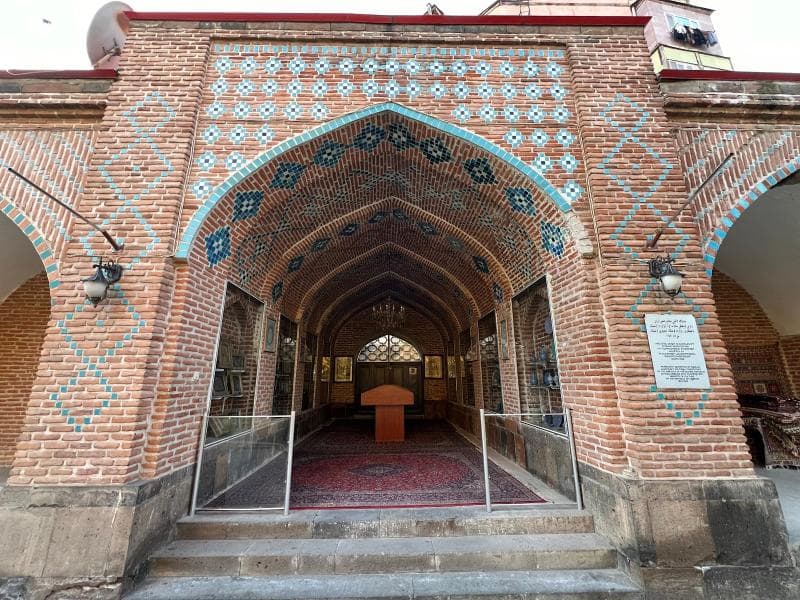
Explore the serene archways of the Blue Mosque in Yerevan, Armenia. Discover its 18th-century Persian architecture and rich cultural history.
Overview
Stepping into the Blue Mosque in Yerevan, Armenia, visitors are immediately transported to a tranquil oasis, far removed from the city's bustling streets. Among its most captivating features are the elegant archways that define its courtyards and connect its various sections. These architectural elements, while not a separate named attraction, are fundamental to the mosque's aesthetic and historical charm, creating a rhythmic and inviting atmosphere. The archways, often made of brick and adorned with intricate tilework, frame views of the central courtyard, the sparkling pool, and the mosque's iconic blue-tiled dome, offering a profound sense of peace and architectural harmony.
The Blue Mosque itself is an 18th-century Iranian Twelver Shia mosque, standing as a significant monument from Yerevan's Iranian period and the only active mosque in Armenia today. Its design reflects the classical Persian architectural style, where archways play a crucial role in defining space, providing structural support, and enhancing the spiritual journey through the complex.
History & Cultural Background
The Blue Mosque was built between 1765 and 1766 (1179 AH) by Hoseyn Ali Khan, the ruler of the Erivan Khanate. It replaced an earlier mosque destroyed in a 1679 earthquake, quickly becoming the largest and most notable mosque in Yerevan. The archways, along with the entire complex, exemplify Iranian architectural traditions, evident in the intricate blue brickwork and the overall layout.
Throughout its history, the mosque has witnessed significant transformations. During the Soviet era, from the mid-1920s, it ceased to function as a religious institution and was converted into a museum, housing the History Museum of Yerevan for over five decades. Despite widespread demolition of religious buildings during this period, the Blue Mosque was preserved through the efforts of Armenian intellectuals, including the poet Yeghishe Charents. This period of secular use meant its religious architecture, including its archways, served a different purpose, housing exhibits rather than worshippers. Following Armenia's independence, the mosque was renovated with support from the Iranian government in the 1990s and 2000s, returning to its original function as a place of worship and a cultural center.
What Makes It Special
The archways of the Blue Mosque are special for several reasons, blending functionality with exquisite artistry. They are primarily constructed from brick, a traditional material in Persian architecture, creating a repeating rhythm that guides the eye and provides a sense of enclosure within the courtyard. These arches, particularly the 'brick arcades', form inviting galleries and passages, offering shaded respite from the sun and creating intimate spaces for contemplation.
The beauty of these arches is enhanced by the vibrant tilework that adorns many parts of the mosque. While the dome and prayer hall facade are particularly rich in blue and turquoise tiles, geometric and calligraphic tilework can also be seen accentuating the pointed arches, adding layers of visual complexity and spiritual meaning. The archways connect various elements of the complex, including three arched prayer halls, 28 study cells, and other functional rooms, all designed around a large rectangular courtyard.
Stories, Fun Facts & Local Details
The courtyard, framed by its elegant archways, has long been a place of gathering and cultural exchange. In the 1930s, even during its time as a museum, the mosque's 'cozy inner yard' was a favorite spot for Yerevan's intelligentsia—poets, artists, and writers—to meet over tea. This tradition of the mosque as a cultural hub continues today, hosting events, conferences, and exhibitions, further enriching its role beyond a purely religious site.
One delightful detail is how the blue dome, which gives the mosque its name, is often reflected in the courtyard's central pool, creating a stunning visual effect that is beautifully framed by the surrounding archways and lush greenery. The mosque complex, covering 7,000 square meters, is an active cultural and religious center, fostering a connection between the Iranian community in Armenia and the broader Armenian society.
Visitor Perspective
For a curious traveler, exploring the archways of the Blue Mosque offers a sensory journey. The repetition of brick arches, the cool shade they provide, and the intricate details of their decoration invite a slow and mindful exploration. Walking through the 'arched interconnected prayer halls' and 'arcaded galleries' allows visitors to experience the architectural depth and the spiritual ambiance of the place.
The overall experience is one of unexpected tranquility amidst the urban landscape of Yerevan. It's a place where you can spend 45-60 minutes quietly appreciating the architecture, the tilework, and the peaceful garden setting. When visiting, it's advised to dress modestly, covering shoulders and knees, and to be respectful of the active religious functions, particularly during prayer times when some interior spaces may be less accessible.
Coordinates: 44.5056, 40.1781
View on Google Maps💬 How Travelers Describe This Place
Based on community votes
Interesting
799Must See
639Beautiful
526Unique
181Photogenic
30
Traveler Stories
Discover memorable experiences shared by travelers who have visited this place.
No traveler stories yet.
Be the first traveler to share what made this place memorable.

Tour
By
Spot
Discover amazing places around the world. Your journey starts here.
Explore
© 2026 TourBySpot. All rights reserved.