Fountain Area
Yerevan, Armenia
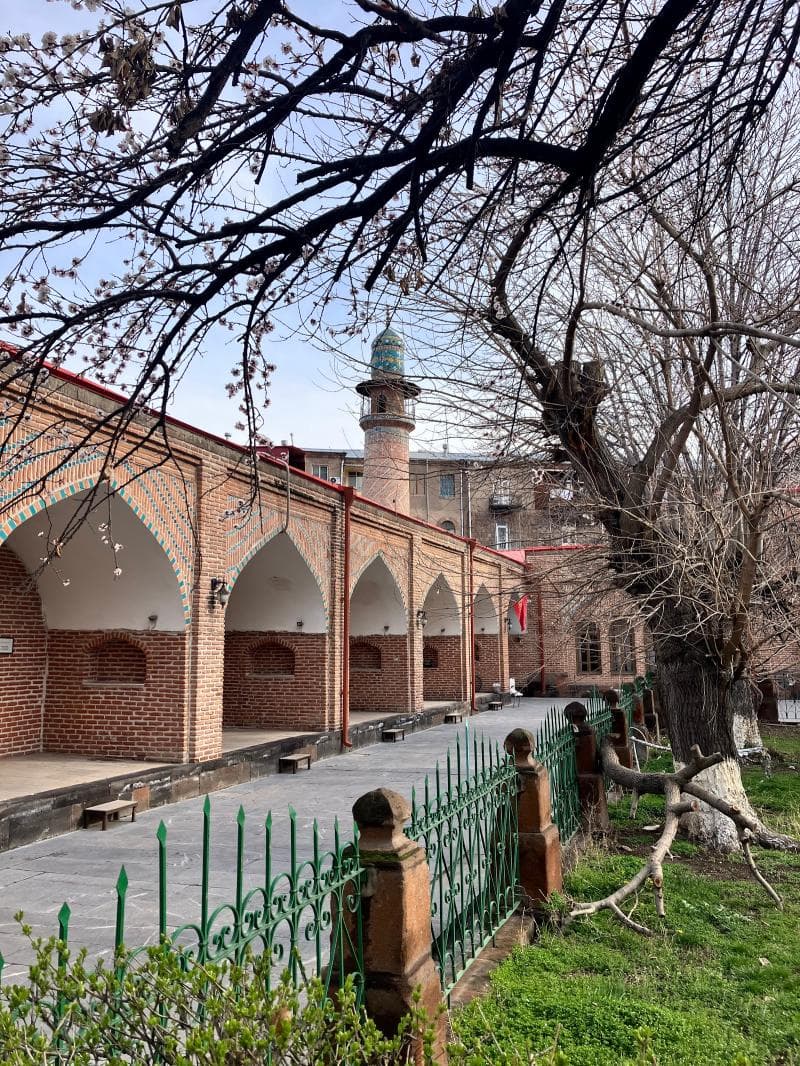
Explore the tranquil Fountain Area of Yerevan's Blue Mosque, an 18th-century Persian architectural gem in Armenia's capital. Discover its history and serene courtyard.
Overview
Stepping through the modest entrance of the Blue Mosque in Yerevan, Armenia, one immediately finds solace in the tranquil 'Fountain Area' – an expansive inner courtyard that serves as the spiritual and architectural heart of this historic Persian mosque. Far from the bustling Mashtots Avenue, this serene space offers a remarkable sense of calm and a vivid glimpse into Armenia's rich multicultural past. The Blue Mosque, known locally as Gyoy Djami, is a cherished monument, uniquely preserving an 18th-century Islamic architectural tradition within the predominantly Christian nation of Armenia.
The focal point of this large rectangular courtyard is its stone pool and fountain, a feature that once held great practical significance for ritual ablutions before prayer, and today provides a reflective beauty to the surroundings. Shaded by mature trees and adorned with vibrant gardens, the Fountain Area invites visitors to pause and absorb the intricate details of the mosque's famed blue-tiled dome and minaret, which often find their reflection in the water's surface. It is a place where history resonates, architectural artistry captivates, and a palpable sense of peace envelops those who enter.
History & Cultural Background
The Blue Mosque's origins trace back to 1765-1766, when it was commissioned by Sardar Huseyn Ali Khan, the then-governor of the Erivan Khanate, during a period of Persian rule. This grand structure rose on the site of an earlier mosque, believed to have been destroyed in a devastating earthquake in 1679. As the largest of the eight mosques that once graced Yerevan in the 19th century, it stood as a central hub for the Muslim community, serving not only as a place of worship but also for educational and social activities.
However, its history took a significant turn during the Soviet era. In the mid-1920s, like many religious institutions, the Blue Mosque was secularized and ceased its religious functions. For over five decades, it housed various museums, including the History Museum of Yerevan, and even a planetarium. Following Armenia's independence, a pivotal moment arrived in the 1990s. With substantial support and funding from the Iranian government, the mosque underwent extensive restoration between 1994 and 1998, returning it to its original purpose as an active place of worship and a vibrant cultural center for the Iranian community in Armenia.
What Makes It Special
The 'Fountain Area' of the Blue Mosque is an architectural marvel and a sensory delight. Measuring approximately 71 by 47 meters, the courtyard is a spacious rectangle, traditionally paved with tuff. At its heart, the stone pool and fountain are more than just decorative; they are symbolic and functional, reflecting the importance of water in Islamic traditions for purification and as an element of beauty. The distinctive blue ceramic tiles, which give the mosque its popular name, adorn the central dome and various elements of the complex, their vivid hues often mirrored in the courtyard's tranquil waters.
Surrounding the pool, the courtyard is transformed into a verdant oasis with thoughtfully maintained gardens featuring a variety of flowers and shady trees, including mulberry trees. These natural elements not only enhance the aesthetic appeal but also provide a cool, serene microclimate, offering a refreshing respite from the urban environment outside its walls. The geometric patterns of the tilework and the graceful arches of the surrounding structures create a harmonious blend of form and color, characteristic of exquisite Persian architectural heritage.
Stories, Fun Facts & Local Details
Beyond its visual splendor, the Blue Mosque's Fountain Area holds stories woven into the fabric of Yerevan's history. During the Soviet period, when the mosque operated as a museum, its cozy inner courtyard surprisingly became a beloved gathering place for Yerevan's intelligentsia—poets, artists, and writers—who would convene for tea, transcending its repurposed identity. Today, it continues to serve as a significant cultural center, hosting events, conferences, and even Farsi language classes, thus perpetuating its role as a bridge between cultures.
A visit to the Fountain Area is a journey through time and a cross-cultural experience. The gentle gurgle of the fountain and the rustling leaves of the trees offer a natural soundscape that beautifully filters out the city's hustle and bustle, creating an almost meditative atmosphere. It's fascinating to note how the mosque's striking blue dome, reflected in the water, gave it its evocative name, a detail often admired by visitors and photographers alike. The presence of this active Shia mosque in Yerevan stands as a living testament to the historical and ongoing diversity of Armenia's cultural tapestry.
Visitor Perspective
For any curious traveler, the Fountain Area of the Blue Mosque offers a deeply enriching experience. Entry is free, and the mosque warmly welcomes visitors of all backgrounds, encouraging respectful exploration. To fully appreciate the spiritual sanctity of the place, it is recommended to dress modestly, ensuring shoulders and knees are covered. Women intending to enter the main prayer hall should also be prepared to wear a headscarf, and all visitors are kindly asked to remove their shoes before entering designated prayer spaces.
Spending about 45 to 60 minutes exploring the courtyard, admiring the tilework, and simply soaking in the peaceful ambiance is highly recommended. The visual spectacle of the blue tiles, particularly when illuminated by the morning sun, makes for excellent photography opportunities, especially when capturing the reflections in the fountain's pool. During Friday prayers, while non-Muslims cannot enter the main prayer hall, the courtyard remains accessible, allowing a unique chance to observe the local community engaging in worship from a respectful distance. This tranquil oasis truly provides an unexpected and meaningful counterpoint to the vibrant energy of Yerevan, offering a moment of quiet contemplation and cultural immersion.
Coordinates: 44.5056, 40.1781
View on Google Maps💬 How Travelers Describe This Place
Based on community votes
Unique
703Must See
521Photogenic
380Interesting
291Beautiful
28
Traveler Stories
Discover memorable experiences shared by travelers who have visited this place.
No traveler stories yet.
Be the first traveler to share what made this place memorable.

Tour
By
Spot
Discover amazing places around the world. Your journey starts here.
Explore
© 2026 TourBySpot. All rights reserved.