Binondo
Manila, Philippines
Discover Binondo, the world's oldest Chinatown in Manila, Philippines. Explore its rich history, vibrant culture, and unparalleled food scene.
Overview
Nestled in the heart of Manila, Philippines, Binondo stands as the world's oldest Chinatown, a district rich in history, culture, and a distinct blend of Chinese and Filipino heritage. It is a vibrant and bustling hub that offers a captivating journey through centuries of trade, migration, and cultural fusion. Visitors to Binondo are immediately immersed in a lively atmosphere, characterized by narrow alleys, traditional shops, and the enticing aromas of street food, evoking the feeling of stepping into a classic Asian film.
History & Cultural Background
Binondo was established in 1594 by Spanish Governor Luis Pérez Dasmariñas as a permanent settlement for Chinese immigrants, known as Sangleys, who had converted to Catholicism. This strategic placement, across the Pasig River from the walled city of Intramuros, allowed the Spanish to monitor the Chinese community while facilitating vital trade. Over its four-century existence, Binondo rapidly evolved into Manila's commercial and financial nerve center. Even before the Spanish colonial period, it was a hub of Chinese commerce, a role that continued to flourish throughout Spanish and American occupations.
A central spiritual and historical landmark is the Binondo Church, formally known as the Minor Basilica and National Shrine of Saint Lorenzo Ruiz. Founded by Dominican priests in 1596, it was built to serve the Chinese converts to Christianity. The church has undergone multiple reconstructions due to fires, earthquakes, and wartime damage, yet its enduring presence symbolizes the deep-rooted faith and heritage of the community.
What Makes It Special
Binondo's primary distinction is its status as the world's oldest Chinatown, a claim supported by its documented founding in 1594. It serves as a unique cultural melting pot where Chinese traditions and Filipino customs seamlessly intertwine, evident in its architecture, festivals, and daily life. The district is a renowned culinary destination, celebrated for its authentic Chinese dishes, from dim sum and Peking duck to street food delicacies like fried siopao and hopia. It also offers a fascinating array of fusion flavors, reflecting the long history of Chinese-Filipino interaction.
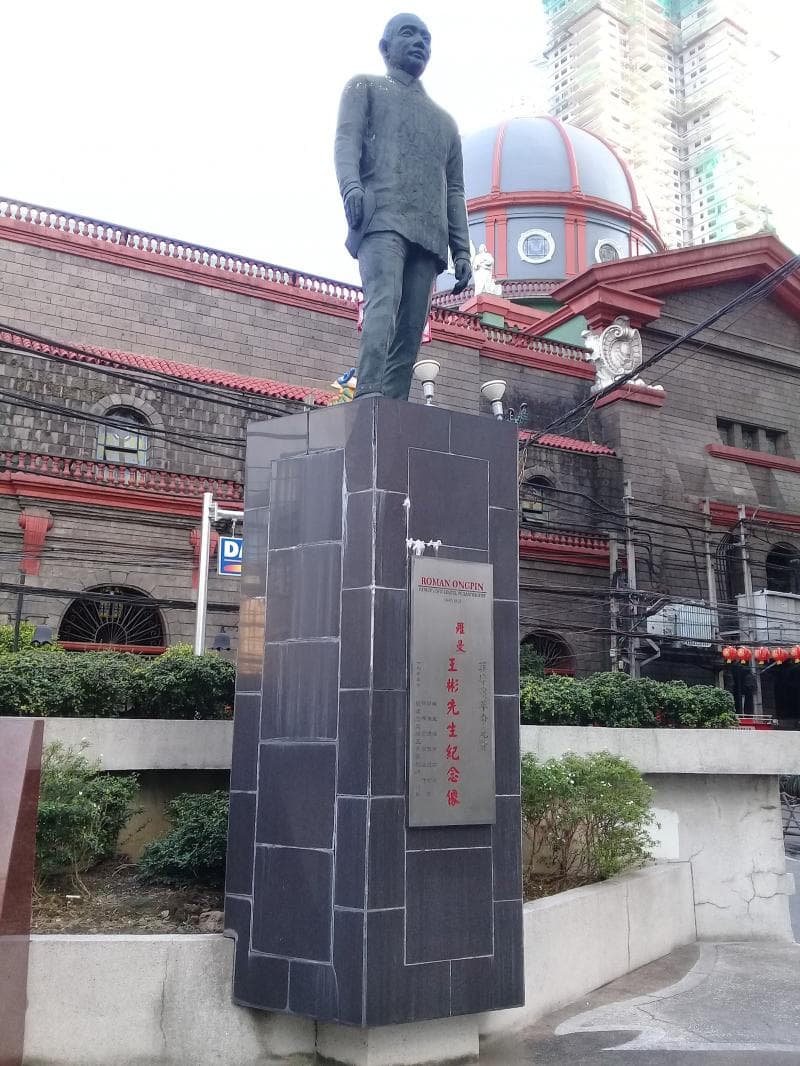
Historic thoroughfares such as Ongpin Street and Escolta Street remain central to Binondo's commercial and cultural identity. Ongpin Street is particularly famous for its gold and jewelry stores, herbal shops, and a dense concentration of eateries, while Escolta, once Manila's premier shopping and financial district, showcases a blend of old Art Deco buildings.
Stories, Fun Facts & Local Details
Binondo holds many interesting stories. For instance, the octagonal bell tower of the Binondo Church is reportedly the only original structure remaining from the 16th-century edifice. The district is also home to Plaza Lorenzo Ruiz, named after Saint Lorenzo Ruiz, the first Filipino saint, who was born in Binondo. Visitors can experience a unique local tradition at the Kuang Kong Temple, where a ritual involving two moon-shaped wooden discs can provide 'yes' or 'no' answers to questions.
The impressive Filipino-Chinese Friendship Arch, located at the foot of Jones Bridge, is one of the world's largest Chinatown arches, symbolizing the enduring relationship between the two communities. Binondo is also the birthplace of famous food brands, such as Eng Bee Tin, renowned for its hopia pastries. The district's name itself is believed to derive from the Filipino word 'binundok', meaning 'like a mountain', possibly referring to its former hilly terrain. For a touch of old-world charm, some areas still offer rides on 'calesas', horse-drawn carriages, a delightful way to explore the historic streets.
Visitor Perspective
Exploring Binondo is an adventure for the senses. The district's lively energy, with vendors calling out their wares and the constant flow of people, creates an immersive cultural experience. Red lanterns adorn narrow alleys, and the tantalizing aromas of diverse Chinese and Filipino dishes waft through the air. It is highly recommended to explore Binondo on foot to fully appreciate its historical landmarks, traditional shops, and, most importantly, its vibrant food scene. Travelers should wear comfortable shoes and be prepared for crowded streets. Bringing cash is also advisable, as many smaller establishments may not accept card payments. A visit to Binondo is not merely a trip; it is an authentic and rewarding cultural journey into a truly unique corner of Manila.
Coordinates: 120.974, 14.5999
View on Google Maps💬 How Travelers Describe This Place
Based on community votes
Unique
963Must See
897Interesting
723Beautiful
463Photogenic
274
Traveler Stories
Discover memorable experiences shared by travelers who have visited this place.
No traveler stories yet.
Be the first traveler to share what made this place memorable.
Things to see at Binondo



Tour
By
Spot
Discover amazing places around the world. Your journey starts here.
Explore
© 2026 TourBySpot. All rights reserved.