Jones Bridge
Manila, Philippines
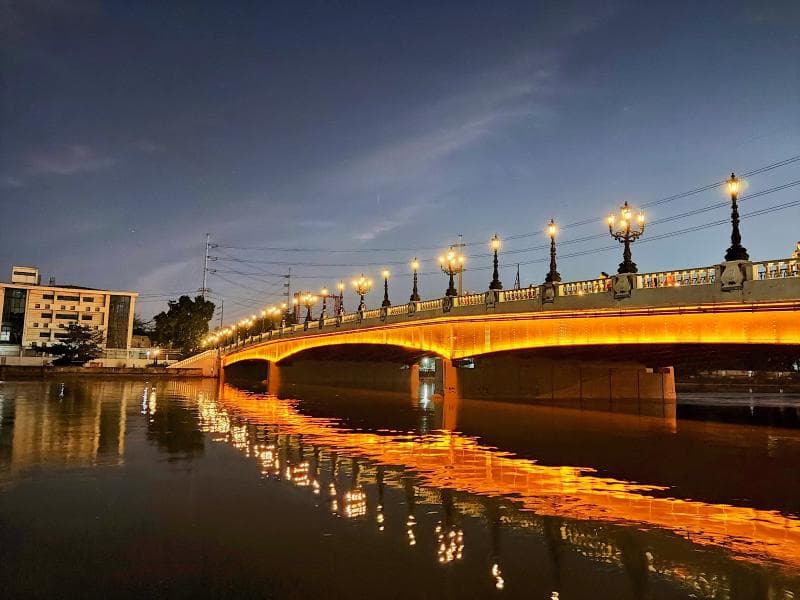
Discover Jones Bridge in Manila, Philippines – a historic landmark connecting Binondo to Ermita, rich in history, architecture, and cultural significance.
Overview
Nestled within the bustling heart of Manila, Philippines, the Jones Bridge stands as a significant landmark, gracefully spanning the historic Pasig River. Connecting the vibrant district of Binondo, known as the world's oldest Chinatown, to the central areas of Ermita and Intramuros, this elegant structure is more than just a thoroughfare; it is a profound historical and architectural testament to the city's rich and complex past. Named the William A. Jones Memorial Bridge, it pays homage to American legislator William Atkinson Jones, who authored the Philippine Autonomy Act of 1916. It serves not only as a vital artery for daily commuters but also as an open-air museum, inviting travelers to step back in time and explore Manila's layered heritage.
History & Cultural Background
Before the current Jones Bridge, the site was occupied by the Puente de España, or Bridge of Spain, a critical crossing dating back to the Spanish colonial period that had undergone several reconstructions since 1630. However, after suffering severe damage from floods in 1914, city planners embarked on a project to build a more modern and resilient replacement.
Construction of the new bridge, designed by the acclaimed Filipino architect Juan M. Arellano, began in 1919 and was completed in 1920, opening to traffic in 1921. Arellano envisioned a bridge that would reflect the burgeoning national identity of the Philippines, designing it in a French Neoclassical or Beaux-Arts style. The original design featured three arches resting on two heavy piers, adorned with faux-stone ornaments, decorative balustrades, and elaborate lamp posts. Most notably, it was guarded by four allegorical sculptures, collectively known as 'La Madre Filipina' (The Filipino Mother), representing the virtues of Democracy, Gratitude, Progress, and Justice.
Tragically, the original Jones Bridge met a devastating fate during World War II. During the Battle of Manila in 1945, Japanese forces destroyed the bridge, along with much of the surrounding urban landscape, in an effort to impede advancing American troops. It was temporarily renamed 'Banzai Bridge' during the Japanese occupation. Following the war, a simpler, less ornate girder bridge was hastily reconstructed in 1946, retaining its functional three arches and two piers but losing its decorative elements and one of the La Madre Filipina statues.
Decades later, in 2019, a significant rehabilitation project commenced to restore Jones Bridge to its initial grandeur. This ambitious endeavor aimed to bring back its original Beaux-Arts architecture, including the reinstallation of the three surviving 'La Madre Filipina' sculptures, which had been relocated for safekeeping, and the replication of the fourth lost statue. New Beaux-Arts-styled lamp posts, inspired by Paris' Pont Alexandre III, were also installed, rekindling the bridge's ceremonial presence.
What Makes It Special
Jones Bridge is exceptional for several reasons, primarily its profound blend of architectural beauty and historical symbolism. Architect Juan M. Arellano's original vision transformed a functional crossing into a work of art, a graceful Neoclassical structure that served as a grand gateway to Manila.
Its unique allegorical sculptures, the 'La Madre Filipina,' are central to its special character. These statues embody the nation's aspirations for self-governance and independence during a pivotal period in Philippine history. The recent restoration has not only resurrected its visual splendor but also revitalized its role as a proud symbol of Filipino heritage and resilience. The bridge connects not just geographical points but also different eras, offering a tangible link to Manila's colonial past, wartime struggles, and its ongoing journey of cultural revival.
Stories, Fun Facts & Local Details
- The 'La Madre Filipina' statues: Originally four, these sculptures symbolized Democracy, Gratitude, Progress, and Justice. While one was destroyed during the Battle of Manila, the three others were eventually rescued and later reinstated on the bridge during its 2019 restoration, with the fourth replicated from historical archives.
- A Parisian Inspiration: The recent restoration drew inspiration from the iconic Pont Alexandre III in Paris, particularly for its ornate lamp posts, adding to Jones Bridge's sophisticated charm.
- Gateway to Chinatown: Positioned at the edge of Binondo, Jones Bridge has long been a significant entry point into the world's oldest Chinatown, making it an integral part of exploring this historic cultural enclave.
- Silent Witness: Throughout its existence, the bridge has silently observed countless historical events, from the bustling commerce of the American colonial period to the devastation of World War II and the city's subsequent rebirth.
Visitor Perspective
Visiting Jones Bridge today offers travelers a unique opportunity to appreciate Manila's architectural grandeur and historical depth. It is easily accessible, open 24/7, and requires no entrance fee. A stroll across the bridge provides panoramic views of the Pasig River, offering excellent photo opportunities, especially at dusk when its restored lights illuminate the water.
Located strategically, Jones Bridge serves as an excellent starting point or a memorable segment of a broader historical tour of Manila. From here, you can easily venture into the vibrant streets of Binondo Chinatown for culinary adventures, explore the walled city of Intramuros with its ancient fortresses and churches, or visit the nearby Rizal Park. Whether you spend a quick 30-60 minutes admiring its details or incorporate it into a longer exploration of Manila's historical district, Jones Bridge promises a meaningful encounter with the Philippines' rich past and vibrant present.
Coordinates: 120.977306, 14.595833
View on Google Maps💬 How Travelers Describe This Place
Based on community votes
Unique
934Must See
879Beautiful
741Interesting
276Photogenic
30
Traveler Stories
Discover memorable experiences shared by travelers who have visited this place.
No traveler stories yet.
Be the first traveler to share what made this place memorable.

Tour
By
Spot
Discover amazing places around the world. Your journey starts here.
Explore
© 2026 TourBySpot. All rights reserved.